UlasanAnime.com – In the realm of anime, one might encounter premises that seem outlandish yet surprisingly resonant. Consider “The Legend of Black Heaven,” an anime where a middle-aged man in crisis saves the future through rock and roll, reuniting with his old band to embark on this improbable mission. It’s a concept that certainly embodies a uniquely anime-esque narrative.
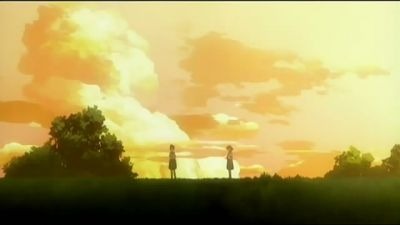
This perspective frames my experience with “Blue Drop.” It’s not about finding amusement in the clumsy endeavors of a novice playwright or the awkward explorations of burgeoning emotions that frequently populate television anime. Instead, the subtle, almost clandestine homosexual undertones within the show provided an avenue for some of the more genuine and heartfelt human sentiments to surface. It was akin to watching a character passionately strumming a guitar, a moment that was both endearing and, dare I say, hilariously entertaining.
You might also be interested in : Creating Your Own Euphoric Field
But I jest, of course. “Blue Drop: Tenshi-tachi no Gikyoku” does not feature explicit yuri content. The anime is ostensibly an original creation set within a universe that also encompasses two manga series, all existing within the same timeline but focusing on different characters and narratives. This shared setting serves as the foundational element, distinguishing the show as an anime rather than a peculiar Japanese drama populated solely by female characters.
And there’s a character who bears a striking resemblance to Yanni…
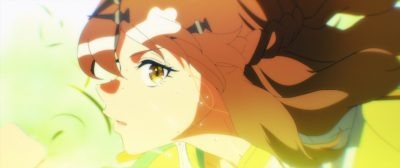
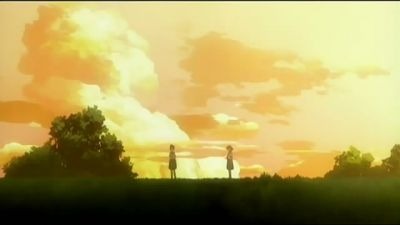
The science fiction aspect of the series, while imaginative, ultimately feels like an afterthought, overshadowed by the core premise of “gender-bending alien invaders possessing superior technology.” The anime itself makes minimal use of this sci-fi element, as the narrative unfolds prior to the actual alien invasion. Our journey in “Blue Drop” begins with a retrospective, following an older woman en route to an important meeting. It is only at the conclusion of the series that we discover her pivotal role as a key supporting character, heading towards the alien mothership, a fact not immediately apparent to the viewer.
While this might constitute a minor spoiler, the narrative cleverly positions the audience to revisit the very first scene of the series as a distant memory. Twelve episodes later, the same woman is recognized as her teenage self, part of a joyful yuri trio, mere moments before a “30 years later” overlay appears on screen. This structural choice is quite remarkable.
Intriguingly, this retrospective element suggests the possibility of peace, implying that some of these aliens possess a sufficient degree of “goodness.” Throughout the series, the enigmatic Arume, or whatever their designation may be, exhibit a diverse spectrum of emotions and morally-driven actions. (Though one might humorously observe that approximately 90% of these emotions seem to manifest as various shades of embarrassment.) Love, in its myriad forms, is explored: the platonic and heroic, as well as the passionate and even vengeful.
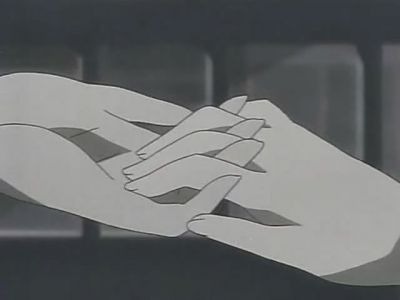
The narrative is deeply concerned with looking back. Perhaps one character’s journey is symbolized through an extended penis analogy (a humorous interjection), while another’s is depicted through a couple holding hands and playing in the school pool, illustrating themes of interconnectivity and reconciliation.
Ultimately, the story conveys a profound message: regardless of the bitterness and challenges encountered later in life, the events that transpire during those crucial formative moments of youth profoundly shape one’s trajectory. This, perhaps, is not a humorous observation at all.