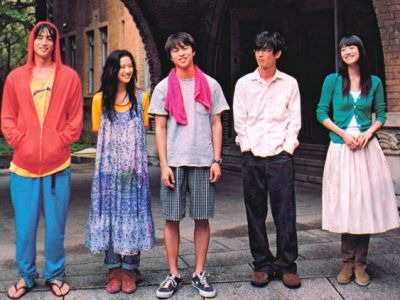
UlasanAnime.com – Saekano, or Saenai Heroine no Sodatekata, is a series that has garnered significant attention for its deeply meta approach to storytelling, making it one of the most self-referential late-night otaku bait in recent memory. The show consistently employs meta-commentary and frequently breaks the fourth wall, a feat it achieves with remarkable success despite constantly teetering on the edge of narrative disaster.
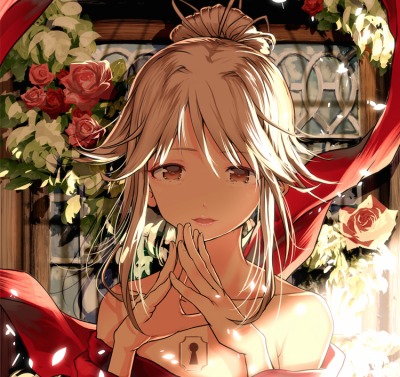
Saekano employs regular meta nods and winks. It also peers past the fourth wall periodically. It does these things successfully, but the show teeters precariously while doing so. In fact, the show is constantly on the verge of disaster but manages to avoid calamity each time.
However, one might question if it’s entirely accurate to say Saekano merely employs meta-commentary. Could it be argued that Saekano, in its entirety, is an exercise in the meta? When a story’s meaning is derived not just from its internal narrative but also from its very foundation in meta-commentary, does it retain its significance if that meta-layer is ignored? While different interpretations can lead to the same conclusions, consider a show like Seitokai no Ichizon. If that series is about characters discussing and embodying harem otaku narratives while simultaneously being a harem otaku narrative, is it still meaningful to state that Seizon merely includes nods and winks to meta elements? Similarly, if Shirobako is an anime about the anime production process, are references within Shirobako about making anime, or even critiques of poorly made anime, worth singling out? Perhaps not. While it’s fair to state that Saekano does engage in such practices, it might not fully capture the essence of the show’s construction.
Instead, perhaps the extent of its meta-narrative can be measured by its depth. It’s akin to the “yo dawg” meme, which humorously involves embedding something you like within something else you like. This can be visualized as a series of “o”s following a “y” in “yooooooooo dawg,” versus a simple “yo dawg.” The repetition of characters can signify a deeper layer of meaning. Some readers engage with content at this level, while others may not, and even the same individual might switch between these approaches on a whim. The value of discussing Saekano’s meta-aspects, I believe, lies in the depth of exploration one can undertake regarding its inception. This dimension is likely what earns Saekano its place on noitaminA. Of course, one cannot ignore that the show’s primary appeal often stems from its exceptionally well-executed fanservice moments, which complement competent character narratives that skillfully navigate the complexities of an otaku property receiving a second season.
You might also be interested in : The Heart’s Song
[Insert your imagined impression of me doing the ANIPLEX bumper.]
Perhaps this is where Evirus and I find common ground: I believe there’s a certain class that our well-starched protagonist, Tomoya Aki (dubbed “Potato-kun”), brings to the series. His self-proclaimed title, “Ethics-kun,” is quite fitting, as one could argue Saekano is largely about ethics in journalism and video game development. But maybe that’s the point. What is the significance of our doujinshi-making heroine drawing erotic content while finding Boys’ Love a bit more challenging to handle in this context? Are we still discussing noitaminA? How does Saekano’s ability to “avoid calamity” translate into something more than just the superficial consumption patterns of a modern “pig”? Who will respond with a “oink” when Megumi, Utaha, Eriri, Izumi, or Michiru beckons? It sounds reminiscent of the hand-wringing from those who are forced to watch something good. At least the pretense for Evirus’s critique seems rather thin.
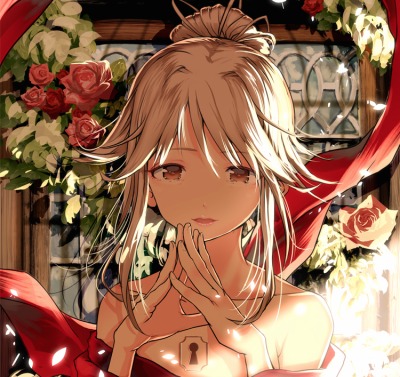
As you can see, Saekano resides squarely within my area of expertise, yooooooooo. And I haven’t even touched upon the fact that this meta-anti-meta duality is the very core of Saekano’s success. By indulging in its meta-fantasy fulfillment, it simultaneously achieves a form of per se fantasy fulfillment. Whether this is genuinely good (or ethical?!) remains an open question, but I doubt the popular discourse surrounding Saekano will delve into these layers anytime soon.