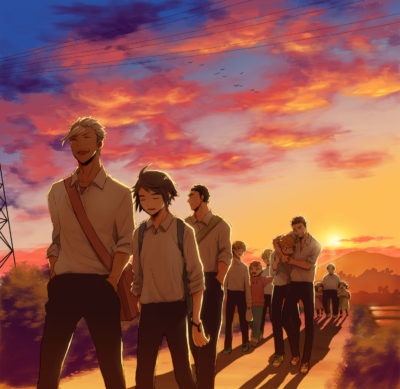
UlasanAnime.com – Iron-Blooded Orphans, a series known for its gritty portrayal of child soldiers and political intrigue, delves into the complex nature of justice, particularly in its poignant conclusion. The narrative, much like an onion, reveals its core truth through layers of action and consequence, with the finale emphasizing the concept of practical justice.
The actions of Gjallarhorn, a faction whose naming conventions are as questionable as their moral compass, range from the trivial to the truly abhorrent. Iok’s antics, while annoying, pale in comparison to the widespread atrocities committed by others. Blanket firing on both combatants and civilians, or employing proxies to commit war crimes, highlights the moral decay within the organization. The question then arises: are these actions inherently “bad,” or is there a more nuanced perspective at play? Gundam IBO seems to suggest that understanding the underlying values and motivations is crucial to discerning the series’ message.
McGillis, for instance, pursued power without establishing a solid political foundation, leading to his swift downfall. Rustal, on the other hand, acted as a representation of the harsh realities of the adult world, where larger forces inevitably dictate outcomes. Neither Rustal nor Gaelio likely viewed McGillis as inherently evil, but rather as someone who pursued his beliefs, however misguidedly. This pragmatic approach also informed Rustal’s decisions, mirroring the backroom dealings that characterized the conflicts between Gjallarhorn and Earth’s economic blocs concerning Mars.
You might also be interested in : A Girlish Number Lover
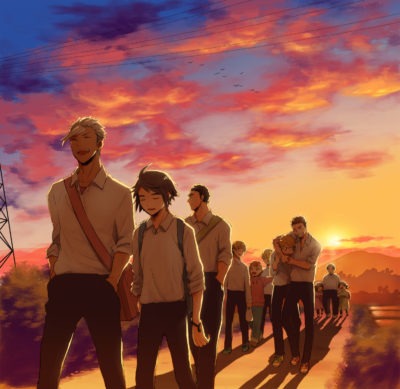
The ending of Iron-Blooded Orphans, therefore, feels earned and consistent with the series’ thematic explorations. The struggles of Tekkadan, led by the charismatic but not always strategically brilliant Orga, are a testament to their precarious survival, often at the cost of numerous young lives. The series doesn’t shy away from depicting the deaths of recurring characters alongside nameless children, illustrating the harshness of their reality. While some might criticize the almost religious devotion Tekkadan members held for Orga, it stems from a child-like trust in a guardian, a loyalty that resonates with the devotion seen in McGillis’s wife. It is this vulnerability and unwavering trust that makes the plight of the children in IBO so heartbreaking and worthy of tears. Their choices are not always rational, which is precisely why they are so endearing and why orphans remain among society’s most vulnerable.
Ultimately, Gundam IBO argues that the superficial actions of characters like Iok and Carta are mere distractions. True change is brought about by the quiet, behind-the-scenes efforts of individuals like Kudelia and Naze, whose work profoundly impacts the lives of ordinary people. Gjallarhorn’s internal crisis was inadvertently exposed by McGillis, revealing a ruling class more concerned with appearances than the suffering of children and adults alike. The series emphasizes that true impact lies not in the accumulation of power, but in the small, practical improvements made for the abandoned orphans. This is the profound message that the final episode of IBO so effectively conveys.