UlasanAnime.com – The author frequently publishes content on Heisei Democracy, and this habit has influenced them. They hope this is the only type of content they produce and the only instance of them doing so. Here’s an excerpt from their NYC Manhattan shopping guide, detailing their activities last Saturday.
The primary shopping triangle in midtown Manhattan, according to the author, is formed by the intersection of East 41st and 5th, 45th and Madison, and Rockefeller Center. While acknowledging that good items can be found elsewhere, they believe these locations offer the most authentic selection in the city, to their knowledge.
The author personally favors the Bryant Park area. Its appeal lies in the free Wi-Fi, proximity to a Chipotle, and the presence of a substantial library. Furthermore, its convenient location between Times Square and a 15-minute walk from Penn Station makes it a strategic spot. However, they admit that most of midtown is quite close to each other, so this advantage isn’t entirely unique, much like the abundance of Starbucks in the vicinity.
The real reason for their fondness for the area, they confess, is the presence of Book-Off right next door. It’s a significant advantage when Japan’s largest used media chain establishes a store in the heart of the city, situated within half a block of other Japanese establishments. The author emphasizes “used” items, noting that one can find a considerable amount of English-language used material, including various books and CDs. As an example, they were close to purchasing a specific item for $3 that day. Despite a fair inventory, Book-Off can be hit-or-miss when searching for a CD or DVD worth buying, let alone a specific title. Its main strength is its exceptional manga collection, arguably the largest Japanese-language manga repository in the greater New York area. Because everything is used, it’s also very affordable, a benefit they attribute to the First Sale Doctrine. The author estimates that nearly half of their import CD collection originates from Book-Off, having acquired nice CD sets and rare out-of-print CDs there on multiple occasions, and having spent a considerable amount on artbooks as well.
A brisk five-and-a-half-block walk uptown from East 41st leads to the reopened Asahiya. Asahiya’s original Manhattan storefront closed in 2003. The author only discovered its reopening mid-last year, making its return earlier this year a pleasant surprise. The new Asahiya is located off Madison, a much-improved location compared to its previous spot off Mulberry, and is conveniently situated near Grand Central. However, during their last shopping spree, the author took a different route and plans to revisit Asahiya after a visit to Kinokuniya.
Kinokuniya at Rockefeller Center has been a landmark for many years. The walk up 5th Avenue from 41st Street takes one through some of midtown’s most glamorous shopping districts. This area features stores like CompUSA and Best Buy, two Borders locations, numerous coffee vendors, and apparel shops. However, the author finds Kinokuniya, much like Borders, somewhat lacking for anime, manga, or music purchases. Yet, it’s not entirely a lost cause. Kinokuniya is the largest corporate brick-and-mortar vendor outside of Japan. As a flagship establishment in midtown, they have recently, over the past couple of years, revamped their store to strongly focus on anime media, recognizing its trendiness in the United States.
This shift is beneficial for the author. Kinokuniya likely boasts the largest selection of imported artbooks currently available. Despite extensive searching, they haven’t found a copy of “Flamboyant,” but they have seen several copies of the coveted(?) Sphere++ for $47 each. More interestingly, Kinokuniya makes an effort to stock the latest J-pop hits and mainstream offerings. This pleased a Joe Hisaishi fan the author shopped with, who was delighted by the healthy selection of new game music and anime CDs from current shows. The author, for instance, was unaware that “Re: Surface” was used in “Yakitate Japan!”. In addition to the expected Japanese manga and books, Kinokuniya now also carries a good selection of domestic anime and manga.
Despite their somewhat exorbitant prices, Kinokuniya remains a good place to shop, at least because Asahiya charges more. However, while browsing at Asahiya, the author felt compelled to take a couple of pictures due to the memorable finds. Firstly, they discovered a new copy of a Masami Kobushi special edition. While this might not seem like a major event, for the author, it was as surprising as seeing a picture of their favorite musician on the wall of a restaurant they’re visiting for the first time, especially when it’s a picture of the musician with the establishment’s owner, complete with an autograph.
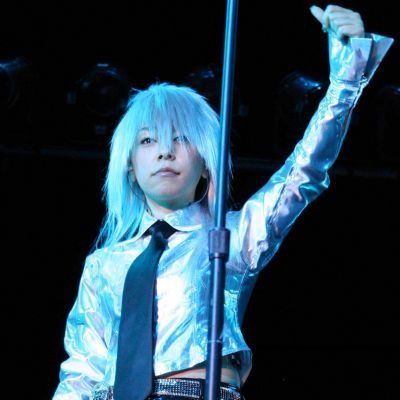
The author acknowledges that their analogy might be a bit of an understatement, but the point is clear. This find was far more noteworthy than discovering the new Eureka 7 albums there, which was itself quite significant. The author was unaware that “The Best Of Eureka 7” came with a DVD and bonus items, and they were very close to purchasing “OST2,” a purchase they anticipate making eventually. Perhaps equally surprising was finding “this” item. This discovery leads the author to question if they are now an official Nana Mizuki convert, or if it’s simply a truthful statement that pirating MP3s ultimately leads to purchasing them. Somewhere in between, they guiltily paid for it, finding some solace in knowing that the copy of “Love and Bubble” they bought at Kinokuniya was $3 cheaper than the one at Asahiya.
The other photo-worthy observation was something that words struggle to describe. Typically, all three of these stores are frequented by native Japanese individuals. Upon entering, customers are greeted with the customary “Irrashaimase! Konnichiwa!” (at least at Book-Off). The cashier returns a receipt and credit card with both hands, and the author is often mistaken for a Japanese person. It’s common for Japanese housewives to visit these places for leisure while their children browse the children’s literature section. At Asahiya, there’s a small TV in the children’s literature corner playing “Laputa” (in Japanese, without subtitles). A young boy, approximately three feet away from the screen, was watching it. The TV was integrated into a display designed to resemble a tree, positioned at the corner between two shelves. Carpeted steps, similar to those found in a swimming pool’s wading area, led up to this tree display. The boy, about 4 feet tall, was kneeling on the middle step.
You might also be interested in : His Subtle Influence?
The scene was described as unsettling, and the author admits that words still fail to fully capture the experience, despite their attempt to describe it. It serves as a poignant reminder that excessive devotion to materialism and anime can be detrimental, even when culture often encourages it. The author advises against getting too deeply immersed in such pursuits, even if societal influences push in that direction.