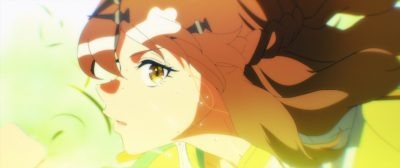
UlasanAnime.com – A recent article on Karmaburn.com presented a perspective on “Yorimoi” (Sora yori mo Tooi Basho – A Place Further Than The Universe) that the author found to be significantly different from their own impression.

The article quoted:
Sora yori mo Tooi Basho (A Place Further Than The Universe) is remarkably well done. Before the season started, I fully expected it to be a trite “cute-girls-doing-cute-things” fluff piece about high school girls having implausibly canned adventures in Antarctica. However, it turns out Yorimoi adopts a serious attitude toward exploring the logistics required and examining just how something like this might actually be accomplished. I take it as a triumph of original anime that the story seems well thought out and enjoyable in ways that are often missing from anime adaptations of preexisting works, particularly when such anime try hard (to their detriment) to closely follow the source material.
This statement raises a question for the author: does “Yurucamp TV,” a manga adaptation focused on the detailed logistics of camping for high school girls, not adopt a serious attitude towards exploring its subject matter?
The author admits to dropping “Yorimoi” after only three episodes, as they couldn’t connect with most of the main characters, except for the “tarento.” They disagree with the assessment that it’s a “cute-girls-doing-cute-things” piece, instead characterizing it as an “annoying-girls-doing-weird-things” show.
The characters were often found to be obnoxious and incorrigible, with character development that the author couldn’t be bothered to invest in or wait around to see. The author also notes that Antarctica, as a setting, isn’t particularly exotic to them, having read extensively about it and spoken with someone who spent time there.
You might also be interested in : Million Thoughts, Million Lives
While acknowledging that the show itself is well-produced, the author felt its presentation was overly self-important and exhibited a calculated quality that clashed with their expectation of a more organic creation.
In contrast, the author feels “Yurucamp” successfully captures what they desire in such a show. They argue that “Yurucamp” accomplishes in one to two episodes what “Yorimoi” might take a season to do, consistently delivering on its premise.
The author questions how many times the girls in “Yorimoi” have actually been to Antarctica (noting it was episode 8 by the time of writing) and feels such extensive setup is unnecessary. They also express a dislike for being constantly bombarded with quirky character traits.
The very idea of Japanese high schoolers wanting to go to Antarctica in 2017, and it being treated as a serious anime premise, is something the author finds difficult to take seriously. They would prefer a story about Japanese high schoolers raising funds for a summer vacation in New York City, as they find that destination more emotionally engaging and worthy of their attention.
The author likens New York City to “another world” in terms of distance.

The meaning of “cute-girls-doing-cute-things” is explored in the context of different works. Having followed anime since the 90s, the author recalls “Magic Knight Rayearth” as an early example of this trope, where cute girls were thrust into an isekai RPG setting in a meta fashion.
They question if the proliferation of trendy “cute-girls-doing-not-much” anime, perhaps driven by the “Kirara-manga-adaptation brand,” has fundamentally altered the category. While shows like “Jinsei” or “Anne-Happy” might not delve into intricate details, they are not presented as being about achieving a specific goal.
The author finds the criticism of omitting details in manga or light novel adaptations, to which the “cute-girls-doing-cute-thing” tag is applied, to be perplexing. They state that “Death March” is not even in the same genre.
Shows like “Slow Start” and “Mitsuboshi Colors” are acknowledged as potentially fitting the description, but they aren’t about pursuing a specific objective. “Slow Start” is noted for its exploration of mental trauma, and “Mitsuboshi Colors” for depicting the antics of brats.
The author points to “Koizumi” and “Yurucamp” as examples that are meticulous about specifics and adapt from manga. They question if this leaves “Takunomi” as the only show that truly fits the described category.
Ultimately, the author believes the initial statement lacks merit. While acknowledging that “Yorimoi” is well-constructed with a strong sense of production value, they feel the writing and direction betray expectations in a negative way.