UlasanAnime.com – The discussion around anime adaptations often brings up the question of whether a story truly shines in animated form or if it’s better suited for its original medium. This sentiment is echoed in a recent commentary regarding “The Ancient Magus’ Bride,” where the author posits that the series might inherently function more effectively as a manga than an anime. Despite acknowledging the high quality and beautiful execution of the WIT STUDIO adaptation, the core argument suggests that the narrative structure and pacing of “The Ancient Magus’ Bride” lend themselves more naturally to the sequential art of manga. This perspective doesn’t necessarily fault the anime itself but rather highlights a potential disconnect between the story’s essence and its translation into a different medium. For viewers who haven’t experienced the manga, the anime might serve as a gateway, sparking curiosity about the source material, though potentially through comparisons that favor the manga. Nevertheless, the anime is described as a decent and refreshing watch, offering a unique take on familiar tropes. The author finds its blend of supernatural elements and a gifted human protagonist particularly appealing, even if the overall content can be perceived as somewhat drab or obtuse, suggesting it might have been a perfect fit for Kyoto Animation’s style.

===
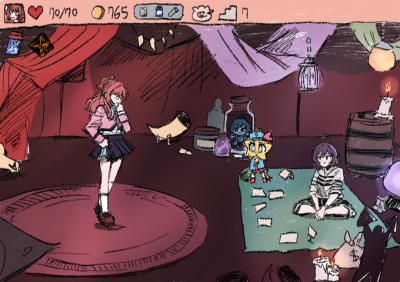
Shifting focus, WIT STUDIO is also involved in the anime adaptation of “Princess Connect! Re:Dive,” a highly anticipated title from Cygames. Having played the original “Princess Connect” game, the author approached “Re:Dive” with a mixture of excitement and caution. So far, the game appears to have addressed many of the concerns that arose from the original’s gameplay mechanics. “Princess Connect” and its successor, “Pricone: Re:Dive,” are characterized as the mobile gaming equivalent of large-scale player-versus-player guild wars, reminiscent of the guild-based combat seen in MMORPGs like EverQuest and World of Warcraft from the early 2000s. While other games in the Japanese social gaming sphere offer similar experiences, “Pricone: Re:Dive” stands out with its impressive production values and a notable score by Tanaka Kouhei. The original “Princess Connect” was a browser-based game with simpler graphics, typical of titles released around 2014-2015. In contrast, “Pricone: Re:Dive” presents a visually rich experience, blending elements of visual novels with a standard auto-playing, party-based fantasy RPG combat system, akin to what one might find in games like “DanMachi.”
A significant aspect of the “Pricone: Re:Dive” game is the inclusion of extensive anime cutscenes. While the term “ton” might be an exaggeration, each communication chapter concludes with an ending animation and a preview for the next episode, a feature that contributes to the game’s anime-like presentation. Although approximately 90 percent of the in-game dialogue consists of static character sprites over text boxes, these anime sequences are interspersed frequently, and WIT STUDIO’s involvement ensures their high quality.

A primary concern for the author regarding “Pricone: Re:Dive” was whether the game would move away from its player-versus-player focus. This worry proved unfounded, as the game retains its PvP core. Notably, it lacks a friend list or friend support system, a departure from many social games. The clan mechanics are still present, though currently, there are no explicit elements of clan warfare, such as filtering potential recruits based on their online availability for versus battles. The game features two distinct PvP arenas where players can compete for rewards. However, these arenas are designed for individual participation. Clan interaction is limited to a system resembling a friend list and the ability to request gear in exchange for in-game currency. The absence of clan-based PvP remains a point of concern, with the hope that it will be addressed in future updates, especially given the presence of “to be deployed later” placeholders within the game.
===
You might also be interested in : Antarctic Dissonance
The author shares some candid insights and meta-commentary on “Pricone: Re:Dive,” based on their extensive playtime. Key observations include:
- Strategic Gem Usage: The game’s economy revolves around a “spend money to make money” philosophy, particularly in the versus modes. High rankings in the arena and princess arena yield substantial gem rewards. By strategically utilizing gems to build a strong core team and upgrade lower-star characters, players can achieve a positive gem balance over time. While saving gems for future rolls is an option, it can lead to a lag in team development compared to players who invest their gems more actively. The ultimate goal is to strike a balance that results in a powerful team while maintaining a healthy gem reserve.
- Princess Arena Balance: The Princess Arena requires balance adjustments. While it’s relatively easy to climb in rank, maintaining a high position is challenging, necessitating significant time and gem investment. Players need two strong teams to hold their ground but only one to advance. This is due to NPCs fielding three strong teams, which can be difficult to overcome, but players often opt to challenge human opponents with two strong teams, as defeating their second-best team is sufficient for victory.
- Level vs. Composition: In “Princess Connect! Re:Dive,” character levels often hold more importance than team composition, even when other factors like star power are equal. A level 60 character with full upgrades will frequently defeat a level 50 character with full upgrades, regardless of their theoretical strengths or weaknesses in a rock-paper-scissors scenario. This principle extends to team dynamics, where the synergy between five characters can compensate for individual weaknesses, but the fundamental advantage of higher levels remains crucial.
- Team Composition and Counters: Effective team composition is largely determined by identifying characters and their respective counters. For instance, a common strategy involves using a Suzune/Io back row to counter characters like Tamaki, who, despite being powerful in other scenarios, has vulnerabilities in this specific setup.
- Anna’s Role: Anna is highlighted as a fun character, not necessarily top-tier, but enjoyable due to her “explosion power.” The author dismisses criticism that her explosion power is weak, comparing it to the idea that a free lottery ticket is bad because individual chances of winning are low. Anna’s offensive capabilities are valuable, and if they help secure a win or even out a losing match, her contribution is significant.
- Character Names vs. Seiyuu: The author admits to a personal habit of identifying characters by their voice actors (seiyuu). However, due to increased interaction with a wider audience on platforms like Reddit, there’s a growing necessity to learn and use the actual character names.