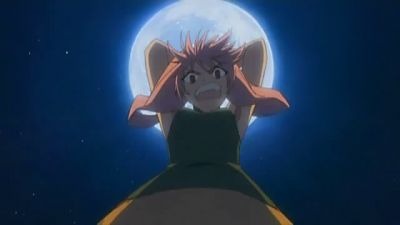
UlasanAnime.com – The anime series Prima Doll, a creation of Key and Visual Art, presents a unique blend of familiar moe otaku tropes set against a post-war world reminiscent of Steampunk Taisho, much like the setting of Sakura Taisen. The story features androids and robotic humanoids, with the narrative suggesting that these machines were once outlawed after an event where they seemingly went rogue.

The plot centers on a cast of female robot characters who perform song and dance routines at a cafe and theater. They are overseen by a man who is revealed to be a robot and military scientist. He carries the burden of childhood trauma, stemming from his experiences with prototype girl-robots used as tools of war, which he feels responsible for. Consequently, he dedicates himself to caring for the robot members of his establishment, as they, too, were weaponized during the conflict. He also conducts maintenance on them, as most robots are decommissioned and outlawed, with only those under his care remaining active.
The robots in the series are broadly categorized into two types: intelligent, human-like models, and simpler, purely mechanical ones capable of performing only basic tasks. The female characters fall into the former category, while the latter are employed for menial duties at the cafe, such as cleaning and cooking.
You might also be interested in : Ex-Kakak Tiri di Tengah Budaya Novel Ringan
Each of the robot girls represents a decommissioned war machine. One is akin to a jet fighter or Gundam, another excels in subterfuge, while others were designed for communication, logistics, and command. The “main” robot character, true to trope, is portrayed as more human-like, often appearing less capable, with her true nature only revealed during the climax. A significant portion of the narrative involves discovering these old war machines and attempting to reintegrate them into civilian life, implying the war has concluded, perhaps due to the decimation of one side.
The story reaches its climax with the emergence of another girl-robot who has gone rogue. This character manages to seize control of dormant, simpler war robots, inciting a large-scale uprising.
Beyond its plot, Prima Doll delves into prominent themes of PTSD and broader post-war anxieties. While Japan has not been involved in recent conflicts, the series’ themes resonate with countries like the USA, which has experienced numerous wars over the past four decades, including operations as recent as 2021. The ongoing “War on Terror” serves as a relevant parallel.
A striking statistic is the number of U.S. deaths resulting from terrorist attacks. This phenomenon can be seen as a cyclical consequence, where interventions in the Middle East may have inadvertently led to internal strife. In the context of Prima Doll’s message, this is particularly poignant. The series suggests that the true adversaries are not merely the individuals or mechanisms causing harm, but rather the ingrained, extremist ideologies within people’s minds. While Prima Doll portrays this through a robot’s extreme thinking, it can be interpreted not as a purely AI apocalypse narrative, but as a humanistic exploration of rigid, outdated beliefs lacking factual or logical grounding. This theme suggests that the “villain” is not a tangible entity but an abstract “vibe”—the pervasive fear, terror, betrayal, distrust, and madness that drive actions.
Therefore, the series encourages viewers to avoid succumbing to such negative “vibes” and destructive thought patterns, drawing a parallel to characters like Sephiroth from Final Fantasy VII. While the overall quality of Prima Doll’s narrative execution is debatable, certain episodes in the middle of the series were particularly effective and charming in their thematic exploration. Despite potential shortcomings in its conclusion, the series, being a Key/Visual Art production, is unlikely to end in a disastrous manner, especially after investing so much time in its development.
PS. The series already boasts a fan club. This raises the question of whether they are leveraging the popularity of other shows like Gochiusa.