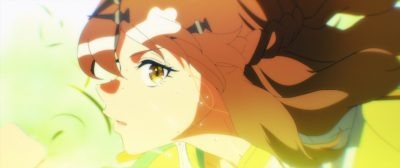
UlasanAnime.com – My Stepmom’s Daughter Is My Ex, also known as Mamahaha no Tsurego ga Motokano datta, or Tsurekano for short, is a light novel series that lives up to its title. The story centers on two main characters who become step-siblings, despite having been in a romantic relationship just six months prior. The anime adaptation of Tsurekano features all the expected elements, yet it offers a surprisingly nuanced take on its premise.
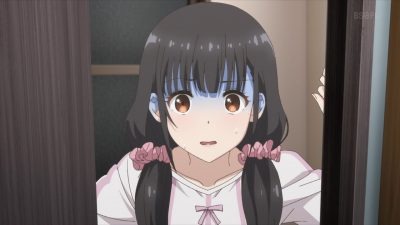
One might wonder what audiences perceive of such a story when encountered through its anime form, before engaging with the original light novel. What expectations are set? It’s not entirely unexpected to discover, around ten episodes into the series, that Tsurekano delves into themes such as the possibility of purely platonic friendships between males and females, and the exploration of intimacy boundaries within non-romantic relationships. Alternatively, a more intriguing perspective is to consider the subtle differences between being best friends and being lovers, reminiscent of those ubiquitous jewelry advertisements. However, if you had asked me three months ago, I wouldn’t have predicted this direction for a series with such a title.
You might also be interested in : In Japan, IDOLM@STER and Cons
What truly elevates Tsurekano is its focus on two introverted bookworms who approach their romantic lives in remarkably similar ways. While the conventional tropes are certainly present, their execution is almost the inverse of what is typically seen in similar anime and manga. The series effectively captures the charming scenarios one might imagine in such a setup, then cleverly subverts them to heighten the romantic tension, or perhaps the deliberate lack thereof, that the narrative aims to build.
Admittedly, the series could be perceived as uneventful. There’s a distinct absence of dramatic conflict, to use a common idiom. The verbal humor, especially when navigating a Japanese-to-English translation, can become quite dense. The female protagonist undergoes a significant transformation, evolving from a timid middle schooler into a stereotypical popular honor student as the characters transition into high school and are brought together by their parents’ remarriages. In essence, the progression is almost mundane. The male lead experiences a parallel development, though his motivations remain somewhat elusive; if anything, it’s a quiet, smoldering intensity that propels the entire narrative. The seemingly ordinary daily life that frames the story serves as a potent example of actual light novel culture as practiced by individuals, given the extent to which the characters are immersed in and surrounded by such experiences.
I’ve labeled Tsurekano as “mid” in this article’s title, and this designation serves as a direct challenge to blogs and writers like myself. In a recent episode, Tsurekano referenced I Want to Eat Your Pancreas, a nod that is remarkably fitting. This, in itself, represents a pinnacle of light novel culture, the very kind of writing that Tsurekano seems to both aspire to and, paradoxically, never wishes to fully embody or surpass. Yet, this very aspiration is the crux of the matter. If you find yourself weary of the tropes involving rented girlfriends, tutoring future wives, or dating influencers, perhaps this series is worth a try.