UlasanAnime.com – The world of anime music is vast and often overlooked, yet it plays a crucial role in shaping the viewer’s experience. This exploration delves into the contributions of several prominent anime composers, highlighting their distinctive styles and the impact of their work.


The decision to engage with music, whether consciously or not, is a fundamental human experience. It’s not about becoming a dedicated fan; rather, it’s akin to enjoying an afternoon cup of tea or taking a nap – a practice deeply ingrained in human existence.
Let’s begin with Joe Hisaishi, a composer renowned not only for his iconic Studio Ghibli scores but also for his compositions for live-action films. His collaboration with the eclectic filmmaker Beat Takeshi has undoubtedly contributed to his widespread recognition. Personally, I find his work to be incredibly enjoyable on a casual level. The theme “Summer” from the film Kikujiro stands out as a particular favorite. Following closely is the main theme from Laputa: Castle in the Sky, which can be found on the original soundtrack or within the “image album.” I also have a special fondness for a re-arranged version of this theme.
You might also be interested in : Welcoming 2007 with Affection, in Fragments
Among friends, Hisaishi is affectionately nicknamed “Hesushi,” a playful moniker used to tease a particularly enthusiastic fan of his music.
The first soundtrack musician in the anime industry whose work I financially supported was Hayato Matsuo. While many may not be familiar with his name, Matsuo has had a long and varied career in anime soundtracks. I still hold a deep appreciation for some of his earlier works, such as the scores for Magic Knight Rayearth and Rescue Wings, though my engagement with these remains relatively casual.
Before we move on to Yoko Kanno, I’d like to mention Toshihiko Sahashi. He was the second anime soundtrack composer whose music I purchased. While the instrumental pieces in the Rayearth OAV were somewhat dark and somber, they possessed a thoughtful quality and flowed exceptionally well when listened to independently on disc, which is precisely why I bought them. Sahashi has an extensive list of credits, including Tsukikage Ran, Smash Hit, Simoun, Gundam SEED, Gunslinger Girl, and Full Metal Panic. His name frequently appears across various productions, and he has consistently delivered compelling musical arrangements.
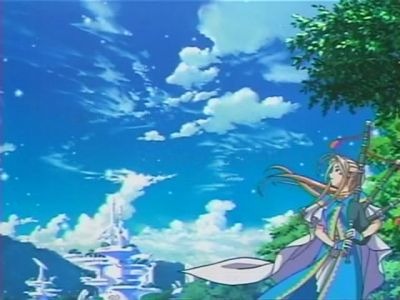
However, no discussion of anime composers would be complete without mentioning Yoko Kanno. My admiration for her work began with the soundtracks for Macross Plus and The Vision of Escaflowne. Curiously, I never fully grasped the exceptional acclaim surrounding the Cowboy Bebop soundtrack, beyond its demonstration of Kanno’s remarkable diversity. I felt that Macross Plus had already showcased a similar breadth of musical styles. Nevertheless, I acquired a considerable amount of Cowboy Bebop merchandise, as it was the trend at the time. I even managed to obtain the DVD featuring a live performance by The Seatbelts, who indeed put on a captivating show.
Of course, Yoko Kanno and Yuki Kajiura are widely recognized figures in the anime music scene. My appreciation for Kajiura’s work grew as I found myself repeatedly listening to the original soundtrack for Aquarian Age TV, even before she achieved widespread fame with her contributions to projects like .hack. I recall listening to her soundtrack for Shin KOR and finding it to be unremarkable yet undeniably solid and charming.
Kajiura’s music often incorporates a pop-synth element, which makes it particularly enjoyable. For me, the two “YKs” (Yoko Kanno and Yuki Kajiura) are most distinct upon repeated listening. I can still listen to the .hack and Aquarian Age soundtracks repeatedly without fatigue, whereas I can effortlessly enjoy Kanno’s entire discography without irritation. It’s unclear if this observation holds any objective significance, but perhaps it explains why I gravitate towards spending more on Kanno’s music.
Another factor is that Kajiura’s music is readily available domestically, making it more accessible.
A glance at my music collection would likely reveal my considerable appreciation for Taku Iwasaki. While I do enjoy his compositions, my engagement is generally more casual. However, I find his work on Witch Hunter Robin to be particularly outstanding, with the second soundtrack brimming with exceptional pieces. For fans of Oban Star Racers, how do you find the music in that series?
At this point, I could continue discussing many more composers, but for now, I will conclude this segment. Figures like Kunihiko Ryo deserve more than a brief mention at the end of a blog post, but I hope this has at least piqued your curiosity. I vividly recall seeing him play the piano during a demo reel for Emma: A Victorian Romance at Anime Expo 2005. It was a truly sweet moment. Studio Pierrot’s continued engagement with him suggests a deep appreciation for his musical talent.