UlasanAnime.com – The author reflects on the anime series “Free,” questioning the believability of its teenage boy characters and comparing it to other Kyoto Animation works like “K-On!” and “The Melancholy of Haruhi Suzumiya.”
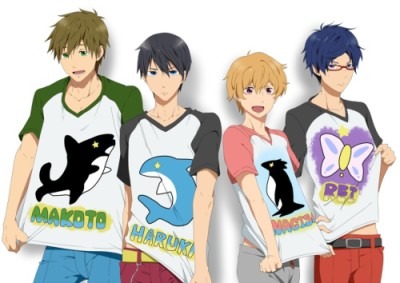
The current era of “Database Animal” is characterized by the assembly of “database” elements, where stories are constructed from archetypal narrative components. What is considered new is the daring combination of familiar elements, leading to cultural remixes.
The author posits that “Free” can be viewed as a similar construction, with elements swapped in to appeal to the female otaku audience. This perspective is deemed reasonable.
As someone elsewhere said: Now you know how people who are into boys feel about K-On. And why it had so many female viewers.
— Lily Catts | 3-Headed Dog & Shark Mount Owner (@lily_catts) July 25, 2013
Despite the reasonableness of this take, the author remains uncertain of its complete truth. There are undeniable similarities between “Free” and past Kyoto Animation productions. A more insightful question might be: what remains of “Free” if we remove the elements it shares with “K-On!”?
- Cute girls versus ikemen (excluding Kou for the moment)
- Athletic club focus (swimming) versus a culture club (“keiongaku”)
- Inclusion of opposite-sex characters
- Fanservice
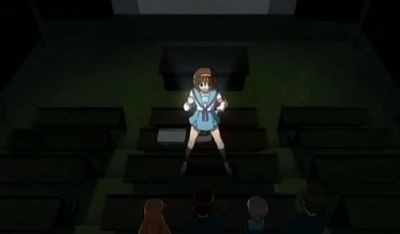
These elements, in themselves, are not considered problematic. The author draws a parallel to “Haruhi,” where similar elements are present, yet it is not a point of contention for viewers. Therefore, “Free” is not simply a “genderswapped K-ON” but rather more akin to “Haruhi” in its construction.
What the author finds challenging about “Free,” beyond potential concerns about gender-specific fanservice, is the characters’ behavior, which doesn’t align with their expectations of teenage boys. For contrast, the author points to “Ookiku Furikabutte” (Big Windup!), a popular series among some fujoshi. This anime, adapted from a seinen manga, has a strong sports focus and incorporates many database elements appealing to fujoshi and female otaku. The anime is also praised for its quality. Despite some characters exhibiting seemingly effeminate behavior or engaging in physical closeness, they are portrayed as believable high schoolers in the context of aiming for the Koshien tournament.
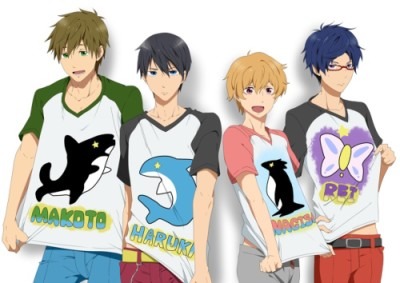
This level of believability is something the author feels is lacking in “Free.” While Haru’s obsession with swimming can be categorized as eccentric, the author questions the authenticity of Makoto, Rin, Rei, and Nagisa. Rei and Rin, being physically imposing and exhibiting traits like being a blockhead and a tsundere, are seen as more masculine, even if these are gender-neutral traits. Nagisa is given a pass, as such personalities might exist among high school boys, though they could be perceived as annoying. The author suggests that Nagisa’s character might be an amalgamation, like “50% Mugi and 50% Yui with a dash of Ritsu.” The character that poses the most difficulty for the author is Makoto, who appears overly motherly. While acknowledging that some men can be motherly, they are typically portrayed differently. Makoto, in contrast, is seen as a more believable blend of female characters, rather than exhibiting traditionally masculine traits.
The author acknowledges that this assessment is based on having watched only four episodes, and things may change. This is presented as a first impression rather than a definitive judgment, reserving the right to revise their opinion. It might also be an indictment of common issues found in Kyoto Animation’s works. The core feeling is that “Free” doesn’t present a story about guys swimming, but rather “muscle-blobs swimming,” lacking a sense of humanity. This feeling is not present in “K-On!” perhaps because that series doesn’t delve deeply into character traits, maintaining a lower narrative depth. While “K-On!” might show glimpses of characters’ worries, it’s primarily a story framed by a passive sense of melancholy tied to the passage of time, making it feel more lifelike than “Free.”
Ultimately, the author’s issue isn’t with how “girl-pandering” might create new narrative combinations, but rather with “Free” seemingly diverting from its characters’ essence to explore different themes and stories. The author hopes Kyoto Animation will prove them wrong.
PS. Regarding Kou: the author speculates that Kou might be the reason some viewers can tolerate reverse harem anime featuring cool female characters voiced by Houko Kuwashima, even if the genre isn’t primarily intended for them. If a character is compelling enough, viewers might overlook detracting elements. This is also why the author tolerates many anime originally written for girls, attributing it to the presence of quality in story, theme, characters, direction, music, and acting. However, the author does not claim Kou is such a character.
You might also be interested in : Girl Talk: Random iM@S Notes