UlasanAnime.com – Upon initial viewing of Zvezda episode 1, a period of deep contemplation was required due to its status as the sole available material. The core issue, initially perplexing, can now be articulated. It’s important to clarify that Zvezda’s perceived “problem” is less a flaw and more a matter of interpreting specific visual and thematic signals and aligning one’s expectations accordingly. The first episode of Zvezda, with its peculiar world-building and revealing attire for its two main characters, was thoroughly enjoyed. This enjoyment was further amplified by the recent viewing of episode 2.
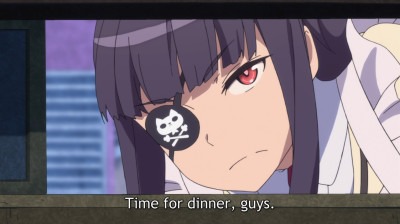
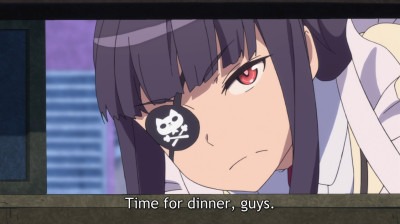
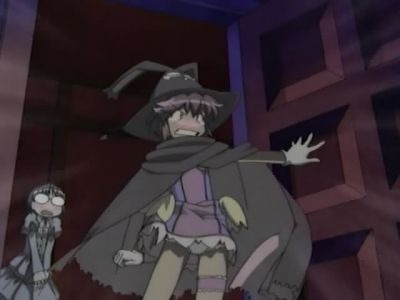
The central challenge lies in discerning what to anticipate from the visual cues presented within Zvezda’s depicted world. The episode opens with a flash-forward to a desolate future, characterized by ruined structures and the remnants of a fallen civilization. Standing amidst this decay is a Kate statue, approximately yay tall, accompanied by a narrator. Subsequently, the narrative shifts to a predominantly ordinary present, featuring an anime girl struggling with oversized grocery bags, a curfew, and peculiar purchasing mechanics. The presence of armored vehicles is also noted. Later, Kate is shown riding a child’s bicycle, and a gas mask appears. The narrative begins to deviate significantly around this point.
You might also be interested in : Is Crowdfunding Simply Danketsu?
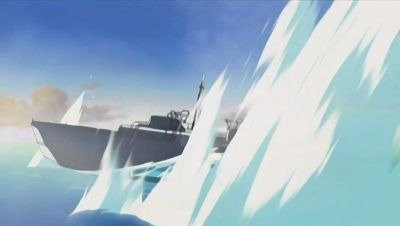
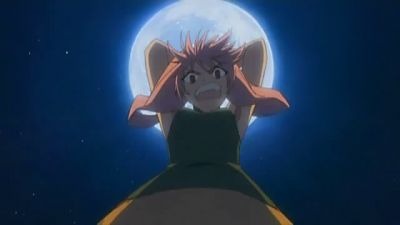
By this juncture, approximately half of the first episode has transpired. The remainder of the episode depicts a decisive defeat of SDF forces, achieved through seemingly magical means. While not on the same scale as “Bombshells from Cat Planet,” the underlying principle shares similarities. Notably, Zvezda remains silent on the nature of this power. Are these beings aliens? Is it magic? Espers? Time travelers? Or perhaps a Haruhi-like phenomenon? This crucial information is deliberately withheld, presented directly to the viewer.
For those not predisposed to seek such explanations within the first episode, the viewing experience might be more straightforward. However, this reviewer was simultaneously engaged in deciphering the narrative and perusing unrelated links on ANN, which speculated about the show’s purported commercial intent. One might surmise it was a slow news week for those reviewers.
To draw a comparison, consider the world-building in “Shinsekai Yori,” which emphasizes the unknown unknowns. Zvezda, conversely, operates on the premise that the viewer is aware of their lack of knowledge, prompting an active search for elements to fill that void. However, instead of providing conventional pieces to complete the puzzle, it offers “half-naked loli-shaped pegs.” This is not to be interpreted as a complaint.