UlasanAnime.com – The exploration of narrative in media, particularly anime, often leads to a deeper understanding of how ideas are conveyed beyond simple plot points. This delves into the intricate relationship between a story’s concept and its expression, highlighting how elements beyond the script contribute significantly to the overall message.
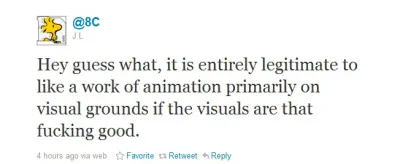
The initial spark for this discussion came from observing online conversations, specifically a late-night exchange on Twitter that touched upon the nature of “story” in media. This led to a contemplation of whether the term “story” itself is adequate, or if a different nomenclature might better capture the essence of what is being communicated.
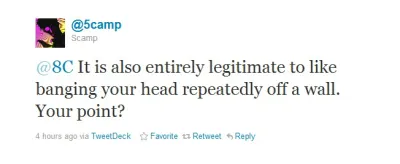
The core of the argument suggests that the problem might stem from an overemphasis on the narrative structure itself, rather than the underlying ideas. The author proposes using the term “idea” as a more encompassing descriptor, with “story” being merely one form of expressing these ideas through conventional narrative means. This perspective divides a story into two key components: the concept, which is the “what,” and the expression, which is the “how.”
Thus, a story is understood as an idea or a collection of ideas that are communicated through a narrative. The narrative itself is a method of storytelling, which in turn is a way of conveying a story. The term “expression” is used to encompass this act of communication, while “concept” refers to the raw, unadulterated idea as it is presented within the story. For instance, the anime Gurren Lagann can be seen as presenting the concept of overcoming seemingly insurmountable challenges.
It is beneficial to distinguish between the content of an idea and its presentation because media, especially literature and pop culture, often features layered narratives. A single work, such as a 12-episode anime series, can contain multiple interwoven stories that collectively form a theme. Typically, discussions focus more on the presentation rather than the inherent content of these ideas. Without the surrounding layers of expression, ideas remain just that – ideas, akin to the difference between 1+1 and the square root of 4. However, by analyzing the presentation, we can effectively refer to the “message” or “substance” of a story.
The author finds the notion of society’s pursuit of “story” to be personally resonant. The desire to understand what is being communicated, both by oneself and by others, is a fundamental human trait, often overshadowing the method of delivery. This can lead to a “means-justifying-the-ends” mentality, where the story becomes a mere vehicle for conveying information. However, when examining literature and entertainment more broadly, the emphasis shifts to how ideas are expressed, rather than solely what is being said.
 Indeed, it is a combination of both. The separation of “concept” from “expression” is an oversimplification, as these two aspects are fundamentally intertwined. This interconnectedness is what the author believes is being alluded to in certain online discussions and is a key reason why animation, in its entirety, is considered worthy of appreciation by enthusiasts. This appreciation extends to various fandoms, including those focused on animation quality (sakuga), voice actors (seiyuu), or specific genres.
With this understanding, it becomes crucial to recognize that the concept of “story” being discussed here is broader than the conventional definition, encompassing more than just the plot-driven narrative. It can be seen as “the point” of a show. For example, in sports anime like Ro-Kyu-Bu or Cross Game, the story follows characters through their ups and downs, culminating in a conclusion. Conversely, in anime like Mawaru Penguindrum, narrative meaning is not solely dictated by plot. The abundant symbolism in the show serves as a powerful storytelling device, running parallel to and interwoven with the plot. The author points out that certain elements, such as a character’s catchphrase or a recurring visual motif, may not have a direct plot-driven reason for their existence but are integral to the overall narrative and its sub-stories.
The very nature of animation, which extends beyond just the movement of characters to include aspects like layout, storyboarding, direction, music selection, writing, voice acting, color direction, costume and character design, and mecha design, functions as a narrative device that is often overlooked. This aligns with the idea of “visual media literacy,” which encompasses a wider range of skills including communication design, industrial design, music appreciation, and film studies. The author agrees that these are not skills typically taught in standard K-12 education, leading to potential clashes in how individuals perceive “story” due to differing levels of awareness regarding these background elements in what might otherwise appear to be a conventional presentation.
Recent commentary from Mamoru Oshii regarding the influence of merchandise on anime production further emphasizes the importance of control over details and the intangible connection between expression and its subject. This highlights the immense potential of animation as a medium. The author poses a pertinent question: is the discussion space for non-plot-driven narrative underrepresented? What kind of “stories” do sakuga enthusiasts seek in anime? Do they even seek stories in the traditional sense? The prevalence of people who follow “stories” within anime soundtracks, among composers, and in terms of stylistic expression that conveys thematic concepts suggests a significant interest. Background music (BGM) is a powerful medium for expressing ideas, with many pieces existing solely for that purpose.
When it comes to individual preferences, it’s acknowledged that people often couch their tastes in terms of what they “like.” The author uses a somewhat crude analogy to illustrate that diverse interests, such as liking music, animation, and anime, naturally lead to overlapping communities within fandoms. It is argued that a comprehensive appreciation of all elements of anime is necessary for a complete understanding, and pursuing these diverse aspects offers a richer perspective than focusing on only one or two. However, the author also concedes that a singular focus on a specific aspect can yield valuable insights. Ultimately, it’s suggested that everyone possesses some level of ignorance, and this ignorance can serve as a motivator for further exploration and learning.
You might also be interested in : Haganai and Bokutomo
In conclusion, the author posits that stories possess a timeless quality, capable of conveying messages that transcend temporal constraints and the barrier between the viewer and the screen. This form of expression goes beyond mere data and neural impulses, offering something that a purely logical, “borg-like” existence might find lacking. It represents a marriage of beauty and truth, and there is no inherent reason to limit the pursuit of either or both.