UlasanAnime.com – Tsuyokiss is a rather poor anime, yet I find myself without regret for having watched it. The primary reasons for this sentiment lie in its actors, its thematic adaptation, its focused approach, and the overall feeling it evokes.
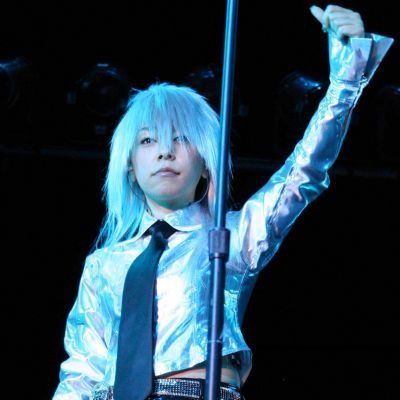
The acting in Tsuyokiss is a notable highlight, featuring a blend of seasoned voice actors and newcomers to the anime scene. Nana Mizuki, in the leading role, single-handedly carries much of the show’s weight. This is fitting, as she is indeed the central character, delivering the majority of the lines. Without revealing spoilers for the final episode, her performance is truly commendable. While the placement of Mai Nakahara’s contribution is debatable, Norio and Takehito Koyasu undeniably shine when given the opportunity.
The anime’s theme is particularly interesting, given its origin as an adaptation of a TEROGE (or perhaps a flawed adaptation of an eroge). Sunao’s forte is acting, which perfectly aligns with the fact that the acting is the most compelling aspect of the show. This thematic connection, I believe, is what makes the show stand out.
Considering the director’s previous works, such as Mahoraba and Maburaho, which elicited mixed reactions—some finding them terrible, others good—Tsuyokiss employs a straightforward, repetitive formula. Its originality stems from the shift in focus and theme, which amplifies the acting cast’s impact. The execution is simple and farcical, and it genuinely felt like everyone involved was having fun. This enjoyment manifested in two ways: the ease of cutting corners in a TEROGE adaptation and the amusement derived from mocking such adaptations. While the show maintained a serious tone, it only went through the motions as much as was strictly necessary.
Some viewers were disappointed that the anime’s opening sequence (OP) was not the game’s OP. What’s worse, and the disgruntled viewers are correct about this, is that the anime’s OP is undeniably awful. However, the final episode offered a pleasant surprise when the sound effects team and voice actors collaborated to aurally annotate the OP. Despite the subpar animation and music, it managed to capture the “energy” of the game’s OP. It was an enjoyable experience, and it seems the director leaned more towards Mahoraba’s style than Maburaho’s in the end.
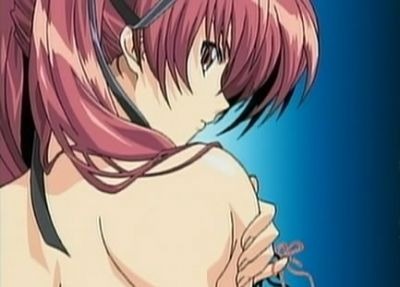
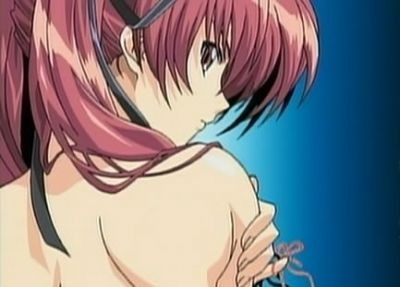
Speaking of the ending, both the series’ conclusion and its ending theme are worth mentioning. The ending theme is a beautiful piece composed by KOTOKO, and Kaori Utatsuki’s rendition effectively conveys the intended emotion. The tastefully posed, well-illustrated naked characters certainly contribute to its appeal. As for the anime’s overall ending, I will refrain from spoiling it, even though it is quite predictable. It suffices to say that the series concluded on a positive note, providing adequate closure that capitalized on the build-up over its 12 episodes.
You might also be interested in : The Call to Revisit or Purchase Unseen: A Look at Kanon
In the context of Air Gear, Tsuyokiss can be seen as a trick. It’s a cheap trick, certainly, but perhaps it garners less criticism than the similarly cheap trick that was Soul Link. Alas, having watched it, I am left with few people to share my thoughts with.