UlasanAnime.com – The article “Jintai 3 Redux: We Are, Again, All Part of the Problem” delves into a critical analysis of the anime “Humanity Has Declined,” specifically focusing on its third episode and its satirical elements. The author begins by referencing various online discussions about the series, indicating a desire to explore the themes more deeply and interpret the show as a proper satire. This interpretation assumes certain norms as positive defaults within the context of “Humanity Has Declined.”
A key point of consideration is the basic ability to access meat as a food source, reflecting on the living standards of the Main Character (MC), who serves as a UN mediator. The author intends to analyze the episodes not in isolation but as a collective narrative, examining elements like the fairies, their factory, sentient chickens, mysterious industrial products, and the village girls’ reluctance to slaughter these creatures.
The setting of the anime, while superficially resembling 19th or early 20th-century rural life, is noted to incorporate anachronistic elements like electricity, books, and steam automobiles. This suggests a thematic rather than a strictly historical setting, possibly European-inspired. The author acknowledges the potential for “Jintai” to weave popular cultural references into its narrative, citing the presence of a regulatory agency overseeing the MC’s livelihood and her friends, a concept more aligned with late 20th/early 21st-century living, alongside readily available electricity.
You might also be interested in : Humanity Has Declined 3: We Are the Fairies
A pervasive feeling evoked by the third episode is a reminiscent connection to the settings of classic British literary figures like Bronte or Austen, authors whose works are often mandatory reading in American education. The author posits that these literary influences continue to resonate, even in Japanese culture and subcultures like BL (Boys’ Love), and speculates about the potential tracing of modern “moe” culture back to 19th-century German literature.
However, the author questions whether “Jintai” achieves the same level of smooth yet cunning satire as these literary works. The personal opinion is that the subject matter presented in the first three episodes is not portrayed positively. Instead, the series explores multifaceted issues, with some aspects of these issues being absorbed into its post-apocalyptic setting as farce, others being openly mocked, and some presented as food for thought, humorously concluding with the observation that “we cannot fly.”
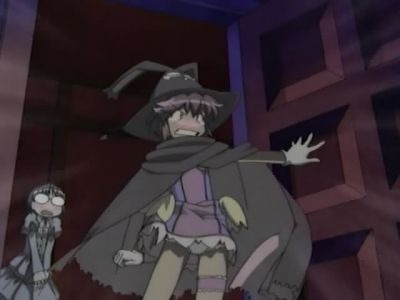
Extrapolating from episode three’s focus on BL and “fujoshi” (female fans of BL) mockery, the author suggests that the satire extends to popular entertainment and fan-driven culture in general. This interpretation is supported by the primary mission of “Y” (presumably a character or entity within the show), which is to archive human history, technological advancements, and culture – a task that ultimately seems to be of little concern to anyone. This apathy is reinforced by plot points such as the UN’s indifference to “Y’s” activities, society’s lack of interest in “Y’s” references to “comiket” (a large fan convention), and “Y’s” own disinterest in her assignment.
The author concludes that this permissive attitude, allowing “Y” to utilize technology and resources without much oversight, is precisely the attitude being satirized in episode three. While it might seem acceptable for the girls to pursue their own interests, even obsessing over romantic plotlines in upcoming manga volumes, and for “otaku” culture to persist, episode three explicitly validates its cultural value and propagation mechanisms. However, the author questions how one can view “Y’s” actions as positive without disregarding the show’s overall setting. While perhaps permissible, the question remains whether it is beneficial.
This critical examination is presented as a universally taught, quality trait of satire, again drawing parallels to Austen and potentially Swift. The author decides to conclude their analysis, humorously remarking that they might be heading towards a specific circle of hell reserved for those who delve too deeply into such discussions.