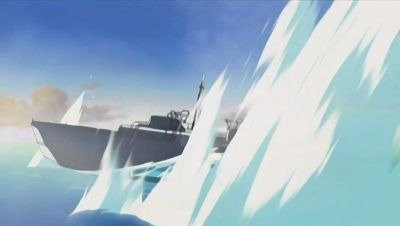
UlasanAnime.com – This article delves into the complexities surrounding the inclusion of the song “Katyusha” in the anime “Girls und Panzer,” particularly its absence from the Crunchyroll stream in several international markets.

The author references a piece by Brickmuppet regarding Crunchyroll’s role in the anime market. However, the discussion quickly expands to encompass the global reach of Crunchyroll’s streaming services, which extend beyond the US to include Canada, the United Kingdom, Ireland, Australia, New Zealand, the Netherlands, Scandinavia, and South Africa. This wide distribution highlights the significant logistical and technical challenges involved in content licensing and alteration.
Furthermore, the article points out that Sentai Filmworks holds the North American license for “Girls und Panzer.” This raises the question of why Crunchyroll would be expected to handle any licensing issues related to the song, especially given that Sentai is the primary licensor in the region.
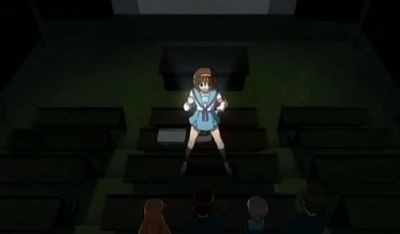
A direct inquiry to Crunchyroll customer service revealed that they were aware of the potential issue and had requested the licensor’s permission to include the song. However, the licensor ultimately decided against it. This decision appears to be further corroborated by observations made by Beta Waffle and noted by Metanorn. Specifically, the song “Katyusha” is not present in the credits of the Crunchyroll version of the anime. This omission strongly suggests that the decision to edit the credit scroll was made in Japan.
The article then explores the question of whether “Katyusha” is in the public domain in Japan. The author speculates that, based on Japan’s copyright law, which often aligns with WIPO’s standards (life + 50 years), the song might still be under copyright. The creators of “Katyusha” passed away in 1973 and 1990, respectively. Therefore, under a standard copyright term, the song would not yet be in the public domain in Japan. While acknowledging the possibility of complex legal nuances, the author suggests that any copyright clearances within Japan would likely have been easily managed by the publisher, given the committee-based production structure common in Japanese anime.
In a broader commentary on media reporting, the author expresses frustration with certain anibloggers who, in their opinion, engage in misinformation. The example given is the unsubstantiated claim that Apple’s patent was provisionally invalidated. The author argues that such reporting constitutes a public disservice and suggests that watching a TEDx talk on chanting mantras for Gaia would be a more productive use of one’s time. The underlying sentiment is a caution against oversimplifying or misinterpreting complex legal matters, such as copyright law. The author concludes by stating that copyright is an intricate subject, often beyond the grasp of even average lawyers, and should ideally be left to experts to decipher.
You might also be interested in : Slowcast Season