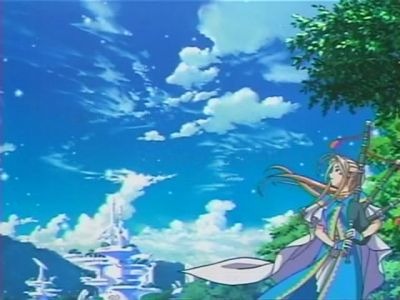
UlasanAnime.com – As the summer heat intensifies, bringing with it humid air and pavements shimmering under the sun, one might crave anime that evokes a similar atmosphere, perhaps like “Aria,” or conversely, something as chilling as a scene from “Spriggan.” However, this summer’s viewing prospects remain uncertain.

Here’s a look at some of the anime I’m currently following.
I’m keeping up with “No. 6.” I wanted to address the homoerotic gazes in this series upfront. These scenes can be bothersome because they introduce a prolonged pause where tension between the two male protagonists is expected, leaving one to question the nature and purpose of that tension. This can pull the viewer out of the immersive experience of the mystery surrounding the killer bees, which is likely the primary draw for viewers who aren’t specifically seeking BL content. On a typical day, I tend to engage in critical thinking, and when a show invites such scrutiny, I find myself leaning towards a negative perspective. This isn’t necessarily a fault of the show, but rather my personal approach. Some anime encourage introspection and a detached consideration of the narrative, while others aim to draw the audience directly into the action. Neither approach is inherently superior or inferior, but sometimes these differing intentions can clash.
This reminds me of the game “Magicka,” which thrives on its solid gimmicks. Gimmicks can indeed be effective. This is partly why I still enjoy “R-15” so much, even halfway through. Compared to a show like “Yuruyuri,” the gimmicks in “R-15” feel random yet somehow organic. It’s akin to Xavier’s School for the Gifted, where students possess special abilities. However, in “R-15,” these “powers” are not conventional mutant abilities but rather derived from what could be described as “the most random, most Japanese crap-anime plot generator.” Some of these “powers” are remarkably creative, to the point where one might need to delve into fanfiction to find comparable concepts. And generally, we prefer to avoid that territory.
It’s easy to label a show as more organic than “Yuruyuri,” precisely because “Yuruyuri” feels rather inorganic. I’m not entirely sure why, but its timing, direction, and general animation seem stale. The writing, however, manages to work well with these perceived shortcomings, and once the main characters become more tolerable, the humor starts to land. This might be a testament to the strength of the writing. The staleness isn’t necessarily a negative trait, but it does make forming a good first impression challenging. When executed effectively, staleness can lend a show a unique flavor, much like how stale bread can sometimes be quite delicious.
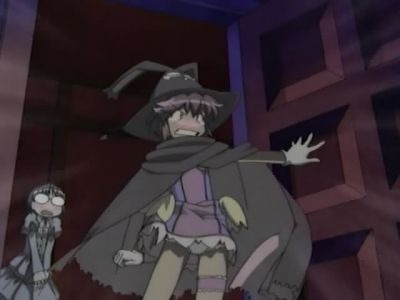
Speaking of stale bread, Yune has a scene with stale bread that might be the cutest in anime history. While it’s not a recurring element, “Croisee” is a sharp anime that feels somewhat out of its element. It’s missing a crucial component that would elevate the enjoyment to the next level. For “Aria,” that element was its skillful channeling of mono no aware. As it stands, “Croisee” is simply a cute and well-executed show.
That’s also how I feel about “Ro-Kyu-Bu.” It’s peculiar how one show might be labeled as lolicon while the other isn’t, despite their similarities. It’s a fine line, and the perception can be quite subjective.
I’m thoroughly enjoying “Usagi Drop,” but I’d prefer not to discuss it in too much detail just yet. Perhaps after it concludes, and I might even delve into the manga then.
It’s also clear that I’m greatly enjoying “Mawaru Penguindrum.” In a way, this is the anime I had always hoped for after watching “Utena,” so it’s been a long time coming. I find it difficult to articulate its impact fully; there’s a simple, calculated, yet visceral quality to its direction. It feels theatrical, like a play, but not excessively over-the-top. Perhaps my familiarity with more exaggerated content makes this feel more grounded. Considering its Thursday slot and the equal measure of fan service, I suspect it’s in direct competition with “noitanima.” It also makes me wonder which show has done this before. Fuji TV, it’s time to step up your game.
I’m still keeping pace with “Sket Dance.” It might be a form of penance. Without the stylistic flourishes that surround “Gintama,” I find “Sket Dance” to be a cleaner rendition of a similar concept. It also bears a slight resemblance to “Nadesico,” particularly in how Yurika and her crew would consistently flash peace signs at the camera—something I’m also watching it for (much like how dm is watching CCS).
And oh, episode 16 was AWESOME. Especially for a show as seemingly inorganic as this advance-formula Jump anime.
Regarding “Blood-C,” I admit I’m behind, but it’s not bad. It just doesn’t truly grip me until around episode 5, and I haven’t reached that point yet. It’s a bit of a delicate situation; the Nico comments significantly boost its entertainment value, but I can’t say too much about the source material itself.
I’m also behind on “Blue Exorcist” and “Tiger and Bunny.” I simply lack the time to catch up now that I’ve fallen behind. Hopefully soon! I do enjoy both series (especially “T&B”), so I’m optimistic about making progress before any major climaxes occur.
Shifting to newer series: “The IdolM@ster” is performing well. Is it canonical to spell it “The Idol Master” when the “@” symbol is an illegal character in titles? Or is there another reason? Regardless, this show hasn’t disappointed, though my initial expectations weren’t particularly high. Still, given how much I loved episode 1, the subsequent episodes have a lot to live up to. Furthermore, this is clearly an anime designed for fans of the game, which is quite refreshing. It’s executed well enough to keep me engaged, offering an episodic focus on characters while expanding on the rest of the cast, as much as reasonably possible. The Producer main character is interesting enough, highlighting something compelling from the game as well. Perhaps someone could elaborate on the significance of asserting the alter ego in first-person ADV games where the overall narrative is driven by interpersonal drama, a blend of “Sakura Taisen” and “IdolM@ster” perhaps?
“Kamisama Dolls” is quite decent. I’m not particularly fond of the character designs either (though it does make Utau cuter than she should be), but the story is brisk and enjoyable. It offers a little bit of everything to make it worth watching, even if the conclusion feels somewhat predictable.
Speaking of predictability, there’s much to be said about it in “Nichijou.” It serves as a rather high-quality textbook example of how to implement such techniques. Is it executing predictability correctly? For the most part, yes; but that doesn’t automatically guarantee that the jokes will land. For direct meta-humor, I’m not sure how to put it into words. It’s like if “Nadesico” (again) is an anime about the meta-commentary of everything it does, then “Nichijou” is meta enough about its own execution to attempt something with it. Whereas a show like “SeiZon” is straightforward meta. It’s comparable to how in MLB, hitters adjust their swings to counter-game the scouting reports on them throughout the long season?
“Mayo Chiki” is somewhat similar to “Seizon” in its meta-approach, except it’s straightforward enough to deliver jokes internally. Unfortunately, it can be quite boring if the lead characters don’t resonate with you. I’m not convinced they have yet.
It’s been a busy summer season, continuing from an equally busy spring. “Hanasaku Iroha” continues to set the benchmark for how effectively anime can entertain. It falters at times yet succeeds at others, and like many series this year, its presentation is generally solid. The key differences lie in their storytelling prowess. It’s unsurprising that the anime with the best storytelling (at least in terms of consistency) is also one of the most popular and anticipated series this year: “Steins;Gate.”
On a completely random note regarding stories, congratulations to Maaya Sakamoto and Kenichi Suzumura on their marriage. It’s pretty awesome—they have canon OTP roles! There’s Shiki x Kokutou from “Rakkyo,” Haruhi x Hikaru from “Ouran Host Club,” Lunamaria x Shinn from “Gundam SEED Destiny”… and some less canonical pairings, like Sakaya Nakasugi x Shamyalan from “Birdy Decode.” Both voice actors are from the same agency, and despite the 5-year age difference, Sakamoto debuted before Suzumura. I suppose they consider themselves from the same “era.” Regardless, congratulations to two of my favorite voice actors! You can find a full pairing list here.
You might also be interested in : Sales Data for DVDs and Blu-rays