UlasanAnime.com – The term “moe” has been a subject of debate and discussion within the anime fandom for a long time, often leading to passionate arguments. While some dismiss it as a trivial concept, this article delves into the nuances of “moe,” arguing for a more inclusive and perspective-centric understanding of its appeal.


The question of what constitutes “moe” and why it resonates with people is a recurring theme. It’s a topic that has been thoroughly debated, even before it became a prominent discussion point in the English-speaking fan community. When the term resurfaces, it often ignites a clash between language purists and evolutionists in an ongoing debate.
While the “sub vs. dub” argument has largely subsided due to technological advancements like soft subs and multiple audio tracks, disagreements persist regarding subjective aesthetic appreciation. The author suggests that perhaps a more productive approach is to acknowledge the subjective nature of these discussions.
Sometimes, navigating online discussions requires a firm stance against unproductive arguments. The author implies that not all debates are worth engaging with at length.
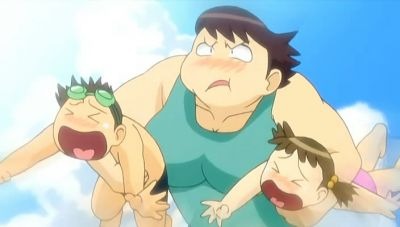
The sentiment that certain characters “cannot be moe” is often expressed, highlighting the subjective nature of the term. The author posits that the real question isn’t about right or wrong, but rather understanding the reasoning behind such declarations. It’s evident that “moe” is a highly personal and subjective concept.
A more valuable approach, according to the author, would be to focus on identifying and categorizing different types of “moe” as perceived by various individuals. Instead of simply disagreeing on whether a character fits the “moe” mold, it’s more practical to understand why certain people would consider them so. This insight can be a powerful tool, even for generating engaging discussions or playful trolling.
Character design often breaks down “moe” into various categories. A broader perspective on how “moe” is redefined through different eyes is essential. The author mentions a common paradigm, particularly disliked by them, illustrated by a sketch from “NHK ni Youkoso?” on “how to make an eroge heroine.” This sketch suggests a formulaic approach to character design.
However, characters are not merely a collection of interchangeable traits or fetishes. A skilled character designer creates a design that impresses with its overall aesthetic value, rather than just the sum of its individual components. These elements work harmoniously, much like fashion, where colors, accessories, and focal points are carefully chosen and accentuated by less prominent features that complement the overall composition.
The concept of “moe,” therefore, aligns with a more comprehensive and holistic view of what is appealing. It offers a way to describe the reality of anime, game, and manga character designs that transcends mere words. This holistic aspect is likely why “moe” is so often debated and difficult to quantify. Even by its most basic definition, “moe” describes an overall effect that captivates the audience, rather than a specific, isolated feature.
Despite this, some parodies and interpretations of “moe” tend to focus on the “sprouting” aspect of its literal meaning, rather than treating the term as a standalone concept. For instance, the question of whether a character like Darry is “moe” is met with an affirmative response. In this sense, “moe” functions as a compelling motivation rather than a purely physical description. The author believes this interpretation is more practical and less contentious, though it’s not widely adopted by English-speaking fans.
You might also be interested in : A Treat for All!
Ultimately, “moe” touches upon the motivations of individuals and what makes them tick, which is its true essence. It is undeniably subjective, but it’s more about our overall perception and less about trying to assemble a checklist of traits. The latter approach should only be considered within the context of the former.