UlasanAnime.com – Sometimes, you encounter something that is undeniably well-crafted, beautiful, meaningful, and unique, yet you find yourself completely unable to enjoy it. In such a situation, you might question why that is, perhaps subconsciously searching for a missing piece in its otherwise impeccable construction. It’s like trying to solve a jigsaw puzzle without a reference picture; the elusive piece you can’t find obscures the entire image, and you continue searching until your drive to care is exhausted.
Reflecting on my earlier days, this was a common occurrence, particularly in most of my high school English classes. We would read classic literary works, but many of them just didn’t resonate with me. The few that did became favorites, but their scarcity meant I was often bored because I “didn’t get it.”
However, perhaps there was nothing particularly profound to “get.” Understanding Shingu is no more complex than trying to understand Stellvia, or so I surmise. What truly shines in Shingu is its ensemble cast. In fact, it might be the best example I’ve seen in all of anime of an ensemble cast that is entirely integral to the story. While Jeff Lawson’s blog post (linked above) omits a great deal, he does capture the essence of why Shingu is a remarkably well-constructed piece, even if he doesn’t explicitly state it. And he lied—he actually enjoys Stellvia more!
But perhaps it’s like eating chocolate: do you savor the substance or the flavor? Is it akin to how Cowboy Bebop tests your tolerance for spicy food and makes personality judgments based on that? (No.)
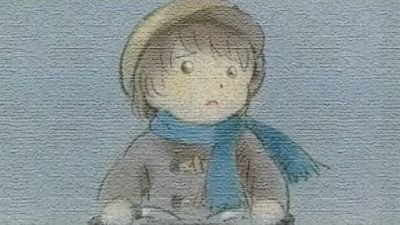
More simply put, what am I missing from Shingu? My interpretation is that the show aims to mimic realism by offering a slice-of-life perspective. Hajime Murata acts much like a Kyon, except he possesses an unusual aptitude for communication and understanding. He’s not just an eighth-grader who can comprehend alien technobabble because he enjoys science fiction (though you can see him discussing Star Trek or its 2070 equivalent), but also someone who can grasp people’s feelings. What’s perhaps most interesting is that Ha-chan’s “power” isn’t uncanny; rather, it’s supremely rare by all accounts.
My favorite aspect of this is likely how the show effectively demonstrates its ensemble cast. The dinner-time conversations between characters, the artful use of silence, the choice of dialogue topics, and the interactions within the Murata family, Futaba, and others. Witnessing a typical family grapple with making ends meet and addressing each other’s emotional needs is depicted. This extends even to minor characters like Hikaru Inagaki, Isozaki-sensei, and the tea-drinking visitor Wennul, let alone less-minor characters like Harumi Mineo. It paints a picture of the ordinary, both in ordinary circumstances and in distress. These are 26 episodes exceptionally well spent and paced.
The show dedicates significant resources to contrasting the ordinary with the extraordinary. This isn’t solely about Muryou (who is, essentially, Superman as a Japanese eighth-grader), but also about how these extraordinary individuals—beings capable of destroying galaxies, commanders of secret Japanese alien fighter clans, or beings who have lived for thousands of years—praise Murata, a normal human being in our eyes. And this praise is never patronizing. This contrast reappears throughout the series.
Well, that’s just one thread I could elaborate on. Shingu is replete with such excellent elements. With Muryou alone, I could spin lengthy, winding paragraphs about how this Superman character serves as an alternative societal norm in a satirical sense. Or how the fusion of the ordinary and extraordinary makes boring old Earth itself a point of conflict between intergalactic space alliances? Or even what the sage-like pronouncements Muryou made in his debut truly signify, even after viewing the entire series?
But amidst all this, perhaps it’s beneficial to recall the purpose, the central struggle of Shingu’s overarching plot?
Shingu is a story about people’s hearts—much like Nadesico and Stellvia. And perhaps, unlike those two shows, Shingu addresses this theme on a more surface level. It’s a different kind of treat, and after navigating such meta-commentary for so long, it’s quite disorienting.
World Peace Banzai? Perhaps Princess DNAra could learn a lesson here. MASUGU GO!
You might also be interested in : Too Predictable, Too Dark
Perhaps it will all become clearer after further contemplation. Tatsuo Sato’s work tends to be densely multi-layered yet appear ordinary at first glance. Here goes.