UlasanAnime.com – This article delves into observations and discussions surrounding the anime “Shirobako,” specifically focusing on episode 2 and related fan interpretations.

The author notes a plan to publish a more detailed analysis on Jtor but decides to jot down preliminary thoughts in a blog post format for immediate sharing. Two points are highlighted for discussion: a 2ch thread attempting to map the “Musani” staff to real-life individuals, which appears largely successful, and a comment from a fellow seiyuu enthusiast humorously remarking on the discrepancy between anime character attractiveness and their real-life counterparts.
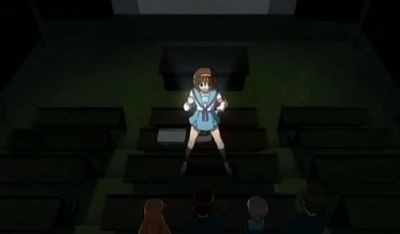
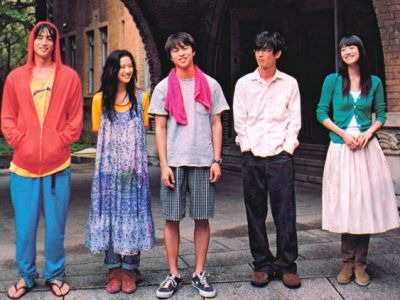
An interesting observation is made about how the anime’s “prpr mode” or critical viewing lens shifts when discussing characters versus real people. The author posits that anime characters, by nature, are caricatures and often lack detailed realism. While “Shirobako” generally employs a lifelike character design approach, reminiscent of other PA Works productions, a visual comparison is presented to illustrate the point.

The author believes that fellow seiyuu fans would agree that Kayano Ai’s distinctive “puppy-like” eyes are well-captured in her anime counterpart, particularly through the accurate portrayal of her eyes and bangs. In contrast, Nakahara Mai is deemed more challenging to represent in an anime style due to her defining facial features, such as her nose and facial bone structure, which lend her a sharp look. These features are difficult to depict when many anime characters lack pronounced noses. Furthermore, the author points out that Kayano’s “puffy cheeks” are easier to reproduce in a late-night moe anime style compared to the more mature looks associated with Nakahara and Itou. However, they also acknowledge that Itou Shizuka’s forehead and hairstyle significantly contribute to her character’s representation in the anime, making her easily identifiable at a glance.
A question is raised about whether these real-life characteristics were considered during the seiyuu casting process. The author speculates that there might have been a casting call for these three actresses to voice themselves while also portraying characters within the anime, suggesting a meta-narrative layer beyond typical “CV: Casting Voice” concepts.
Addressing the comment about attractiveness, the author states that even considering the “3DPD factor” (likely referring to photorealism or perceived attractiveness), anime characters exhibit a range of beauty. They believe “Shirobako” also presents this spectrum among its five protagonists, refraining from comparing the attractiveness of the anime characters to their real-life counterparts.
The author praises Kayano Ai’s performance in episode 2, likening it to a lesson from a seiyuu school. They suggest that listening to seiyuu radio shows can be insightful, citing Hayami Saori’s demonstration at her Otakon panel as an example.
Regarding the episode’s content, the author expresses strong admiration for how the plot unfolds and how the anime utilizes anime-specific narrative devices to illustrate Arupin’s arrival. They also appreciate the portrayal of Maruyama as a sort of patron saint for struggling TV anime productions, noting that his inclusion in a meeting scene is both endearing and humorous due to his lack of tangible contribution. The author playfully wonders if a “Shirobako-type” anime could be made about the production of a movie that takes seven years to release.
A postscript mentions that “Onee-chan” is Nu, but laments that she does not receive an anime character cameo, expressing a desire for an anime version of Nu.
You might also be interested in : The Memo I Didn’t Write: The IDOLM@STER Movie: Beyond the Brilliant Future
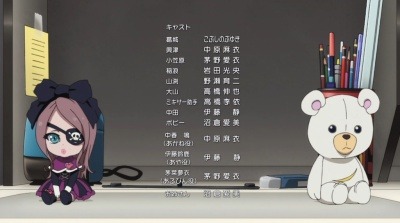
A second postscript confirms that the ending animation (ED) for the week, which was actually the opening animation (OP) from the previous week, was handled by the core team and directed by Mizushima.