UlasanAnime.com – The exploration of diverse voices and the social structures that shape artistic creation is a complex topic, often leading to a deeper understanding of the creative process. This discussion delves into the nuances of how different perspectives contribute to the richness of anime and the discourse surrounding it.
The initial reflection questions the nature of exceptions to a perceived norm, hinting at a broader societal or fandom-driven expectation. It prompts consideration of who these exceptions might be and what defines them.
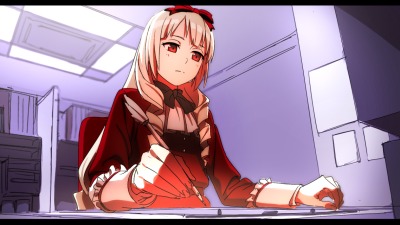
A central point emerges regarding the tension between the diversity of voices and the blogger’s inherent need to engage and entertain their audience. The author posits that the kind of discourse found in, for instance, pre-production meetings for anime projects, and the general principles behind large-scale artistic endeavors, should be multifaceted and cut across various dimensions.
It should not be surprising to witness a character like Kinoshita discussing Arupin’s core concept. What should be remarkable is the evident passion behind such discussions. Similarly, the emotional investment shown by Aoi crying for characters in a squad is presented as a surprising display of depth, contrasting with more superficial observations like discussing the “type of cloud.”
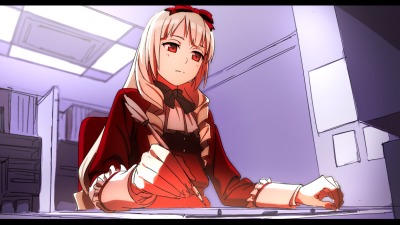
The power of the art board, a crucial element in visual storytelling, is highlighted as something often overlooked in online discussions. Hearing it discussed in an anime like Shirobako is likened to discovering an exceptional anime blogger whose every word resonates with the reader.
This sentiment echoes a previous observation, emphasizing that the fruits of passionate labor should be what fans anticipate. The example of Goripon is brought forth to illustrate this point, serving as another reason why fans often deeply adore series like Anim@s.
The discussion then pivots to the idea that more sensitive and constructively debated dialogues can uncover the diverse voices that often inhabit the less-traveled paths of creative expression. This is contrasted with the limitations imposed by certain online mentalities, such as “reddit-ism” or “channer mentality,” which can hinder nuanced discussions and contribute to superficial engagement, for example, in video game review scores or a general disinterest in specific details.
Anime, in the author’s view, is fundamentally about details. This is why discussions surrounding concepts like “cour” (a broadcast season) or “slice of life” are relevant. These elements matter when moving beyond broad stereotypes and genre norms. It explains why subversion in anime is effective and relatively common.
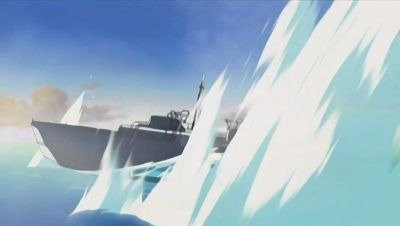
The focus is not on how stories are mandated to present certain elements upfront, as that represents a starting point. Instead, the emphasis is on why things are presented in a particular way. Expanding on the example of Kancolle, the author notes that what is not explicitly stated in the anime can be as significant as what is communicated directly.
However, this also touches upon consumerism more than the actual production of anime. While Shirobako offers educational insights, it also underscores our own ignorance. In many cases, writing about Shirobako can feel like allowing that ignorance to dictate the narrative. Similar to Kancolle, what remains unknown can be as telling as what is known.
This leads to the consideration of “perspective,” which heavily influences how audiences interpret reviews. The author expresses appreciation for another reviewer’s perspective, acknowledging it as something they do not possess and, at times, struggle to fully grasp the origin of.
Returning to Shirobako, the author notes that the series initially presents a dutiful uptake. This prompts a question about the extent to which “duty” within fandom is closer to a form of Stockholm syndrome rather than pure, passionate dedication driven by genuine enjoyment. Yet, when the perceived “captors” are as benevolent as they are in some fandom contexts, the distinction might blur for many.
You might also be interested in : Persepsi tentang Hak Cipta
The author concludes by stating that while they personally care about these distinctions, it is not a requirement for others. It is perfectly acceptable to exist within a fandom in a particular way, just as it is valid to appreciate a certain aspect of a series without overthinking the underlying motivations. This acceptance extends to situations where the “hostages” are not in a violent scenario, implying a more relaxed and enjoyable engagement with the medium.