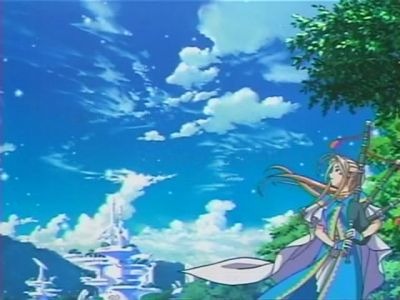
UlasanAnime.com – The comparison between “Heroic Age” and “Star Trek” is an interesting one, highlighting a shared “geek-utopia” essence that permeates both franchises.

The extensive literature surrounding the Star Trek franchise delves into its unique culture and its appeal to geeks. Imagine a scenario where “The Next Generation” wasn’t about Captain Picard’s discoveries, but rather Deanna Troi’s younger, innocent sister guiding the Federation toward reconciliation with a peculiar version of the Borg. If you then replace the technobabble with phrases like “hoshiboshi no michibiki,” “staarrrrway,” and “the power of the Golden Tribe,” you begin to capture the spirit.
One might even ponder, what if Q were the one raising Age?
The underlying sense of utopia, underpinned by reason as a common principle for all sentient beings in the universe, appears to be the core of the Star Trek universe and a consistent theme. In “Heroic Age,” this is also the established order of the world.
Shifting focus to a present and persistent critique:
Within the series, it’s important to recognize that, much like many other space science fiction narratives, interstellar travel presents a significant challenge and often serves as a major plot point. This is as true in “The Heroic Age” as it is in other anime within the same genre. The method of space travel in each sci-fi setting is a crucial element for the storyteller to consider and develop. This is a significant “Kero-chan Check” point for world-building, akin to character design. However, within the series thus far, a clear explanation of how faster-than-light (FTL) travel functions has been conspicuously absent.
The author believes it’s a considerable disservice to the audience not to understand the mechanics of this pivotal plot device. This is particularly true given how it connects to DNAra’s singular and unique power, which is revealed later in the series.

You might also be interested in : Manabi’s Saimoe 2007 Support
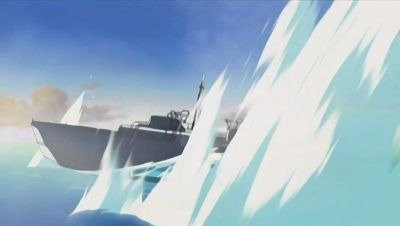
Along similar lines, real-time space maneuvering in “The Heroic Age” seems to mirror that of “Starship Operators.” It takes a considerable amount of time to move objects around, with battles often spanning days, weeks, or even months to resolve. Despite this, the combat itself often feels somewhat reminiscent of “Star Wars.” The Nodos in “Heroic Age” serves as both a helpful and detrimental element. While it strips away a degree of realism, it also prevents the narrative from becoming monotonous. Nevertheless, the combat sequences in the show are still perceived as rather dull, and the author is unsure of how this could be improved.