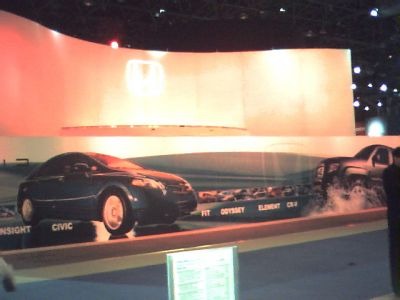
UlasanAnime.com – Kamiyama Kenji’s latest film, “Ancien and the Magic Tablet,” also known by its Japanese title “Hirune-hime ~ Shiranai Watashi no Monogatari,” offers a compelling cinematic experience. The movie primarily unfolds in Okayama, imbuing the narrative with a distinct local flavor through its heroine’s charming accent. The film subtly weaves in fascinating trivia, such as the origin of Honda’s first motorcycle, the “Dream,” and the recurring motif of wings in Honda’s branding and slogans.


Light spoilers follow.
Director Kamiyama’s personal touch is evident, as he revealed during a post-screening Q&A that the film was conceived as a message or a work for his daughter. This perspective helps contextualize many of the story’s elements, making them resonate more deeply.
You might also be interested in : Kemono Friends: The Lost Art of Friendship
The adventure sequences in “Ancien” are particularly engaging, reminiscent of the thrilling chase scenes in “Eden of the East.” These segments often see the protagonist, Kokone, embarking on fantastical journeys in her dreams alongside her plush toy companion, Joy, voiced by Kugimiya Rie. The film skillfully transitions between dream and reality, sometimes blurring the lines even when the characters are not explicitly dreaming. Kamiyama’s execution of this narrative device is commendable.
However, a recurring point of contention for some viewers, including myself, is the film’s pervasive focus on Honda and autonomous driving. While the surface narrative doesn’t overtly center on these themes, their presence is undeniable and, at times, feels overwhelming. The film’s exploration of Japan’s struggle with modernization, using the auto industry as a prime example, can overshadow the expected dream-like adventures.
Kamiyama’s inclusion of CMU (Carnegie Mellon University) and a nod to DARPA teams adds a layer of intellectual depth, showcasing his thorough research. The film also aims to engage adult audiences, with allegories that astute viewers can discern early on. These references, particularly to Honda, serve as a narrative anchor amidst the fantastical elements.
Visually, “Ancien and the Magic Tablet” is a masterpiece. The CGI is seamlessly integrated, enhancing key moments such as Kokone’s exhilarating run through a fantasy cityscape. The film blends steampunk-inspired aesthetics with the serene rural landscapes of Okayama and the vibrant energy of urban centers. The diverse array of car and motorcycle designs, including a special, memorable motorcycle, adds visual flair. Fans of video game soundtracks will appreciate the inclusion of music by Shimomura, who previously worked on the “Final Fantasy XV” score.
In conclusion, “Ancien and the Magic Tablet” is a well-crafted film that expertly merges fantasy and steampunk science fiction with a reality that can, at times, feel extraordinary. Its strong thematic undercurrents might be subtle, often playing second fiddle to the foreground narrative. The film’s proposed solution—a daughter communicating with her grandfather—is particularly resonant. The Japanese title, translating loosely to “Napping Princess ~ the story I did not know,” might set a unique expectation for viewers. It is a film suitable for family viewing, aligning with Kamiyama’s reputation for delivering thoughtful and engaging works.