UlasanAnime.com – In a continuation of thoughts on HanaIro, before shifting focus to Anohana.
The community of anime enthusiasts, particularly those in the West, is remarkably diverse. This diversity likely surpasses that found among domestic late-night anime viewers, critics, NEETs, academics, and industry professionals in Japan. Across the Americas alone, individuals hail from an extensive range of backgrounds. Some may be Japanese expatriates, passionately engaging with content like Saint Seiya as if it were still 1995 in Brazil, while others could be American girls from the Midwest, reminiscing about their teenage years and cherishing shows like Sailor Moon. However, one might question if these demographics would even be watching the same late-night anime in the first place. This perspective, though seemingly contradictory, highlights a potential similarity in the shared passion for anime, regardless of origin.
Yet, when we move beyond the specific context of anime consumption, the differences become stark. We see divergences akin to the left versus the right, conservative versus liberal, rich versus poor, empowered versus disenfranchised, and homogeneous versus diverse. The core distinction can be simplified to: Japanese, or not Japanese. It’s an evident truth that the world is a varied place, especially outside of Japan.
This inherent diversity is, I believe, a significant aspect of anime’s power as a cultural export. It possesses the ability to establish its own unique rules, context, and a distinct cultural database. Through this shared, yet foreign, experience, we can find common ground. Unlike, for instance, food culture, which is universally familiar, anime often presents a novel experience to everyone, potentially even to many within Japan itself, especially certain types of anime.
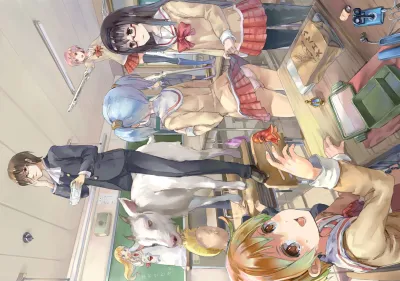
Hanasaku Iroha serves as a clear illustration of this cultural divide. It’s akin to compelling individuals to watch Japanese television dramas. While the events in Hanairo might be considered an extreme example, for many, they may not seem that far removed from reality. Experiencing a physical reprimand from a grandmother is undeniably an extreme event. However, the cultural interpretation of such an event, whether occurring within an Indian or Chinese household versus a typical white, urban American household, is often better captured by American comedians who humorously depict immigrant families interacting with their new neighbors and classmates.
You might also be interested in : Adjusting Expectations, Rape as a Plot Device
How seriously should this demographic of Gen-Y/Millennials view corporal punishment? This question becomes even more pertinent when considering that Minko is not directly related to Ze Grand Baba. Would any of them perceive it as a sign of affection and endearment? Similarly, what are their thoughts on Ohana’s elaborate multi-layered dish? I’m curious to see their reactions.
And this is merely the beginning. Those who have studied Japanese culture or have some familiarity through direct or indirect narratives are likely aware of the Senpai-Kouhai dynamic, so that aspect might not come as a shock. The issue of rape, which I touched upon in a previous post, while potentially misleading in its presentation, does hold a place within this narrative context. It parallels arguments that can be made about the prostitution subtext in Spirited Away. If one considers it carefully, Hanairo isn’t deviating significantly from this established pattern.
It’s so quintessentially Japanese! It almost borders on offending my Chinese sensibilities (though, not truly), let alone my American ones (I think, I’m not entirely certain). Fortunately, the Western anime-blog-otaku-fandom sphere is already adept at expressing outrage, which ironically bothers me more than the thematic elements presented in the second episode of HanaIro. At its worst, HanaIro can’t possibly be worse than Summer Wars (with its Yoko Ono reference). Perhaps, they could introduce Nako with a hidden talent that ultimately saves the day, which would actually improve the show. Wouldn’t you prefer a tall, athletic, and graceful high school girl from the countryside over a character designed to appeal to a younger demographic? This is aside from the contributions of Aki Toyosaki.
And let’s not even begin to discuss the trope of a “bad mom abandoning her kawaii daughter.” This particular element is what elevates HanaIro significantly, making it at least 10 times better than Summer Wars.