UlasanAnime.com – The anime series Shirobako, much like other great works of art, possesses a quality that transcends the need for extensive praise or detailed analysis. It doesn’t require advocacy to be appreciated, and attempting to articulate its merits can be surprisingly challenging.
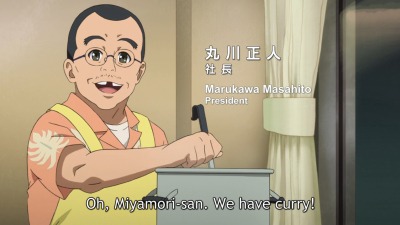
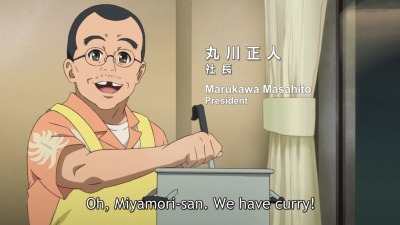
The author of a linked review suggests that truly great anime cannot be spoiled. I would extend this idea further: great anime often doesn’t need to be talked about at all. Shirobako is a prime example; its inherent quality speaks for itself, making it difficult to find new ways to champion it. While one could mention minor details, such as an initial impression of a character like Minami-san being somewhat intimidating, or ponder the culinary skills of Maruyama-san, these feel insufficient to capture the essence of the show.
This quality of self-sufficiency in art is, in a way, a “cheat.” Like all interpretive arts, the audience brings as much to the experience as the artwork itself. The connection forged between the art and its viewer is as profound as the miracle of creation. For those deeply immersed in anime culture, Shirobako’s references to the craft of animation will resonate deeply, disarming even casual viewers and drawing them into the same appreciation experienced by its Japanese audience.
Maintaining the drive and passion for one’s work, much like the characters in Shirobako strive to do in their professional lives, can be as challenging as staying up late to watch your favorite anime. Despite airing early enough in Tokyo to be watched before bed, Shirobako still demands a certain commitment – the dedication to get home, turn it on, and remain engaged without succumbing to sleep.
You might also be interested in : Threads of Existence
Actions, as they say, speak louder than words, and describing Shirobako’s impact proves to be a difficult task. There was a moment, during the viewing of episode 22, where I admit to dozing off. This was less a fault of the episode itself, which served as a bridge to the next, and more a consequence of a long day of touring, late-night drinks, and watching the raw footage. It mirrors the way I’ve internalized the nonchalance of characters like Hiraoka and other representations of the office environment. Have you spent enough time in such a setting to look beyond the surface? This applies not only to your personal experience but also to the dramatized office depicted in Musani. What is considered top-tier work, and what is merely standard fare at the establishment Shirobako portrays? Is your inner child, the one who once dreamed, still awake?
However, precisely because Shirobako offers such a cherished narrative about the production of animation, grounded in a straightforward understanding of the industry that few anime series have dared to explore, it is destined to be remembered as a classic. Its ability to entertain dedicated anime fans, keeping them engaged late into the night, is merely an added bonus.
PS. I found some tweets that struck me as ironic. Perhaps it’s because PA Works consistently strives to create content that deviates from the norm. To suggest, for instance, that Hanasaku Iroha follows a typical J-drama formula misses the entire point. If PA Works weren’t a studio that actively avoids chasing fleeting trends (unlike, perhaps, Glasslip), Shirobako might not even exist, as evidenced by the content found in the volume 1 omake. They place their trust in their creators, empowering them to pursue their artistic visions. Even if this sometimes means enduring a series like Glasslip. To be clear, this issue of entitlement and a sense of undue authority manifests frequently among those who voice opinions on entertainment. My apologies to Toast for using him as an example; this sentiment is widespread. Buhiiiii.