UlasanAnime.com – Subtitles are often viewed as a crutch, a necessary tool for understanding content in a language one doesn’t comprehend. While closed captioning serves a vital purpose for the deaf or those learning a new language, its pervasive use can lead to a dependency that hinders a deeper appreciation of the medium.
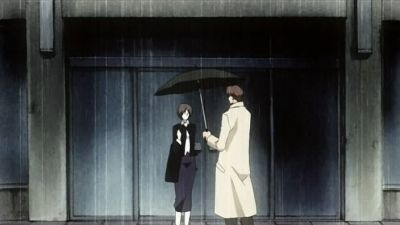
The argument isn’t about dubs versus subs, a debate as futile as choosing between two undesirable options. The limitations of subtitle formatting are evident; cramming extensive dialogue, especially technical jargon as seen in shows like Ghost in the Shell: Stand Alone Complex, into a few lines of text can be challenging. Yet, fansubbers have historically managed this, sometimes employing creative solutions like drop-down boxes or extensive liner notes, though the latter often requires pausing playback and can disrupt the viewing flow.
This reliance on subtitles can foster a sense of dogmatic comfort, a psychological habit that, while seemingly logical, remains empirically unsubstantiated. It’s akin to a child comfortable with training wheels, hesitant to remove them for fear of falling. This dependency can make watching anime without subtitles feel unnatural and incomprehensible, leading viewers to avoid raw anime altogether.
However, venturing beyond this comfort zone can reveal a richer experience. In my own journey, I’ve found that letting go of the perceived necessity of subtitles has been less daunting than anticipated. As a non-Japanese speaker, I often find myself needing translation aids anyway, but the act of seeking them out independently can be more rewarding.
The pitfalls of relying solely on subtitles are twofold. Firstly, it can lead to initial misinterpretations. Shows like Soul Taker, for example, left me bewildered by their vibrant visuals and seemingly “Italian” direction, an impression that almost led me to abandon them permanently. It was only a friend’s persuasion that led me to re-evaluate and eventually enjoy the series immensely, even purchasing the DVDs.
Secondly, and perhaps more significantly, this reliance can isolate viewers from sharing their passion. Many enjoyable raw anime, untranslated and unloved by the mainstream, remain inaccessible to friends who are either unwilling or unable to venture beyond their subtitle “crutches.” While I jest about leaving these beasts to lie, it highlights a missed opportunity for shared cultural experiences.
Ultimately, anime, in its essence, is not exclusively meant to be watched subtitled, with exceptions like Crest of the Stars. A perfectly executed dub often surpasses a perfect sub, unless one possesses a peculiar preference for hyper-literal translations or, of course, is deaf. For those who are not, the freedom to explore anime raw exists.
This freedom allows for a more active viewing experience. One can download raw anime, fast-forward to action sequences, and consult the internet for translations, notes, or even manga adaptations. Rewatching is also an option, and while time can be a constraint, it needn’t be an insurmountable obstacle. Fansubs remain a fallback for those truly stuck.
Over the years, my anime-watching “skills” have undoubtedly evolved. Raw anime no longer seems as opaque as it once did. This could be attributed to improved Japanese comprehension, a deeper understanding of Japanese culture, or simply a better grasp of the art form itself. Perhaps I’ve gravitated towards more accessible shows. Regardless, I remain a Japanese illiterate anime enthusiast, much like many others. What I have gained is a profound appreciation for anime’s visceral, visual, and vivid storytelling, its ability to transcend linguistic barriers and resonate on a level beyond mere words. While not all anime may present the full spectrum of human emotion and experience, many do, especially those set in high schools. For those that remain opaque to me, the diversity of anime likely offers a broader range of narratives and themes.
You might also be interested in : Simoun Wars I: The Rise of Teenage Motifs