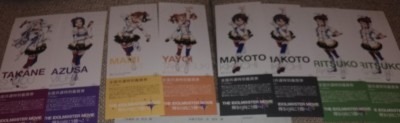
UlasanAnime.com – This article reflects on the author’s personal standing within the iDOLM@STER fandom at the end of 2013, detailing shifts in their character rankings and evolving perspectives on the franchise.
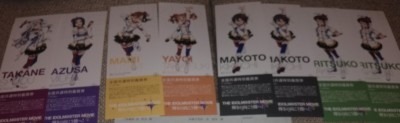
The author begins by presenting their iDOLM@STER character ranking from the previous winter, followed by their updated list for the current winter. This shift in preference, particularly the inclusion of Ami as a distinct entry and the upward movement of Yukiho and Hibiki, prompts reflection on the reasons behind these changes.
The author admits to not fully understanding the exact reasons for these shifts but acknowledges a growing comfort in differentiating between characters like Ami and Mami. They reaffirm their core preferences, still favoring Makoto for her “ramen-chomping sincerity” and Miki for her “rice-balling do-it-all” nature. Mami remains a representation of pure adolescence. The return of Makoto and her voice actress, Hirata-san, is noted with appreciation. The improved standing of Yukiho and Hibiki is attributed partly to their voice actresses’ performances.
Despite the ranking changes, the author emphasizes that they still like all the idols, including Chihaya, which is why they remain invested in the franchise. They also mention a liking for some Cinderella Girls and Million Live! characters, though they struggle to remember their names, a sentiment they extend to remembering real-life individuals.
The author expresses a genuine desire to be a “Producer,” finding the role cool and acknowledging the personal investment already made. However, they also feel they haven’t fully embraced the “otaku spirit” or “paid the cost” in the way they perceive true producers do.
You might also be interested in : 2013: A Year of Love Lab’s Dedication
A significant portion of the reflection is dedicated to the vastness and depth of the iDOLM@STER fandom, which is approaching its ninth year. The author observes how the fandom has grown so large that different segments may not interact, and how fans have come and gone, with some even returning. The franchise’s multi-media nature, originating from video games, sets it apart from others the author is familiar with, with Sakura Taisen being a notable exception.
The author contemplates the meaning of identifying as a “Producer” and the respect they hold for the term. A moment of realization occurs during a Winter Live concert, where seeing Azumin perform “Alright*” with a guitarist, reminiscent of the Shiny TV/Shiny Festa version, evokes a feeling akin to being “tsundere” with the franchise itself, characterized by a hesitant affection.
Shifting focus to music, the author notes a decrease in the number of iDOLM@STER songs they can repeatedly listen to. However, this is offset by the continuous discovery of new songs within the extensive catalog. The author expresses a desire to participate in a shared iM@S Spotify playlist group. The daunting backlog of music is identified as another reason why fan engagement is crucial for introducing new individuals to the franchise. The author estimates they have listened to approximately 75% of unique iM@S tracks.
Reviewing their usual iM@S playlist, the author feels they are still in the initial “getting to know the songs” phase, perhaps akin to the first semester of the first year in a course. They muse that their “otagei credits” might prove useful in this journey.
The article then lists the iM@S songs the author can “withstand over time looping” in 2013:
- MOONY
- Jibun REST@RT
- L.O.B.M
- Change
- Ai Like Hamburger – noted as being close to the edge
- Jitensha
- Little Match Girl
- Megare
- Watashi-tachi wa Zutto… Deshou?
- Colorful Days
- Eden
- Machiuke Prince
The song “Ready” has been removed from the list, a decision the author finds acceptable as long as they remain an active participant, even if only through voting. This list has remained surprisingly consistent. The author admits to being largely unaware of A-Side’s music output, attributing this partly to a low opinion formed from initial samples. Songs like “KisS” or “Precog” might make the list with more dedicated listening, but the author hasn’t had the time, suggesting these tracks need to be integrated into games to gain more traction.
The author highlights the significant impact of the English language versions of Shiny Festa on iOS. This led them to purchase an iPad mini, which they used extensively for playing the game, finding it intuitive. The iPad mini itself is praised as a portable device, making it convenient to have the games readily accessible.
Despite their current affection for the franchise, the author senses a “light at the end of the tunnel.” The prospect of attending a major live event in Japan might signal a transition, a potential farewell to one obsession among many. This is presented as a gamble, with the alternative being deeper immersion in the characters, works, music, and spirit of iDOLM@STER, experiencing both its highs and lows. The camaraderie with fellow producers who encourage this endeavor further enhances the experience.
The article concludes with a “Year in Review 2013 Index,” listing other related articles:
- Introduction
- Shorts
- Literacy
- Figures
- New World Disorder
- Love Lab
- iM@S
- N-list
- Signs from a Mermaid