
UlasanAnime.com – Now that a couple months have lapsed since the conclusion of what was arguably the most talked-about anime of 2011, the question remains: what is there left to say about Madoka?
This post is spoiler-free.
You might also be interested in : Sing for Japan, Help a Cause
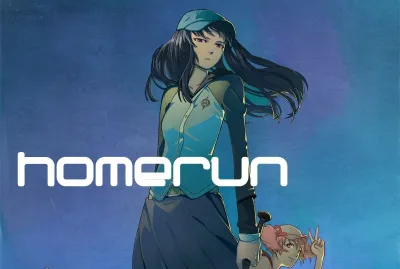
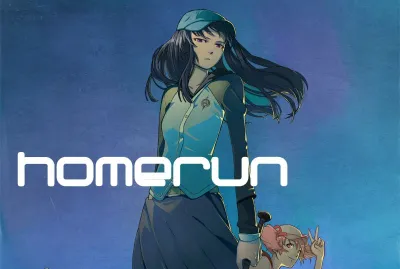
My perspective on the show aligns closely with Wah’s on a technical level. I suspect his “criticism” stems from a personal dislike, especially when compared to his usual adoration for Shinbo x SHAFT productions. If I had to choose one word to describe Madoka, it would be “inventive.” Its most striking innovation lies in its visuals, with sharp, jarring directorial choices and visual gags that were already hallmarks of other popular anime like Bakemonogatari. If you view SHAFT’s anime as a product of an iterative refinement process, an assembly line of adaptations, then Madoka stands out as the latest and most successful iteration.
Essentially, the inventiveness in Madoka can be attributed to the talented individuals the producers enlisted. SHAFT has a history of collaborating with emerging stars in the industry, a practice that appears to have culminated in Madoka. It’s not their first foray into this, but rather a culmination of years of such collaborations. While it represents a refinement, Madoka is fundamentally a product where the sum of its excellent parts creates a powerful whole. The anticipation surrounding the collaboration of Shinbo, Urobuchi, Aoki, and Kajiura was well-founded, a sentiment we can recall from the months leading up to the anime’s debut.
However, it would be unfair to dismiss Madoka as merely a sum of its parts. Great components do not always guarantee a great anime. The Madoka collaboration succeeds largely due to Shinbo’s mastery in this genre. The gamble on an original anime paid off, with the production proceeding as planned despite unforeseen circumstances like earthquakes and tsunamis. It demonstrates that magical girl shows can resonate if they tap into character-centric pathos, and Urobuchi is particularly adept at this. Ironically, compared to his other works, Madoka is remarkably uplifting.
The result is an “uplifting” series that uses strong character-driven pathos as its hook, presented with innovative visuals within the familiar magical girl framework. Its success as a best-seller is not entirely surprising, though it does buck a trend. While numerous magical girl anime have been released over the years, particularly those appealing to the otaku demographic, Madoka takes a different approach. What sets it apart and makes it more captivating than the average anime of its pedigree is a certain je ne sais quoi.
This distinctive element is not entirely novel. It’s the same quality that propelled three seasons of Zetsubo-sensei and Hidamari Sketch, or Bakemonogatari, to success. It’s why Wah holds his little SHAFT productions in such high regard. It’s also something I’m growing somewhat weary of. While this element was groundbreaking in 2008, by 2011, Madoka feels like a direction Shinbo should have explored years prior. Instead of Bakemonogatari, we could have had something more revolutionary. One could even view the original Nanoha series as an earlier attempt at this kind of storytelling for adults within the magical girl genre. Whether audiences were ready for such themes in 2004-2005 remains a question, but it suggests we might be lagging behind our potential.
I pose this question because I distinctly recall 2005. At that time, something like Madoka would have been precisely what was needed, a counterpoint to the overwhelming moe trend. A show like Madoka could have had a lasting impact, perhaps even setting a trend. Alternatively, perhaps audiences simply weren’t sufficiently fatigued by the prevailing trends then and didn’t voice their dissatisfaction as loudly as they do now. This is without considering whether Aniplex’s efforts could have even orchestrated such a viral phenomenon during the peak of “Cool Japan.”
Perhaps we weren’t ready, or maybe SHAFT still had kinks to work out, as evidenced by the significant delays in Bakemonogatari. The global recession might also have played a role. Regardless, Madoka offered a breath of fresh air that could have been appreciated earlier. It was akin to ef, but without its niche appeal and with significantly more star power, featuring a composer arguably superior to Kajiura. Madoka is a great anime; it simply arrived a little too late. My hope is that SHAFT, Shinbo, and the rest of the industry will continue to strive for innovation and catch up to their potential.
[Homework: Imagine Geneon USA’s last license was a show named Madoka instead of Nanoha…]





















