UlasanAnime.com – The Magnostadt arc in the second season of Magi has left a peculiar impression, prompting a deeper look into its themes as of episode 17.
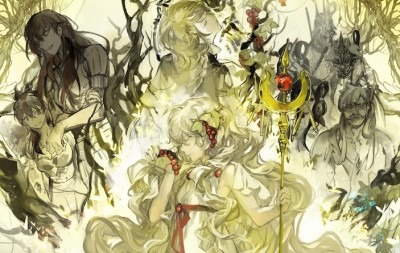
While the anime has touched upon social stratification previously, the Magnostadt arc introduces a conflict that strongly resembles racism: the division between magic users and non-magic users. This theme, while present throughout the series, takes on a more direct and unsettling form in this particular arc.
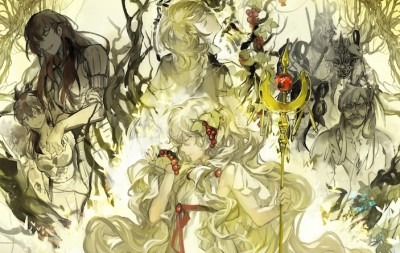
Magi, drawing heavily from Middle Eastern folklore, populates its world with characters and settings inspired by various cultures. From the Roman-esque Leam and the Chinese-inspired Kou Empire to characters potentially representing Black individuals and even an Egyptian child, the series demonstrates a well-researched approach to its world-building. The inclusion of nomadic tribes, reminiscent of Central Asian or Mongolian cultures, further adds to this rich tapestry. While explicit representation of Jewish or Arab populations might be subtle, they could be implicitly linked to Alibaba’s origins.
For those familiar with American history and civics, the conflict in Magnostadt between mages and non-mages evokes parallels with the racism prevalent in the United States during the Jim Crow era, particularly in the early to mid-20th century. The arc delves into concepts like eugenics and ethically dubious practices justified in the name of progress and national welfare, presenting a vision of benevolent elite rule and planned societies. This deviates from the traditional concept of noblesse oblige, as Magnostadt’s rulers are not born into nobility but are created through their magical abilities, lending the dynamic a distinctly paternalistic and racist undertone.
The themes explored in this arc mirror the profound social questions America grappled with over the last century: how to reconcile the ideal of equality with the reality of inherent differences. It questions whether exceptional individuals or their noble intentions can truly excuse fundamental flaws in their beliefs. The hypothetical scenarios presented in Magi, however, sometimes offer the story a somewhat convenient resolution to these complex issues.
America’s approach to overcoming such societal divisions has involved legal battles, efforts towards economic and political solidarity, and, at times, violent unrest. The historical trajectory of racial treatment in America—from dehumanization to the status of second-class citizens, social outcasts, and eventually, a more nuanced societal integration—has been a long and arduous process. The evolution of society is driven by cultural shifts and the inevitable passage of time. It is particularly striking that a character as old and knowledgeable as Mogamett clings to philosophies that might seem more appropriate for younger, more idealistic individuals. The adage suggesting a shift from liberal to conservative views with age highlights how the thematic exploration in Magi can sometimes feel more like a philosophical exercise than a gritty, realistic portrayal.
The principle that “those who do not know history are doomed to repeat it” resonates deeply, especially concerning racism, which is deeply embedded in the American consciousness. It raises the question of whether other cultures, particularly in Asia, have truly learned from historical mistakes, especially considering their limited reflection in popular media.
You might also be interested in : Reporting the Truth: Winter 2014 Meta Analysis Report
Setting aside the serious discourse on race, Magi’s narrative unfolds in a manner reminiscent of a “western” interpretation of “Twelve Kingdoms.” However, instead of the nuanced, character-driven storytelling with Chinese influences found in “Twelve Kingdoms,” Magi presents a more condensed manga adaptation that follows a similar trajectory. In its place, “Magi” offers shounen tropes over the more romance-oriented themes often found in light novels aimed at female audiences. While not necessarily a preference, the series remains compelling enough to warrant continued viewing. The treatment of Magi, akin to their role as Kirins for various nations, underscores an underlying pursuit of prosperity and the extreme measures individuals might take to achieve it.