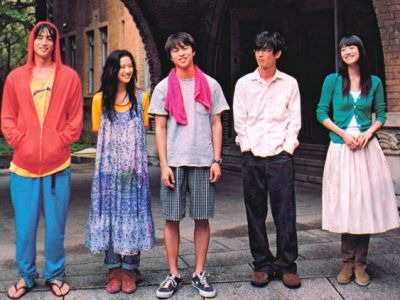
UlasanAnime.com – The author expresses a sense of uncertainty regarding their understanding of the anime “True Tears” after finishing it a week prior. They note that something felt “off” or didn’t quite click, leading them to reflect on the series.
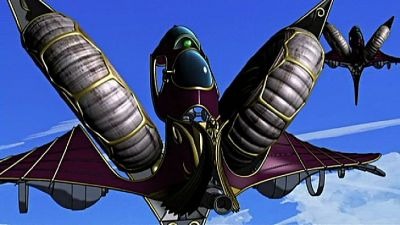
To gain further insight, the author considered watching “True Tears” alongside the bonus material for “Simoun,” which features director Junji Nishimura offering his perspectives. This comparison was prompted by the perceived complementarity between the two shows.
The author highlights that while “Simoun” deviated from a standard dramatic formula, “True Tears” presented a straightforward love triangle. Despite this narrative difference, many aspects of both shows, from their mood and atmosphere to the use of traditional illustration stills, were found to be quite similar.
However, a key point of confusion for the author is the allegorical significance of the “tears” in “True Tears.” They interpret it as a symbol for exchanging feelings, expressing them, and appreciating others. This appreciation is illustrated through characters like Shinichiro acknowledging his parents, his mother understanding Hiromi’s struggles, and Hiromi empathizing with Shinichiro’s difficulties involving Noe.
Despite this interpretation, the author questions if this is the full extent of the allegory’s meaning. They ponder what deeper significance the “tears” might hold.
The Raigomaru/Jibeta storyline also presents a challenge to the author’s understanding. This subplot is seen as a parallelism for the character development observed throughout the series, intended for the audience. Simultaneously, the characters consciously projected their own feelings onto the chickens, identifying with either Raigomaru or Jibeta.
This narrative layer becomes particularly complex when delving deeper. The author questions how Noe knew what Shinichiro had drawn in his book before the final episode and why she intended to throw Jibeta into the sea. They also ponder if Shinichiro’s reaction to seeing Noe dance represented his “Raigomaru sees Jibeta fly” moment, and if her subsequent jump indicated a switch in their roles or a different symbolic meaning.
The author concludes that a thorough understanding of the final episodes, particularly their symbolic interpretations, is likely crucial to fully grasping “True Tears.” Unfortunately, they admit to not having achieved this level of comprehension.
You might also be interested in : Makoto Shinkai’s Lolcats
Referencing external opinions, the author notes that “Simoun” has been described as akin to a World War II-era war drama, complete with pilots and the poignant longing of their loved ones. They observe that “True Tears” concluded in a manner that, fittingly, mirrored this sentiment, albeit without the presence of an airplane runway.