UlasanAnime.com – Gonzo is a studio that, in my opinion, excels at its craft.
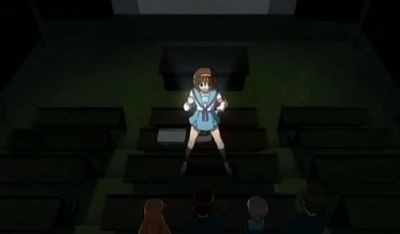
They are highly capable. However, it appears their path is similar to that of many other studios, such as ufotable, KyoAni, and Gainax. Studios like TNK, J.C. Staff, and even respected names like DEEN, Madhouse, Pierrot, and Sunrise are not exempt from this trend. They move from one project to another, and from one generation of their creative team to the next. It’s as if there’s an unspoken agreement that they won’t cross the lines they’ve established for themselves. This has no relation to Haruhi from Ouran, by the way.
I have a specific point to make regarding the anime “Welcome to the NHK.”
What’s interesting about Gonzo is that they are well-funded and cater to a broad international audience, not just North America and its English-speaking market. Their productions are typically quite robust from a technical standpoint. Many people don’t feel their work warrants the attention it receives because their creations are rather unconventional within the anime landscape. They also tend not to appeal to the audience that enjoys series like “Prince of Tennis” or “Full Metal Alchemist.” I can’t fault them for that.
As anime becomes more mainstream, fans of more exploitative anime, such as “Ghost in the Shell,” “Ninja Scroll,” “Wicked City,” “Guyver,” and even “Fist of the North Star,” may find themselves overlooked. However, because this has been a consistent element of the fanbase since its inception, particularly in Japan, there are periodic efforts to acknowledge these influences, for better or worse. Just as we’ve seen a TV series for “Ninja Scroll” or works like “Basilisk,” we also have titles like “Gantz” and “TOKKO.”
“Welcome to the NHK” stands apart from those shows. Nevertheless, it possesses a distinct flavor, a certain “snuffy psychedelic” quality that complements its source material exceptionally well. If we can categorize “Welcome to the NHK” as dark humor, then we might be in for a truly remarkable experience.
But that’s the core of the matter. I still find the manga’s handling of its subject matter to be problematic. Perhaps the new adaptation will offer a more palatable approach, making it more appropriately humorous or even funnier to engage with such a grim topic. Will the anime adaptation provide enough variety of psychedelia for us to collectively laugh at our own misfortunes? So far, it has met the initial requirement of believability. My expectations are high.
You might also be interested in : Love Languages for the Solitary
Gonzo’s distinctive style finally feels appropriate.