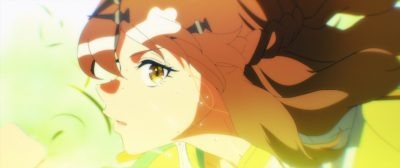
UlasanAnime.com – The anime series Shinsekai Yori offers a deeply engaging exploration of what it truly means to be human, presenting a complex narrative that, while sometimes arduous to navigate, ultimately rewards viewers with profound thematic depth.
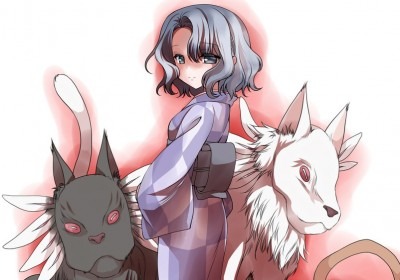
The process of making sense of Shinsekai Yori is a particularly enjoyable aspect of the show for me. It ranks second only to the sheer pleasure of experiencing its unique atmosphere, a blend of kuuki-kei sensibilities within a twisted, science-fictional setting. Without a doubt, the world-building in Shinsekai Yori stands out as its most awe-inspiring element, skillfully merging Eastern cultural nuances, aesthetics, and elements that imbue it with warmth and humanity. Beneath this refined surface lies a foundation of ruthless, cold, and calculating pessimism that propels the narrative forward, a common characteristic of ambitious, high-concept science fiction stories.
The show’s strengths and weaknesses became apparent very early on. The initial four episodes were among the most tedious I had to endure during the Autumn 2012 season. While the production values were good, they weren’t particularly exceptional. What kept me engaged was the distinctive art design, best exemplified by the first ending sequence, and the promise of a story that appealed to my tastes. I persevered until the first major reveal, which pierced through the facades that had obscured the eyes of the young protagonists and the viewers alike. From that point forward, my imagination took flight, perhaps more so than the characters within the show.
However, as the story slowly unveils the pieces leading to the eventual climactic moments across two significant time jumps, punctuated by suspenseful encounters between the children and the bakenezumi, the experience can feel like a chore. The narrative and plot predominantly focused on the intercharacter relationships surrounding Saki, aiming to make a specific point. This central message was only fully articulated at the very end of the final episode, rendering a substantial two-thirds of the series rather uneventful.
The progression often felt like a repetitive cycle: school, children, school, people traveling somewhere, a few episodes of darkness and encounters with bakenezumi, people returning home, a time skip, and then the cycle repeats. This structure might make sense from the perspective of an adaptation of a written work, perhaps a novel or light novel, where such pacing can build towards a compelling endgame. But in a serialized television animation, with one episode released weekly, maintaining viewer attention over 25 episodes using this pacing is incredibly challenging.
You might also be interested in : Execution Gets Me to My Feet: Girls und Panzer
Some of the high praise directed at the show is certainly deserved. To its credit, the anime adaptation did an admirable job conveying the book’s messages and themes to a foreign audience. If I were to set aside the fact that watching the show until its final arc felt like a tedious obligation, I would rate it quite highly. Unlike other series, Shinsekai Yori’s world is meticulously constructed and internally consistent, which holds the entire narrative together. The reception to the character drama, however, remains a point of speculation; it’s certainly not comparable to K-ON!, nor was it intended to be.
While I believe the most sensible approach to appreciating this show is through a kuuki-kei lens, it’s likely that viewers who enjoy Shinsekai Yori are those who appreciate heavy, plot-driven narratives and can tolerate elements like Mamoru’s characterization, Maria’s teasing nature, or the explicit depiction of same-sex relationships. Or perhaps not? I’m not entirely certain. It’s advisable to take my opinions with a grain of salt, as you probably already do.
Spoilers.
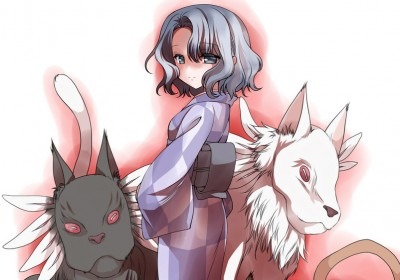
What lingers with me from the rather epic conclusion of Shinsekai Yori is Yakomaru’s assertion about the nature of humanity. I believe it’s valuable to consider this idea, much like Satoru did. I personally align with Satoru’s perspective: the bakenezumi are no longer human. The narrative dedicates its entire span to exploring the characters surrounding Saki, thereby illustrating what it means to be human. Small details, such as Saki’s parents grappling with the loss of their older daughter or the emotional outbursts of the only other boy she loved, represent humanity within this bleak new world. These elements seem to be the primary source of the emotional pathos in the first dozen and a half episodes, ultimately influencing Saki’s crucial decisions, such as destroying the psycho-buster. Naturally, this is my interpretation of the text, and I am biased towards it because it imbues meaning into the struggles I endured during the slower segments of the show.
Does this interpretation resonate with you? Unlike the comforting camaraderie of “Houkago Teatime feat. Kiyomaru” in other anime, this series features the rat-people as advanced evolutionary byproducts, or at best, victims. Do you know how much I looked forward to Wareta Ringo each week? It signaled the end of another Shinsekai Yori episode, prompting reflection on the show and anticipation for the next installment. This anticipation was for the “end of chapter SETTINGS QUIZ” in the form of creative plot devices, such as the mystery of where the bakenezumi kept all the abducted human babies.
To be fair, there’s a strong counter-argument to my point: what does this say about the creators of the bakenezumi? What does it imply about Saki and Satoru, or their society? I also find merit in the argument that Kiyomaru might be the most human character, even though his self-sacrifice appears no different from Yakomaru’s manipulative use of deceit, technology, and tactics. The distinction lies in Kiyomaru’s lack of societal evolution to the point where Yakomaru’s methods became possible.
End spoilers. And the post, really. I found more enjoyment in using Shinsekai Yori as a platform to discuss and contemplate other ideas than in dissecting the primary thematic message presented within the story itself. Nevertheless, I did have fun.
P.S. While Vertical has published the author’s previous work, The Crimson Labyrinth, it’s unclear if this holds significance for fans of Shinsekai Yori. On one hand, I sympathize with Vertical’s potential licensing challenges without proven sales for Kishi’s existing catalog. On the other hand, I find it difficult to recommend The Crimson Labyrinth to fans of Shinsekai Yori, as it appears to belong to a different genre. Even before reading it, the internet has already framed it as a Battle Royale knock-off, devoid of any factual basis. It’s not even an impulse purchase for me due to the absence of an e-book version and my already extensive backlog of physical books.
However, it’s good to be aware of it. Has anyone read The Crimson Labyrinth? Is it any good?