UlasanAnime.com – The way we consume media profoundly shapes the culture we build, and understanding this context is crucial, especially within the realm of anime fandom.
It’s one thing to pirate software like Microsoft Windows, which is often treated as a utility, much like a keyboard or a car used for daily transport. These are generally accepted as functional tools without much thought given to their origin.
However, I want to make a case for the importance of how we consume otaku media and piracy in general. This isn’t about gatekeeping but rather a broader observation that applies across the board. Imagine choosing to pirate a low-quality cam rip of a major film like Star Wars Episode 7 instead of seeing it in a theater. While you might be content with this choice, it directly impacts the box office revenue, reducing the earnings of a billion-dollar franchise by a few dollars.
But my concern goes beyond mere financial impact. A fundamental aspect of the Japanese nerd scene and the commercially produced content it generates is its self-perpetuating, cultural recycling nature. While individuals outside this context can enjoy the content as they please, they might miss out on a deeper understanding. Legally consuming this content is a way to actively participate in this cultural dialogue. Illegally participating might still count as participation, but perhaps in a diminished or altered capacity.
Ultimately, the way we consume content is actively building our culture.
I use the word “might” because I’m not entirely certain. My own experiences suggest that for an overseas fan who can only engage with content through semi-legal means, this participation might speak volumes more than another Japanese fan doing the same as thousands of local otaku. In a broader sense, while consumption and production are the two sides of the anime, manga, and game world, illegal participation on either side doesn’t inherently make it good or bad. Legally, it’s bad, but beyond that, what is its true impact?
The article I previously critiqued touches upon a subject that is dear to me. It poses significant questions without easy answers, questions that lie at the heart of the overseas anime fandom experience. While I appreciate the attempt at an order-of-magnitude estimate, such an approach can be misleading when tackling a much larger, more complex issue.
I’ve mentioned before how disheartening it is to meet an anime creator at a convention and admit to having watched all their work through piracy. It would be ideal if copyright laws were more sensible or if licensing regions weren’t so fragmented with varying costs. It’s probably too much to ask Japan to “get on with the program,” even if it seems necessary. The reality is often murky, far from ideal, and sometimes unfair to both consumers and creators. The core question, for me, is whether the laws, economics, industry, fan organizations, consumer culture, and the surrounding meta-culture help or hinder the development of actual culture. Or, perhaps more accurately, the overall exchange of ideas between people, viewing pop culture as a vast interaction where ideas spread through media and other widely circulated concepts. How do business dealings between a few companies affect thousands of fans? How does Japan leverage its cultural appeal, which is partly built on pirated cartoons?
Contrary to what logic might suggest, this calculation must include the cost of protocol breaches, which is precisely what unlicensed streaming entails. In my limited personal experience, the observed consequences include major newspapers and journalists tweeting or writing articles that link to illegal scanlation sites. I’ve encountered individuals, both online and offline, who recommend watching a specific anime on a streaming site, even when a legal option is available in the same region. In all these instances, paying a small monthly fee is not the primary issue. The problem lies with these individuals and organizations lacking awareness of the “context,” making the source of their content irrelevant to them. Even if they are aware, they may not fully grasp its significance.
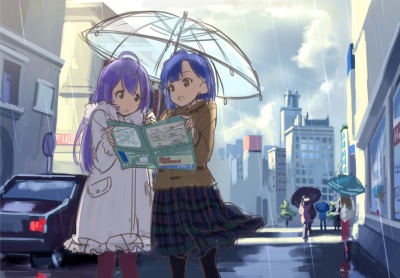
This brings us to the value of context. Fandom gatekeeping can be viewed from this perspective. I’m not referring to the superficial “so-and-so is not a fan” declarations often found on platforms like Tumblr. Consider, for example, someone from the English-language yuri section of the internet who ships IDOLM@STER girls. Would this person be considered a “Producer”? Being a Producer is intrinsically linked to being a fan of IDOLM@STER, not necessarily shipping its characters. While one could argue that liking certain idols makes you a Producer, my point is that these concepts, issues, and arguments are more about context than the fandom itself. People can debate these topics without understanding the bigger picture, which is why these discussions often go nowhere.
The same can be said for fans who spend $300-600 annually on imported Blu-ray box sets versus the “piracy-or-die” types who invest in a $3000 NAS array to mirror BakaBT every five years. Both might spend an equal number of hours watching anime and potentially enjoy the same shows. However, they are clearly different kinds of fans, unless you encounter someone who does both. The very existence of such an individual suggests that these two “fans” operate from vastly different contexts, not conflicting ones, but rather overlapping ones.
You might also be interested in : Deresute: Week 33 – Next Steps
To that extent, fandom could certainly benefit from less judgment. Unfortunately, based on my experience, context often matters significantly, making judgment understandable. In some cases, context is paramount, determining the difference between Sekai Project licensing Clannad and Visual Arts refusing any involvement with the West. It’s like the difference between a group of tourists aimlessly wandering through Akihabara, caught up in superficial “OMG JAPAN” notions from the internet, versus someone who takes the time to live in Japan through an ALT program, befriends locals, and eventually experiences Akihabara as a local. While I won’t judge, as I lean closer to the former, the point is that things are complex and nuanced, and a simplistic order-of-magnitude estimate cannot be fairly applied.
I believe this same context-free extraction is what allowed fansubbers in the late 90s and 00s to include elaborate karaoke subtitles that obscured half of the opening or ending visuals, or to overlay their credits, obscuring the original credits or even the show’s own title. From their perspective, it was just an opening animation, visually appealing. The significance of those 90 seconds was lost on them, or they simply didn’t care that some opening sequences could cost as much as 10% of the show’s budget.
The association of piracy with fansubbing also has its own historical contexts. For better or worse, this is how it unfolded, barring rare instances of troublemakers.
Contextless abstractions are, in a way, the antithesis of the anime sakuga fandom, which highly values the unique styles of individual animators. Animation is undeniably the core underpinning of fandom, yet animators are often overlooked by otaku of all kinds. As one gets closer to the core creative team, more attention is paid. The original creators, directors, composers, theme song singers, actors, and actresses—these contexts, along with the animators, are first-party participants in the work. One would think these individuals would matter to fans. Not always, and often not! This is all just context, after all, hidden behind illegible and often untranslated credits.
And to some extent, that’s acceptable, as these elements provide the context behind the work, the communication of their primary case, through which they speak to us. This relates to how ideas are presented and how people react to them. Even if, in the West, these names are closer to brands than human beings with faces, lives, and personalities, what I dislike is when we deliberately ignore what comes with these ideas. Perhaps one could argue that we are building a database, akin to TVTropes, that connects dots to create context. However, this still involves looking in only one direction, not all of them. We must delve deeper.
We must go deeper to understand why Aniplex of America charges high prices. We must go deeper to understand why people complain about it in a race-to-the-bottom home video economy. Or do we?
This is why, when attempting to ascertain the cost of pirate streaming anime, we can examine the purported health of Japan’s anime industry, its licensing costs, and revenue, and understand that the monetary loss is only a fraction of what else is being lost. It’s about the relationship and context in which content producers interact with the content’s audience. You simply don’t have this when consuming from an illegal source. You don’t have it when you allow individuals to use unlicensed artwork for web advertisements. You don’t have it when you purchase shirts at conventions that infringe on copyright or trademark rights. This is because it represents participation in ignorance.
Anime fandom is rife with copyright violations. Comiket and doujinshi culture arguably represent its greatest festival of such practices, framing this entire discussion. This is to say, just because something is illegal doesn’t automatically make it bad. But until you understand why it is good or bad, how can you begin to make sense of other peculiar situations? At the very least, when you pay to watch something, a portion of that money returns to the show’s creator, which is the least we should be doing. Regardless of philosophical stances, it’s simply not being a jerk. If you enjoy someone’s work, offering them a little respect, even if not monetary, is appropriate.
Returning to piracy, rather than viewing the person who downloads but buys the Blu-ray as an example of how copyright infringement in “markets not sown” can yield profits, it’s akin to a superfan wanting to build a $2000 PC for their favorite seiyuu, which would directly benefit a creator. This is—man, don’t do it. Recognize the system and allow creators to do their work. Supporting a creator means not just directly supporting them but also partially supporting the system that enables people to make a living creating things. Perhaps we can simplify this to a patronage system like crowdfunding, but when it comes to anime and games, it’s quite complicated.
Once you grasp the context, you can make more informed decisions about when, how, and why to pirate. This applies not only to how you obtain your anime but also to why I no longer prefer buying R1 releases, as they often operate devoid of this context. While special limited editions are created, what is their ultimate value to the fan? They are not thoughtfully produced in aggregate.