UlasanAnime.com – The anime series Un-Go delves into the complex theme of nationalism.
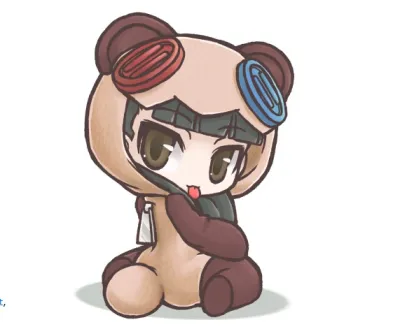
Guilty Crown also explores a similar motif of nationalism.
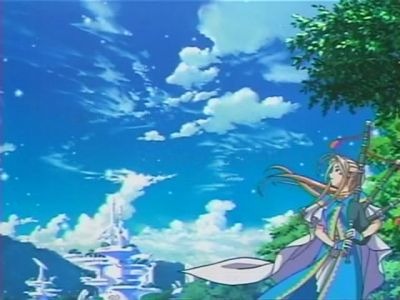
Horizon in the Middle of Nowhere is, in essence, entirely about nationalism.
However, it is Majikoi: Oh Samurai Girls that presents the most impactful line regarding this subject.
This is a significant amount of content on nationalism within a single anime season, which could normally be overwhelming. Yet, Japan’s creative approach to exploring this topic is commendable. It’s a subject that warrants further discussion and analysis, perhaps through examining works like Strike Witches.
The case presented in Un-Go is, in my view, both the most accessible and the most intricate to dissect. It’s less straightforward than the overt, romanticized portrayals of Nazi ideology in hypothetical World War II scenarios. Ultimately, Un-Go‘s narrative resonates deeply, especially with its post-WWII setting featuring Meiji-era detectives uncovering government cover-ups, drawing heavily from relatable source material.
It’s also crucial to consider the dialogue in Majikoi concerning the protagonist’s father, as discussed in episode 6. The protagonist’s father is branded a traitor to the country he resides in. A mysterious figure engages in a debate with him, suggesting that his rejection of his country’s actions is misguided and offering an alternative perspective. This context helps explain Rie Kaishou’s position as the accepted norm: it is permissible to protect one’s family, even if there’s a strong likelihood that the father is guilty of a serious crime. This can be understood through the lens of the “village analogy.”
Please bear with me for a moment longer: the village analogy can even be extended to what Ikuhara explained in his Penguindrum special material. While the connection might seem tenuous, terrorism serves as a natural antithesis to nationalist sentiments, particularly in a post-9/11 world. It is the primary tool through which the show explores the systemic issue of systematically subverting the system.
I wish to focus on Rie Kaishou. She quietly embodies this perspective. In Un-Go, she functions as a co-narrator, representing one side of a duality. Her father pursued beauty, in the sense that Kaichou covered up truths to facilitate transitions for his constituents and serve his own interests. This contrasts with Shinjuuro, who professes to seek truth, though beauty is also a factor for him.
This beautiful paradox frames the nationalism question within the context that Japan, I believe, intends to examine. While there are undoubtedly more unsettling ways to approach this topic, these anime collectively present a relatively consistent picture: the will of the people reflects a “village analogy” notion. However, much like individuals, a nation resorts to deception to preserve its collective identity. The distinction between someone who faces legal consequences and someone who does not is often determined by their affluence, rather than their inherent human quality.
Lacking more suitable material, I find it challenging to seriously analyze Horizon in the Middle of Nowhere in relation to this theme. My primary observation is the enjoyable debate surrounding the reconciliation of modern democratic ideals with a form of “noblesse oblige.” I suspect there’s a subtle, yet present, logical short-circuiting occurring. The relationship between a lord and his subjects serves as the primary lens through which nationalist identity is examined. However, this analysis leans towards an interpersonal interpretation of character motivations, again highlighting the “village analogy.”
Taking a sudden turn, this reminds me of the criticisms leveled against sports journalism in recent years. Much of it focuses on the “story” and the “person” behind the statistics or notable plays, rather than the pure facts. Is this truly truth, or simply an appealing narrative for mass consumption? It’s not about whether it’s fiction or not – I don’t believe people are fabricating deaths or similar events – but rather about the purpose it serves.
In essence, what is nationalism doing in my anime? The anime I’m referring to are predominantly late-night series, watched by individuals like myself, with the key difference being that these viewers are products of Japan’s “Lost Decade.” Is there a cathartic effect in witnessing the fundamental issues that have troubled an entire generation of Japanese people presented as character narratives or speculative scenarios? From this perspective, Un-Go ultimately functions as an equalizing work, deconstructing the nationalist pride upon which today’s viewers’ parents built their lives. It exposes the falsehoods that shaped Kaichou Kaishou into the man he is.
You might also be interested in : Year in Review: My Writing Journey
So, what does this imply for Rie and Shinjuuro? Beyond their obvious status as an OTP (One True Pairing)? Is the Otaku community brave enough to confront these implications? This can only happen if every anime series exhibits the courage of Un-Go. This is a testament to the excellent work of noitaminA, and indeed, to all productions that take risks exploring such profound themes.