UlasanAnime.com – While Gen Urobuchi had a standout year in 2011 with major contributions to Fate/Zero and Madoka, this review will focus on the significant work of Mari Okada.
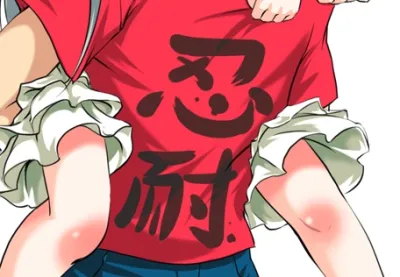
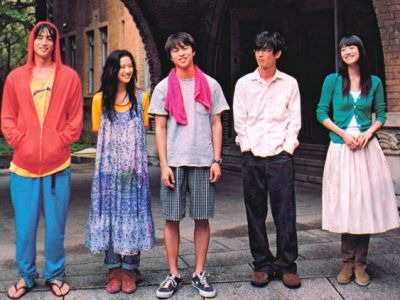
Okada was instrumental in at least four notable anime series released in 2011: Fractale, Hanasaku Iroha, Anohana: The Flower We Saw That Day, and Hourou Musuko (Wandering Son). It is in Hourou Musuko that her writing truly shone. The series significantly diverged from its source manga, suggesting that Okada’s distinct style was key to translating the narrative into a compelling animated format. The adaptation, directed by the same individual behind Fate/Zero, likely benefited from this synergy. The overall experience of watching Hourou Musuko felt magical, imbued with a potent sense of nostalgia. Even setting aside the genderbending themes, the supporting characters were exceptionally well-developed, with their interactions creating a dramatic and engaging dynamic that prevented the story from becoming weighed down by its serious subject matter.
When considering a personal top list for 2011 anime, Hourou Musuko would contend with Madoka Magica and Steins;Gate. The opening theme alone was enough to capture my attention.
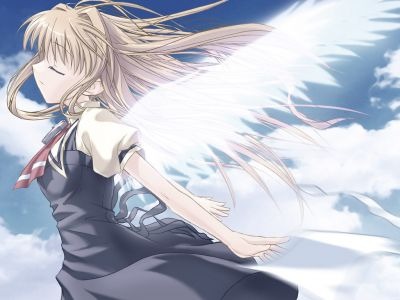
More directly relevant to Okada’s original concepts is Hanasaku Iroha. At its core, the story appears to explore the nature of work and career, particularly for women within a culturally accepted framework. However, there’s a notable duality in the narrative, especially concerning the contrasting situations of Ohana and her mother. While many viewers disliked Satsuki, her character is crucial for the story’s credibility. It’s not merely about societal expectations or conforming to what society deems right; it’s about embodying the true spirit of a mother. This interpretation suggests that individuals cannot be held to uniform standards, especially in parenting.
The career aspect of Hanasaku Iroha is equally complex, though perhaps less emotionally charged. We see characters like Sui pursuing their ambitions, while others, like Satsuki, prioritize their careers without apparent regard for the women in their lives. The series might be illustrating a conflict where harmony is elusive, yet individuals can still prioritize what is important and resolve issues accordingly. This could lead some to perceive an anti-feminist message. Personally, this aspect doesn’t detract from the series; if I were a feminist, I might find Japanese animation in general to be a challenging medium.
Ultimately, the perception of Hanasaku Iroha may hinge on cultural context. If one can navigate or overlook these nuances, the series offers a sharp critique, perhaps somewhat diluted by the typical 26-episode format that necessitates extensive character backstories. Nevertheless, it is fundamentally a story about women’s work, a message that carries significant empowerment in a society where women have historically been treated less favorably than men.
You might also be interested in : Ghibli Challenge #1: Totoro
This leads to a couple of intriguing questions: To what extent was Hanasaku Iroha drawn from Okada’s own life experiences? And what was it like for her to work on both Hanasaku Iroha and Fractale concurrently? Fractale, as we know, was a collaborative effort involving Yasuhiro Irie (Yamakan), cultural critic Hiroki Azuma, and Okada. It’s unfortunate that the series did not achieve greater success, but it prompts speculation about the creative dynamics among the three. One might expect such a collaboration to yield something exceptional, yet success is not always guaranteed.
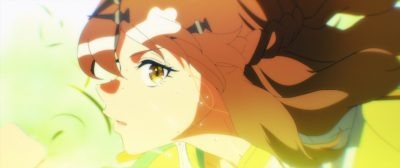
Then there is Anohana. It presents a charmingly bittersweet narrative with likable characters, despite a somewhat predictable character development trajectory. The series leans a bit too heavily into sentimentality, and ironically, it’s a story that proved difficult for me to recall vividly six months later. Beyond the memorable smiling-and-crying Menma face and the playfully suggestive nicknames of the main cast (MANMA wwwww), Anohana offers little more than a showcase for its numerous references to “Forget-me-Not” within its 12-episode span. Like Okada’s other works, it is a tightly constructed narrative. If Hanasaku Iroha were condensed to a similar length, it might adopt a comparable format. Both series feature a deliberate pacing segment around the halfway point, building towards a dramatic conclusion, which Anohana effectively manages due to its shorter runtime.
Reflecting on this, the challenge of fitting a compelling narrative into the standard TV anime broadcast format remains a consistent issue for me when evaluating these works on a broader scale. Urobuchi’s writing style, in contrast, tends to create more concise packages, akin to an HBO miniseries, within the same episode count. Nevertheless, it’s remarkable to consider the effort required to craft a 22-minute episode each week that balances sufficient build-up and release while maintaining suspense for the following installment. It is undoubtedly a demanding task.
Considering Okada’s prolific output in 2011, it’s likely she was performing above average, regardless of the underlying reasons. While I generally tend to downplay the impact of writers on the quality of TV anime narratives, believing fans often overemphasize this aspect, writers—especially those creating original concepts—are undeniably crucial components of the creative core that guides an anime to its conclusion. Alongside directors, they hold significant influence over an anime’s fate before production even begins. The year 2011 clearly demonstrated this pivotal role.
To provide further context: Okada penned nine episodes of Simoun and contributed to True Tears (both directed by Seiji Kishi). She also served as the series composer for Bantorra. These contributions are not mere coincidences, I believe. To continue the baseball analogy, she is undoubtedly batting well above .300. And it’s no surprise that in 2012, Okada was tapped for significant projects such as the new Kenshin Shin Kyoto-hen remake, Black Rock Shooter TV, Aquarion EVOL, and the AKB48 anime. Oh boy! That certainly sounds like a .300 average, wouldn’t you agree?
PS. Meeting Tatsuyuki Nagai and Masayoshi Tanaka at Anime Expo this year remains one of the most memorable aspects of my 2011 convention experiences. It was a genuine pleasure to connect with some of the individuals behind the immense popularity of Toradora.
PPS. I’m uncertain why I’ve opted for Japanese name order in this post, but it is what it is.