UlasanAnime.com – This article delves into the economic underpinnings of two distinct anime series, Lapis Re:Lights and Deca-Dence, exploring how their fictional worlds function and the implications of their unique societal structures.

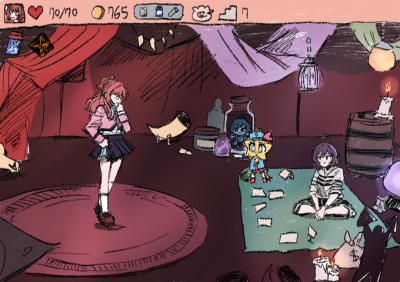
The analysis of Lapis Re:Lights’ economy is sparked by the concept of mana, a mystical energy source that powers its society. This mana is collected through “orchestras,” performances that seem to generate the energy from crowds or specific city regions. The article draws parallels to real-world economics, posing hypothetical scenarios of an economy fully powered by clean, renewable energy and questioning its scalability, storage, and accessibility.
A key economic factor in Lapis Re:Lights is the labor involved in magic. Casting spells requires time, skill, and effort, with limitations on how many spells a single person can perform. The effectiveness and scalability of magic for mass production are also questioned, as many spells appear to be for aesthetic or performance purposes rather than direct value generation. The characters still engage in traditional employment, suggesting a familiar economic structure despite the presence of magic.
Mass production seems to be an underdeveloped concept in Lapis Re:Lights, with the world’s visual aesthetic resembling a mid-industrial-revolution European setting. While elaborate architecture and designs are visible, the article questions how goods like magic lanterns are produced in bulk for a city of seemingly significant size. The presence of craftsmen and hints of social stratification, with royalty and common folk, suggest a society with distinct economic classes.
You might also be interested in : Anime Blogging in August 2020
The article further probes the foundational needs of Lapis Re:Lights’ society, such as food production and the generation of goods and services for trade. The existence of commercial relationships with other nations, exemplified by characters from countries like Konohana wa Otome and Supernova, indicates an international trade network. However, fundamental questions remain about the economic models of the nations within the anime’s world, such as whether Waleland operates like a mature European economy, a tourism-dependent state like Monaco, or a financial and high-tech manufacturing hub like Liechtenstein.
The potential for Waleland to thrive by exploring expensive, magic-infused goods is discussed, contingent on a mature global market with wealthy buyers. The prevailing impression is that Waleland enjoys a positive trade balance, with its magical power serving as both a luxury and a national resource that underpins its infrastructure and justifies the existence of orchestras.
Transitioning to Deca-Dence, the article highlights its thematic wordplay on “decadence” and its unique “reverse Wall-E” setting. The narrative unfolds across two realities: a “robot” world inhabited by digital intelligences and the Deca-Dence world, a physical reality where cyborgs and humans coexist. While cyborgs can respawn, humans face permadeath, adding a layer of consequence to this dual existence.
The economics within the Deca-Dence game are presented as a complex system with a real economy driven by supply and demand, influenced by both NPCs and players. Conflicts with Gadolls, the game’s antagonists, create economic “sinks” by consuming resources for equipment, causing casualties, and inflicting damage. Conversely, looting Gadolls fuels the economy by providing essential materials like fuel and food. However, the origin of materials for robotic parts and other manufactured goods remains unclear, as does the process of replacing destroyed assets like humvees.
Deca-Dence is not depicted as a self-sufficient or closed system. The introduction of Gadolls from outside the game and the potential for manufacturing to occur beyond the game’s facilities suggest external dependencies. While the anime is set on Earth, the extent to which resources are harvested from the general environment is not explicitly detailed.
The article notes that while NPCs and PCs influence pricing, there are also developer-set prices for high-end gear, accessible to “external players” (Gears) who can use real-world currency for in-game upgrades. This concept leads to the exploration of the more intriguing world outside Deca-Dence.
The world beyond Deca-Dence is described as a post-apocalyptic cyborg society where humanity uploaded itself into cyborg bodies to survive. Deca-Dence functions as a “zoo” for humans and a “reality” game for the cyborg inhabitants, presenting a narrative inversion of Sword Art Online, where players within a virtual reality engage in a game of reality.
Despite the exposition provided, many aspects of the world remain open to interpretation. The energy cycle, with Gadolls as the core transfer medium for cyborg sustenance, raises questions about the origin of Gadolls and the energy powering the cyborg society. In this context, energy is paramount, eclipsing basic survival needs like farming.
The article connects market economics and the concept of “sinks” to game design, viewing it as a natural critique of theoretical governance and, tangentially, macroeconomics. This analogy is used to illustrate the impact of powerful entities on the lives of ordinary people, akin to the relationship between Wall Street and Main Street.
In conclusion, the article posits that the economic systems within fantasy settings are crucial to their believability. The economics of Deca-Dence, particularly its post-scarcity, demand-based economy, is seen as an intrinsic criticism. The author suggests that creating a compelling and entertaining narrative around such complex economic concepts is a significant challenge, perhaps explaining the appeal of explanatory YouTube channels on the subject.