UlasanAnime.com – The concept of “good girls” in anime can be multifaceted, and this article delves into the nuanced interpretations of this archetype, particularly as seen in characters like Azusa from K-ON! and Mamiina from Simoun.
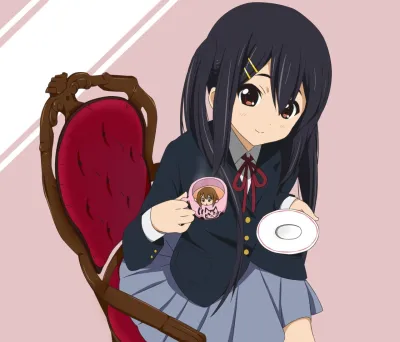
The author expresses sympathy for 2D Teleidoscope’s perspective, suggesting that Azusa’s appeal stems from a deeper, relatable ideal rather than just superficial traits. The stereotypical image of a sweet, cat-eared, sweets-loving character might not be the sole reason for her popularity, nor for her being a favorite character.
In essence, 2D Teleidoscope’s realization was that Azusa embodies a real-life notion of ideals. This connection was further elaborated in the comments section, where Azusa was described as a “sweet, good child,” explaining her classic “moe” pull.
I wasn’t so much a fan of her myself… until I realized that all the students I have who are like her, I love! [] Such a sweet, good child. I understand her classic moe pull.
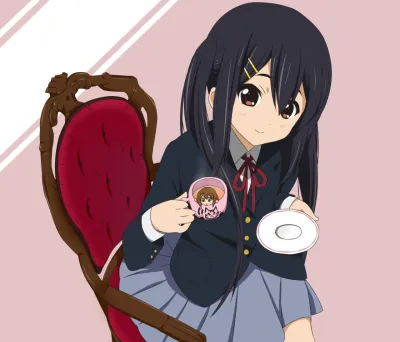 The article distinguishes between “classic moe” and other forms, noting that “classic moe” might be a better term than “old moe” to avoid confusion with older characters. The author also touches upon the idea that “moe” as a concept might be somewhat overused or “dead,” expressing a preference not to dwell on it if possible.
A personal connection is drawn to the band dynamics in K-ON!, where the author sees parallels with real-life experiences. Specifically, Mio is likened to a musically talented and well-liked individual the author knows, complete with a fan club, highlighting the subjective nature of character appreciation.
Human beings are complex and multi-motivated, making character mapping to real people a challenging yet rewarding aspect of fiction. The inherent appeal of “good girls” is seen as a universal draw, channeling a sense of righteousness and moral understanding within many individuals. The author aims to differentiate between two distinct types of “good girls.”
To illustrate this distinction, a scene from “Conan the Barbarian” is referenced, posing the question of what is “best in life.” The contrasting answers, between the general’s simplistic “open steppe” and Conan’s more brutal “crush your enemies,” set the stage for the discussion.
Mongol General: Hao! Dai ye! We won again! This is good, but what is best in life?
Mongol: The open steppe, fleet horse, falcons at your wrist, and the wind in your hair.
Mongol General: Wrong! Conan! What is best in life?
Conan: To crush your enemies, see them driven before you, and to hear the lamentation of their women.
Mongol General: That is good! That is good.
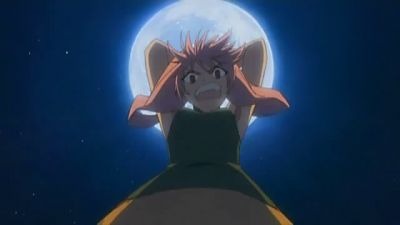
The author then draws a parallel with the anime “Simoun,” specifically mentioning the character Mamiina. Simoun is described as having a cast that contributes to engaging drama. Mamiina is presented as a heartwarming, “turn-around good girl,” comparable to Kyouko Sakura from “Madoka Magica” for those unfamiliar with Simoun. Unlike characters with overt “moe” traits like cat ears, Mamiina’s goodness is expressed through her actions, akin to a “stray cat” versus a “house cat” dynamic. Her actions convey a sweet, good-girl persona, reminiscent of Studio Ghibli characters, even when she exhibits antagonistic tendencies.
This concept extends to Azusa-type characters, reinforcing 2D Teleidoscope’s observation but with a crucial distinction. While characters like Kiki and Sheeta from Ghibli are examples of “good girls,” figures like San and arguably Nausicaä represent another facet. The author posits that there are two sides to the “Good Girl” archetype, separated by a philosophical divide.
Mamiina exemplifies a “good girl” by bridging antagonism and protagonism to reveal her inner virtues, performing the “Right Thing at the Right Time.” This creates a desired dramatic impact, especially within her interpersonal relationships. Conversely, a Mamiina-type character could be the nemesis or rival to an Azusa-type character, a dynamic that might drive the plot of a battle anime. Without the crucible of tragedy or suffering, the difference between these two “good girl” archetypes might hinge on the answers to the “Conan the Barbarian” question, as Conan himself was once just a normal barbarian.
A hypothetical scenario involving the YuiAzu episode from K-ON! further illustrates this point. If Azusa were replaced by an antagonistic version, she might initially refuse to help Yui with a performance but later do so for a plot-specific reason. While this might seem like a typical “gap moe tsundere” trait, it’s not directly about character demonstration. The duality of being good or bad can coexist with such traits.
You might also be interested in : Reiterating the Problem
Ultimately, the author suggests that inherent in being “good” is a certain strictness, as seen in Azusa’s tenderness, or conversely, a tenderness within the intensity of characters like Mamiina or San. This duality can lead characters down different paths, whether towards villainy, servitude to antagonists, adherence to reason, or involvement in peculiar plot devices. The overarching message is that “Good Girls” are abundant, and like people in general, they possess a plurality of faces.