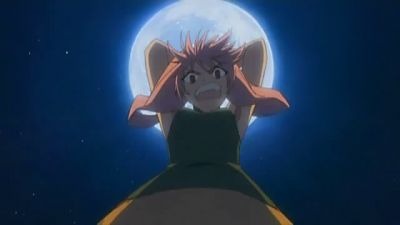
UlasanAnime.com – Yukari Morita, a character voiced by Eri Sendai in the anime Rocket Girls, exhibits a performance that is both familiar and tinged with a sense of indignity and mild irritation. This distinct quality was eventually traced back to Sendai’s earlier role as Yuuhi in Neo Ranga. Yukari carries a similar streak of defiance as she navigates the challenges and peculiarities of her journey into space as a high schooler, a situation that demands a degree of seriousness, perhaps more so than one might expect from a group of washed-up idol singers.

The narrative then muses on the potential misplacement of characters, suggesting that Matsuri might have been better suited for a role in Wandaba Style, while Rocket Girls could have incorporated references to figures like Lisa Nowak. This thought process leads to a broader contemplation of audience preferences, questioning if anime fans are particularly drawn to determined female characters with a touch of madness.
You might also be interested in : Hidden Tiger, Crouching Pumpkins
The article delves into the complexities of pseudo low-tech science fiction, expressing a personal sentiment that such elements can be bothersome, akin to a confused bee amidst blooming spring skies. It draws parallels to the enduring influence of Gundam, pondering if a past event significantly shaped the creative direction of animators and creators for decades. The piece also touches upon the evolving societal landscape, questioning if such narratives are bridging gender gaps and how generational perspectives on historical events, like the Apollo 11 landing, influence contemporary storytelling. The author speculates whether these themes serve as a nostalgic reminder for older Japanese men, evoking childhood dreams and fascinations.

The ability to discern geography from low Earth orbit is presented as a remarkable skill, one that Yukari possesses. The author expresses a personal impression that such a feat might be inherently difficult, partly due to the absence of a consistent “north-up” perspective when viewing the Earth from space.
The performance of Eri Sendai as Yukari Morita in Rocket Girls is described as strangely familiar, imbued with a sense of indignity and mild irritation. It took some time for the author to pinpoint the source of this familiarity, ultimately linking it to Sendai’s portrayal of Yuuhi in Neo Ranga. This underlying “mean streak” continues with Yukari, particularly evident in her reactions to and acceptance of the trials and strangeness that accompany a high school student’s involvement in space exploration. This elevated seriousness contrasts with the notion of a group of faded idol singers, suggesting a more profound narrative context.
The article then poses a hypothetical scenario: perhaps Matsuri would have been a more fitting character for Wandaba Style. It also wonders if Rocket Girls could have benefited from referencing figures like Lisa Nowak. This line of questioning leads to a broader observation about the anime audience, suggesting a potential affinity for determined female characters who exhibit a degree of “insanity.”
The author expresses a personal frustration with the pseudo low-tech science fiction elements, comparing the feeling to a confused bee in a blooming spring sky. The piece then broadens its scope to consider the impact of historical events on creative works, drawing a parallel to Gundam and questioning if a significant past event continues to influence animators and creators. It explores the idea of bridging gender gaps through such narratives and reflects on generational differences in experiencing historical milestones, like the Apollo 11 landing. The author speculates whether this genre appeals to older Japanese men as a means of recalling their childhood fascinations and dreams.