UlasanAnime.com – The connection between a popular virtual idol and a common car model might seem unusual, but exploring the underlying reasons and potential interpretations can be insightful. This analysis delves into the implications of such a partnership, particularly concerning the Toyota Corolla and Hatsune Miku.

The initial context for this discussion stems from an article on Boston.com, which focused on the movie “Fast Five.” This film, released around late April, predates the Toyota Corolla x Hatsune Miku tie-in by over a week. The Boston.com piece itself examined the progressive nature of “The Fast and the Furious” franchise in American mainstream cinema.
Titled “Fast Forward: Why a movie about car thieves is the most progressive force in American cinema,” the article highlights how the franchise treats race as an inherent aspect of life rather than an issue. It reflects a reality that is less “whitewashed” and more representative of the diverse experiences of many people in the country, suggesting it acts as a force for progress, perhaps by coincidence.
While the Boston.com article offers a compelling read for those interested in its specific topic, the core idea relevant here is the observation about shared cultural experiences. The author quotes:
You might also be interested in : Miku and Corolla Explained
In a sense, the balkanization of movies would appear to be an example of how much culture has splintered into niches—more proof, if we needed it, that we no longer watch, listen to, or read the same material. But moviegoing is one of our last shared public acts. Hundreds of millions of people continue to watch movies together, and it’s easy to scan the house and see who’s watching with you. Were you to visit the big theaters in Boston—the AMC Boston Common or the Regal Fenway—you’d see that the audiences at both complexes are often diverse. The movies are not.
You wouldn’t draw much of a popular audience, mixed or otherwise, to a movie about race, of course. And that is the accidental genius of the “Fast and Furious” movies. They’re not about race. Race—and casualness about race—is just their hallmark. They’re about something else, a great American unifying principle: sexy cars that everybody wants to drive.
 From this perspective, the Hatsune Miku and Toyota Corolla collaboration can be viewed through two lenses:
Firstly, the appearance of Hatsune Miku, a prominent virtual pop idol and a significant figure in Japanese meme culture, in a car advertisement is seen as a quintessentially “American” phenomenon. It embodies the spirit of big dreams and ambition, a concept that likely resonated humorously with many. The choice of vehicle, the Corolla, is also considered fitting for its intended audience.
Secondly, some criticism has arisen due to the choice of the Toyota Corolla itself. Many perceive the Corolla as the antithesis of “sexy cars that everybody wants to drive.” The limited sales success of the Corolla XRS model (which was discontinued for the 2011 model year) serves as an example. While one might find a peculiar enjoyment in customizing a less conventional vehicle like a Chrysler Town and Country, the Miku x Corolla ad might not be as jarring as that. However, it does raise questions about the unifying appeal of such a vehicle choice in an advertisement.
Despite this, the Corolla’s utilitarian appeal ensures consistent sales, with over 200,000 units sold annually in the US alone. Nevertheless, it doesn’t typically represent a “big dreams” vehicle; it is more accurately described as an exemplary, conservative Asian economy car.
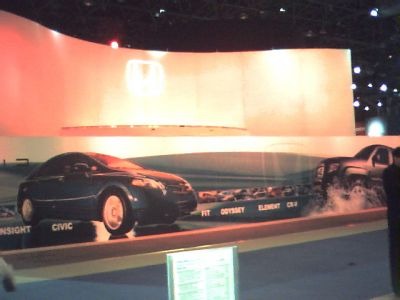
The article suggests that a more fitting collaboration might have involved “Mr. Opportunity,” a character from Honda’s advertising, with the young idol. Such a pairing could have generated significant buzz, particularly in Japan. While Honda Civics have had more prominent roles in the “Fast & Furious” franchise compared to the Corolla (which was largely confined to cameos, like the iconic AE86), a collaboration with a Civic or a Mazda 3 might have been received more favorably.
A Mazda 3, in particular, could be seen as a progressive fusion of American and Japanese automotive concepts and technologies. Beyond the choice of car, production quality concerns are often present in international advertising campaigns involving copyright and significant budgets. However, these issues might have been less noticeable if the migration from one media scene and aesthetic to another had been smoother.