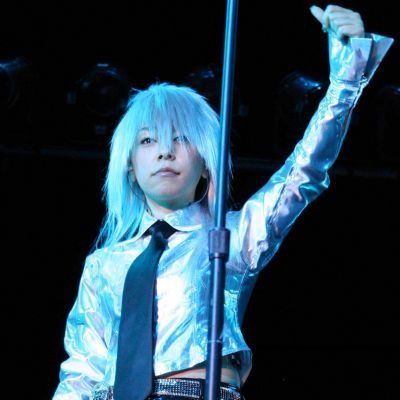
UlasanAnime.com – This American’s experience at C3 Anime Festival Asia Singapore 2019 (AFASG) can best be described as a Thanksgiving weekender, a journey across a considerable distance that proved to be enjoyable. Singapore, a bustling city-state, perfectly encapsulates both rich Asian traditions and the opulent modern lifestyle reminiscent of “Crazy Rich Asians.” However, it’s also an expensive locale. The convention was held in Bugis, and a walk to the Merlion offered photo opportunities, though the area felt like a tourist trap, replete with overly curated, Instagrammable setups. The author’s persistent impression of Singapore, even on previous visits, was the feeling of being inside a mall, though this certainly beats enduring the outdoor heat.
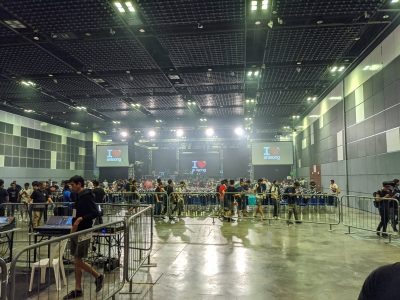
AFASG, now in its eleventh year, has expanded its brand to encompass other conventions in the Southeast Asian region, including those in Malaysia, Indonesia, and the Philippines, following its merger with the C3 brand. This expansion is beneficial as it leads to greater English-language coverage of these events, primarily due to the language commonly used by attendees, especially in Singapore. This contrasts with conventions in continental Europe, where English-language coverage is less prevalent compared to UK events.
The convention itself shares similarities with many other Asian cons, largely revolving around a vast exhibition and dealer’s room. This trend is also observable in major US conventions like Anime Expo (AX) and Anime NYC (ANYC), indicating a broader shift in the convention landscape, for better or worse. While the author acknowledges the significance of the venue, they believe it doesn’t define the entire convention experience and may delve deeper into this topic later.
As a first-time attendee of AFA, the author found the convention to be well-organized, with experienced staff and attendees contributing to a generally positive experience. Minor issues, such as a seating problem for Friday’s concert, were resolved just before the show commenced.
(Imagine the scenario: you’re eagerly anticipating fhana’s performance, only to find no available seat matching your ticket in the concert hall. You join other attendees standing nearby, all having reported the issue to staff who are working to fix it. Soon, harried staff members arrive with extra chairs, rearranging seating to accommodate everyone. The show is set to begin in five minutes.)
AFASG comprises two main components: the exhibit hall, which features two stages (the Akiba stage, akin to AX’s community stage, and a stage at Lumica’s booth), and the main event space. Stage events are integrated into the exhibition, while the “I Love Anisong” concerts, requiring separate admission, take place in the evenings. All attendees use wristbands for admission, with daily options and a full weekend pass available, though a consolidated weekend wristband would have been more convenient.
A notable aspect of AFASG is its scale. For a considerable period, it has been one of the largest anime conventions outside of Japan. While still substantial, it is now comparable in size to Anime NYC 2019, with Anime Expo being two to three times larger. Attendees familiar with major US anime conventions will find AFASG’s layout and offerings familiar. The “I Love Anisong” concerts, while not always sold out, offer premium seating at a higher price and standing room at the back for a nominal fee, a pricing strategy that contrasts with typical US conventions. The venue’s acoustics were deemed satisfactory, and VIP ticket holders could secure good seats.
Despite some negative feedback, the author suggests that attendees should expect a typical anime convention experience. The venue’s size is appropriate for Singapore, and the crowd strikes a balance between relaxed and enthusiastic, minimizing disruptions. The author’s personal engagement with AFASG was primarily on Sunday, and most enjoyable activities did not involve long queues, as many were either lottery-based or sold online.
For instance, the author was able to join DJ Arisha’s Akiba stage set midway and reach the front row without issue. Similarly, attending Arisha’s set at Lumica allowed for a spot near the front. The exhibit hall was crowded on Saturday but not overwhelmingly so. While shopping opportunities were abundant, attendees often queued at larger industry booths. The author speculates that without contributions from companies like Lumica, attendees might have found fewer activities to engage in.
The lack of concentrated crowds at specific attractions might also contribute to this perception. While many fans were present for various Arisha stages, their numbers were not as significant as in the US, suggesting a healthier convention environment.
Cosplayers were predominantly found outside the exhibition area. Suntec’s convention spaces are situated above a two-floor mall, offering a vertical layout with spacious lobby areas. Attendees congregated and utilized designated photography spots. However, on Saturday, photo circles formed at key choke points, a pet peeve of the author, resembling the Japanese “photo circle” style rather than brief photo stops. The author believes cosplayers should be more mindful of this, though navigating the convention space was generally easy, almost by design.
You might also be interested in : Rokka vs. Spacefarers
To provide more specific details, the author will now move beyond general observations.
The concerts this year were segmented by companies: Day 1 primarily featured Lantis artists, Day 2 included Sony and others, and Day 3 was dedicated to HoriPro. Day 3’s lineup was reminiscent of “Anisong Ichiban.” Despite attempts at crowd interaction, the performances were generally well-received, with the live band accompaniment for May’n and subsequent collaboration songs being a highlight. The author notes that “Don’t Say Lazy” was significantly improved with a live band.
The author and their companions did not stay for the entire concert series, leaving after ReoNa’s performance on Saturday to have dinner, and departing after Mayayan on Friday due to travel exhaustion. The limited late-night dining options in Singapore presented a challenge, but they managed to find decent meals, often at tourist-oriented establishments offering Western bar food. Even McDonald’s was considered a reasonable option.
The concerts generally did not feature live bands, except for actual bands like Scandal and fhana. May’n’s performance with a live band was a notable exception. This composition of the concert lineup suggests that AFASG might be a collaborative effort of various entities, potentially allowing more artists to participate, though the extent of organizer control over management and labels remains unclear. The limited availability of merchandise for many artists was also observed, a trend seen in other shows like AWM.
The audience was energetic, creating a festival atmosphere akin to those in Japan, albeit on a smaller scale and less intimate. While audience calls were largely absent, they were audible, lending a slightly improved American live concert feel.
Beyond the concerts, the author found the talk stages and meet-and-greet sessions to be the most engaging aspects of the convention. The stage events were typical Japanese-style talk shows, but unlike less engaging US counterparts, AFASG featured skilled moderators like Yoshida Hisanori who kept the segments lively. The Fate/Grand Order (FGO) ANYC panel was cited as an example of a well-executed event, in contrast to scripted walkthroughs that waste attendees’ time, a plea directed at Aniplex and Pony Canyon.
The success of the AFASG stage events was largely attributed to the exceptional MCs, including Ash, Reiko, and Yoppy, who expertly managed the Japanese segments. Yoppy, in particular, was highlighted for his ability to facilitate engaging panels, a skill that is difficult to replicate outside of East Asia. A Malaysian talent, Shinonon, also competently handled meet-and-greet sessions, though the limited time per person often resulted in brief interactions. The author noted that all four meet-and-greet guests were adept at making these brief encounters memorable. Eriko, surprisingly, was considered the least proficient, while Arai’s comedic timing and appearance were praised. Fujita Saki, who typically does not engage in such sessions, seemed to be doing more now, possibly due to her role as Miku. Tano Asami also provided a pleasant interaction.
The author attended a few stage events, including a notable one where Yoppy and Eriko attempted an English-only discussion about Eriko’s work, with Ash providing narration. Tsugu and Kayanon hosted their usual “Saekano” stage, which also touched upon “Sword Art Online” (SAO), and vice versa. The author was only present for the “Saekano” segment, where Yoppy’s usual antics and the cameraman’s focus on Tsugu’s expressions were observed. The “Null&Peta” stage featured a demonstration of the game’s gameplay by Ajuju, which was interesting for someone who enjoyed the short anime series. The author also played the game’s demo, which was reportedly its first public reveal.
The Eriko panel was so engaging that it surpassed the Trysail radio event at Taipei during the first Lisani TW as the most enjoyable panel the author had witnessed at a convention or event. The author expressed a desire to see such cross-language panels, featuring prepared guests and scripts (though Yoppy and Sensei’s improvisation added to the charm), implemented in the USA, perhaps starting with Toronto. The author believes that such MC skills are crucial and AFASG serves as a proof of concept, demonstrating that with the right personnel and planning, these events can be successful.
Overall, AFASG 2019 was a positive experience, and the convention itself was deemed satisfactory. The author suggests that while more demanding attendees or specific guest lineups might lead to greater criticism, AFASG offers a laid-back experience for those who are flexible, with opportunities to spend money for access and enjoy programming that caters to a more relaxed approach. The monetization model is effective in Southeast Asia but may limit its appeal to a wider audience compared to US/Canadian conventions, leaning more towards industry focus. The author found Singapore’s climate and urban environment somewhat tiresome after a while, but appreciated the welcoming and friendly people who made their short stay enjoyable.
PS. Regarding food, the author experienced both high-end and casual dining. Maxwell hawker market is now a pilgrimage site for Trysail fans. They visited Summer Pavilion for yumcha and then dined like expats for the remainder of the weekend, also indulging in airport lounge hopping, which included ANA sushi and a salted egg Krispy Kreme donut.
Hawker food is highly recommended in Singapore, and more upscale food court options are also available and likely comparable. Breakfast was enjoyed as pictured:
The aforementioned meal at Summer Pavilion, conveniently located near the convention and accessible by walking. The chili sauce, lychee oolong tea, and abalone tart were particularly memorable. The author would consider returning.
They also had kaya toast and kopi, and McDonald’s, with the double spicy chicken sandwich being quite good. No pictures were taken of these meals as they were considered unremarkable.
Jaggi’s Northern Indian Cuisine was a recommendation from Yoppy on his show with Eriko the week of AFASG. It turns out the owner is Ash’s uncle, who is pictured on the truck, a truly remarkable individual, embodying both lancer and rider classes!
Another establishment recommended by Yoppy and Sato Junichi, which they visited on Saturday after dining there on Friday. Located at Clarke Quay, it’s a very touristy area, and the craft beer bar was deemed acceptable.
For the rest of their meals, they frequented mall food courts. The most notable dish was a salted egg stir-fry noodle that was surprisingly delicious, though no picture was taken.
The author concluded their stay in Singapore with a Sunday night “uchiage” (after-party) with other “Americans” at another bar and grill, as the city generally closes after 10 pm. The venue, costing approximately 20 SGD, was considered expensive by local standards. The location can be seen in this Instagram post.
The post concludes with photos from the Narita ANA lounge lobby, featuring a 787 model, an R2D2 787, and an autographed R2D2 787 with the entire cast, symbolizing the end of the journey.