
UlasanAnime.com – Aquarion Evol episode 9 delves into symbolism and concepts that invite thought experiments and association games, pushing the boundaries of its narrative.
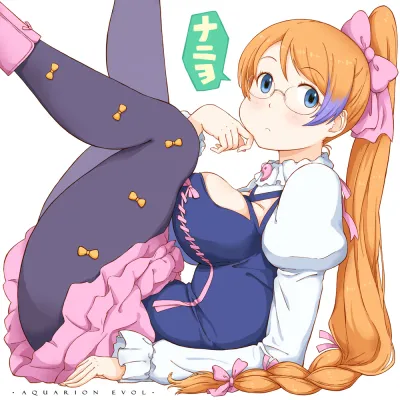
The episode is undeniably over-the-top, offering ample material for interpretation, particularly concerning the recurring themes of geometry and gender within anime.
Phallic symbolism is a prevalent element, a genre trope often seen in mecha anime where robots are formed from combining parts, a concept familiar from series like Voltron. Aquarion, in its postmodern fashion, plays with these ideas, deviating from the straightforward approach of its predecessor.
The infamous Mugen Punch from the first season is revisited, but EVOL introduces new interpretations and uses for such attacks, suggesting a deliberate departure from the original’s methods.
The question arises: what does it signify when a character like Mix “fills all your holes”? The imagery suggests a more invasive and perhaps uncomfortable penetration than simply being cut by a weapon, leading to a discussion on whether this can be considered a sex-distinct literary treatment.
Feminism is another underlined theme in Aquarion, highlighting the inherent differences between men and women, yet emphasizing their need to perform similar tasks. This mirrors the dynamic between humans and Zentradi, who, despite their differences, coexist.
The narrative prompts reflection on who might represent the Zentradi in this context. Considering the nature of public education in Japan, which can be seen as more conformist than nurturing of individuality, Aquarion can be interpreted as a celebration of gender differences.
This celebration occurs within a framework where, upon leaving the structured environment of school, individuals are metaphorically “sucked up” by external forces, likened to alien abductors or sent to a “child boiler.” After this transition, the distinctions between men and women become less apparent.
However, within the confines of their education, characters can engage in metaphorical countermeasures, confronting manifestations of real-world issues through symbolic battles.
Rape is presented as a plot device, particularly through the depiction of mind-controlled soldiers who seek out women for the purpose of bearing children. Beyond the science fiction jargon, the underlying implication points to a desire for procreation.
Andy’s desire to save his first “gattai” (combination) with Mix raises questions about his motivations. While he might be posturing to impress her, the act of “gattai” in Aquarion’s context brings the discussion back to the theme of consent and synchronization.
The concept of “synchronizing” to make “gattai” work implies a form of consent, thus allowing for the reinterpretation of potentially problematic scenarios as plot devices, even if the term “rape” is used metaphorically.
The episode also touches upon sexual harassment, contrasting Andy’s consistently lecherous behavior with a more innocent portrayal, questioning whether such actions are purely biological or harmless.
This is compared to the “trash talk” often seen in competitive fighting games, prompting a debate on the nature and impact of such behavior.
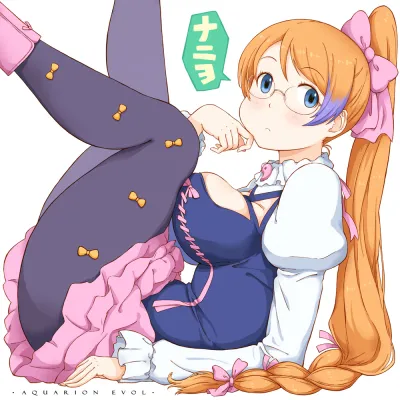 As an aside, the writing for Andy in this episode deviates from his established character. Andy is typically depicted as someone who perseveres through setbacks. However, his method of doing so, by “digging” both figuratively and literally, is explored.
The scene where Andy learns about Mix by eavesdropping is noted as peculiar, with the suggestion that a more direct approach, like asking Mikono or having Amata relay information, might have been more fitting.
The character’s moniker, “Andy W. Hole,” is explained as a playful reference to the idea that all his “holes” are the same size, tying back to the earlier “canning factory” metaphor.
EVOL consistently portrays Mix with tsundere characteristics, reminiscent of Kirino from OreImo. This portrayal is seen as a stereotypical yet effective narrative choice that the show leans into.
The episode offers a deeper interpretative layer when Andy discusses the “hole in her heart” with Mix. The notion of “filling” this void leads to questions about who is doing the filling and who is being obliged.
Andy’s “digging” into Mix’s personal construct symbolizes his role as a phallic aggressor, but it is ultimately Mix who must decide whether to accept his advances.
The irony that Andy doesn’t achieve his immediate goal, and Mix ultimately takes a more dominant position, especially in relation to Amata and Mikono, is highlighted as a progressive or compromising aspect within the anime’s narrative.
You might also be interested in : Unprecedented Surge of Unpredictable Novels Hits Japan
While acknowledging that Aquarion might not be expected to offer truly progressive interpretations of sex and gender, the episode provides the foundational elements for such discussions.





















