UlasanAnime.com – This article might be a decade late, but it’s better to address it now than never.
It’s reassuring that the most contentious point in the forum discussion was someone referencing TVTropes to argue that light novels are easier to read than regular novels, which is actually incorrect. The rest of the conversation remained quite civil.
Indeed, the term “light novel” is primarily a branding and marketing strategy, much like the concept of OEL Manga. The appeal of such initiatives, often promoted as “by fans for fans,” lies in their ability to foster niche content, even while larger corporations capitalize on these trends. This environment allows for unconventional narratives, such as the popular self-insert stories commonly found in best-selling light novels, to flourish, ultimately contributing to the anime content that many enjoy.
You might also be interested in : Autumn 2016 Housekeeping
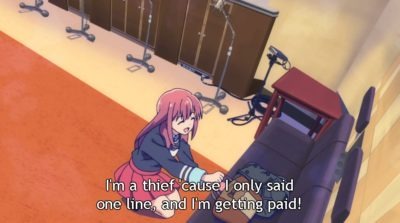
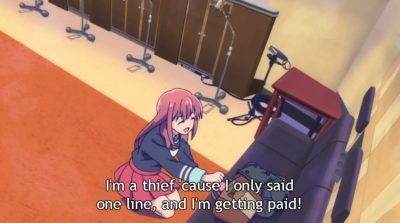
Wataru, a character in Girlish Number, partly expresses frustration stemming from these industry dynamics. Understanding how anime is produced, much like grasping the intricacies of how anime gets made, is crucial for a deeper appreciation of the show. Comparing Girlish Number to Shirobako is fitting in this regard, as terms like “gyara” (character designs) take on new significance. Without knowledge of how voice actors are compensated or the process of “afureko” (post-recording), the lead character’s playful demeanor in the initial episodes might be misunderstood.