UlasanAnime.com – The term “Mary Sue” carries a lot of baggage, which is why “chuunibyou” often serves as a more fitting alternative when describing TV anime. Its relative newness and foreign origin mean that many viewers are not entirely sure of its precise meaning. Essentially, both terms address fundamental issues related to realism and the suspension of disbelief.


When engaging with anime, certain elements are naturally accepted as part of the medium. Realism, in this context, pertains to how the audience interacts with the material. For instance, most viewers approach late-night TV anime as character and drama pieces, prioritizing character development. This often leads to a disconnect when people try to analyze even simple gag 4koma adaptations from a dramatic perspective, resulting in frustration for onlookers. For example, when watching Full Metal Alchemist: Brotherhood, the focus is on the unfolding plot, the characters’ journeys, and how the protagonists achieve their goals. Details like the specific ammunition used in different environments or the military’s sock provisions are less relevant. However, the automail, a plot device, is expected to be acknowledged, suggesting an emphasis on not sweating the small stuff.
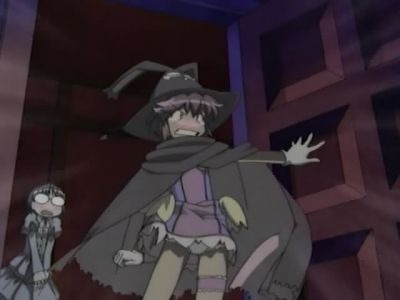
Considering this, let’s examine the choir drama Tari Tari. In a particular episode, a petty thief is apprehended through the power of cosplay and impressive vocal performances. The ensuing chase scene, where costumed characters pursue a bicycling thief on foot, culminating in a vocal performance, likely exhausted both the pursuers and the criminal. Despite this, viewers are expected to believe that the bicyclist is somehow more fatigued than the high school students in their tokusatsu outfits. As the song progresses, the audience is meant to accept that the thief is mesmerized by Wien’s heroic stance against the setting sun. It’s also implied that Sawa’s mother conveniently had these outfits, which miraculously fit the one-size-fits-all Japanese characters and their designs, while also providing an opportunity for side income. This is presented as drama, and such occurrences are attributed to coincidence, much like a thief stealing during a public event. One might question Japan’s crime rate in such scenarios.
Perhaps focusing on trivial matters like these is preferable to questioning where Sawa would ride Saburo, given the limited space for such a fine animal without encountering people. This is reminiscent of the scenic shots across Enoshima, where the Choir And Sometimes Badminton Club members are frequently seen alone on the seaside. This is peculiar, as Enoshima is typically bustling with people in reality. To Tari Tari‘s credit, these kinds of questions are usually not raised, as the audience is more invested in Konatsu’s struggles and the group’s characterization. This is how viewers engage with Tari Tari.
But why would these questions arise? Because they stem from contemplation. This highlights the delicate balance between deeply engaging with a narrative and simply enjoying it without excessive scrutiny. The former can be highly effective in captivating an audience, but it risks exposing the thinness of the plot if viewers begin to question too much, potentially reducing a beautiful production to its underlying mechanics. This is precisely what happened with Sword Art Online for me. This is why an excessive reliance on chuunibyou elements within a story can be problematic, as it prompts the audience to ask the wrong kinds of questions.
A more illustrative example is Guilty Crown. In this case, the chuunibyou factor was not overwhelming, but it was sufficient. When combined with its tangled web of plot devices, conspiracies, and peculiar character dynamics, it compelled viewers to ask direct questions that Guilty Crown‘s flimsy narrative couldn’t adequately address. Once the underlying structure becomes apparent, it’s natural to point out areas where the story could have been improved, especially when similar narratives have been executed more effectively elsewhere.
Conversely, a story like Hyouka demonstrates how an engaging narrative can be maintained without revealing its underlying chuunibyou nature. At its core, it’s a boy-meets-girl story where the boy initially believes he holds all the advantages. The girl, however, is considerate enough to communicate her intentions without resorting to manipulation. The outcome is a less predictable life for the boy, a subtle shift from the typical middle-school ailment. [For those who follow my blog and were unaware that Houtarou begins Hyouka with a Type A case of chuu2byou, now you know.] The series also reflects a distinctly Japanese sensibility, where men often maintain their “face” due to the significant contributions of women who support them.
As a side note, this is partly why I struggle with shows like FMA and mainstream shounen titles. My tendency to overthink leads me to dissect their narratives, ultimately revealing their weaknesses over time, as is the case with most things. Based on my experience, this process is rarely pleasant, with the exception of One Piece. I believe some shows intentionally leverage this aspect to their advantage; Simoun comes to mind as an excellent example. I also consider certain meta-shows like Seitokai no Ichizon as a way to both celebrate this phenomenon and provide catharsis for such frustrations.
Finally, I assume there’s no need to elaborate on shows that explicitly require viewers to leave their critical thinking at the door, right?
You might also be interested in : The Essence of Hyouka
PS. I believe I’ve used “chuunibyou” in two different ways within this post; I hope it hasn’t caused any confusion.