UlasanAnime.com – Sengoku Collection is a 26-episode TV anime series. For a comprehensive understanding of its premise, a thorough review is recommended. In fact, any review from someone who has watched the entire series should provide a good overview, as the author has yet to encounter a Sengoku Collection review they disliked.

The distinctly episodic nature of this anime makes it challenging to categorize in a way that resonates with the general English-speaking anime audience, especially since series like Seraphim Call or Kita E are not widely known. However, the show’s structure allows for selective viewing, enabling viewers to jump between episodes and enjoy the “best” ones with minimal loss of context.
The author attempted to write this post multiple times, starting in the summer and concluding in the winter. The delay was likely due to the complexity of some grand ideas presented in the show, which were difficult to fully grasp. Additionally, by the time of writing, others had already covered similar ground, such as an excellent write-up that explored the films Sengoku Collection draws from, its epic structure, and its Greek chorus elements.
Readers are also encouraged to check out a staff interview, generously translated, for further insights into the series.

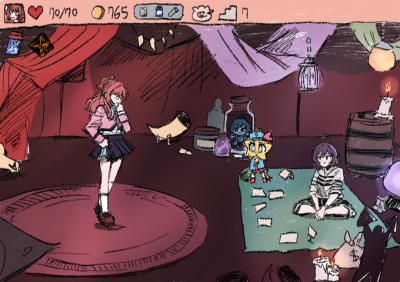
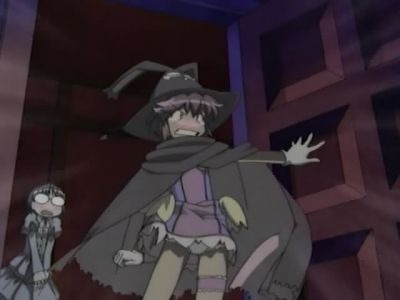
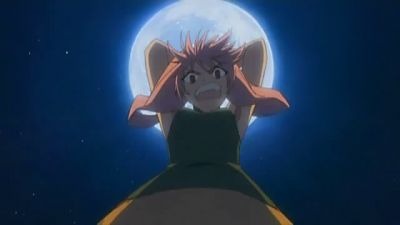
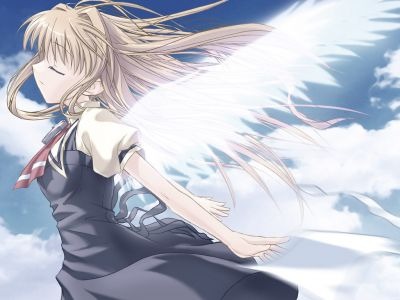
In essence, while a comprehensive guide has already been written, the following presents a personal perspective. The list below highlights recommended episodes, indicated in bold, for those who prefer to pick and choose. However, the author suggests that any episode is enjoyable, and it might be best to watch them all without relying on a list to allow the show to offer its own surprises. Alternatively, clicking on the provided image can lead to the corresponding episode based on the film it references.
- Sweet Little Devil — This episode would be more enjoyable if it weren’t the first. As it stands, it plays on first impressions, which this post may have inadvertently ruined. It’s recommended to skip it, though watching it with a fresh perspective might offer some appreciation.
- Peaceful Empress— Contrary to some opinions, this episode, along with episode 3, is considered among the best due to its subtle storytelling. The author believes this sentiment might stem from viewers who approached the show without prior knowledge, as its premise was unclear at that point. It remains a personal favorite.
- Pure Angel— This episode is particularly appealing to fans of yuri. For others, it might seem a bit dull. The author’s enjoyment was enhanced by strong voice acting and a story reminiscent of Eastern literature tropes, similar to Hyouka.
- One-eyed Dragon — While there’s a follow-up episode, this one is generally good. It marks the first significant shift in tone, offering a sengoku genderswap noir with a protagonist entangled with a criminal gang.
- Sword Maiden— This episode served as a key realization for the author, drawing parallels to “Bowling for Columbine.” It’s recommended to grasp the extent of the show’s silliness, which escalates later. Watching an anime about “Bowling for Columbine” is a unique experience in itself.
- Knowledge Master — Initially, this episode was not fully understood, but it offered a satisfying revelation later on. While not outstanding on its own, it contributes to understanding the generals’ attitudes and deviates from the preceding episodes. It also appeals to fans of “Back to the Future.”
- Refined Bard — This is arguably the best episode of the series, centering entirely around haiku. It beautifully illustrates how poetry can transform the lives of those who engage with it.
- Regent Girl — This episode is an homage to “Alice in Wonderland,” focusing on the visual representation of imagery and the engaging practice of finding meaning in the absurd.
- Ambitious Princess I — The first part of a two-episode arc. It’s considered average as the narrative doesn’t fully conclude within this episode, instead wrapping up in the final episode. Recommended for those planning to watch episodes 25 and 26.
- Ambitious Princess II — Refer to the description for episode 9. This episode features conflicts between rough school factions.
- Brutal Maiden — An engaging episode for fans of noir, focusing on fallen characters.
- Dancing Blossom — This episode is a more direct homage and offers an enjoyable, self-contained story about a night rider.
- Silver Hornet — Introduces Ageha, who is considered the author’s favorite and the second-best side character in the series.
- Novel Deciders — This episode is for those who can appreciate its absurd comedy. It features the Shinsen Gumi.
- Annihilate Princess — While a follow-up to a previous episode in a thematic sense, this episode focuses on a haunted house, avoiding major spoilers.
- Blade Adept — Continues with absurd comedy but is more straightforward to follow than previous installments.
- Sunshine Ruler — A touching, self-contained episode. The “sengoku general” featured is believed to be Chinese.
- Four Leaves — This episode boasts impressive visuals (despite the low budget) and a moving story, making it a quality standalone episode.
- Vengeful Fang, IS — The second two-part episode, it sets the stage for the main plot involving Nobunaga and Mitsuhide. Though skippable, it’s a strong example of the Japanese murder mystery genre.
- Vengeful Fang, OS — See the description for episode 19.
- Cavalry Queen— This episode is an homage to “2001: A Space Odyssey” and introduces the best side character of the series, and possibly the year.
- The Splendor — This episode serves as a follow-up to Masamune’s episode 4, offering a satisfying conclusion. It’s recommended only for those who have seen episode 4.
- The Dune — This episode uses a sandbox analogy where children manipulate children, with the analogy mirroring reality. It’s the episode that left the most lasting impression on the author.
- Peaceful Empress – EX — This episode relates to Ieyasu from episode 2 and also functions as a standalone homage to an 80s French film, presented as a media-within-media concept.
- Marshal Princess — A warlord goes fishing in this episode, which also connects to episodes 9 and 10, as well as the final episode. Watching it is recommended for clarity, as it explains certain plot points.
- Sengoku Collection — This episode helps to tie up loose ends and is highly recommended for those who have watched any of the non-standalone episodes.
The author acknowledges recommending half of the series, questioning the utility of a selective list and suggesting watching everything. For a synopsis, Wikipedia is available.
Another notable aspect often overlooked is the exceptional ensemble of voice actors behind the show, described as “nuts” due to the sheer number of independent talents involved. The series features a vast cast, with individual actors delivering memorable performances. Examples include Aipon’s great role in episode 7, Kugyuu and Mariya Ise’s comedic brilliance in episode 23, Ageha’s introduction, Ai Shimizu’s surprising role, and Ayumi Tsunematsu’s consistent performance in sulky-voiced roles.
To conclude, the author quotes a favorite anime reviewer:
…there were some fantastic episodes in here overall with striking and appealing animation throughout. I really enjoyed this show thoroughly and hope to explore it again some day.
In agreement, and regarding endorsements, another reviewer offers a more in-depth appreciation:
…Sengoku Collection is a hidden gem. On the surface, it’s a story of cute girls living their lives in an ordinary fashion. And it is. Upon deeper inspection, it gets its warring states history right, and expresses it in unique ways, like turning the steed Matsukaze into a motorbike. Upon further deeper inspection, it’s a cinephile’s dream, covering every conceivable genre of fiction in the last fifty years. It’s science fiction. It’s fantasy. It’s comedy. It’s drama. It’s allegories and dreams and arthouse and mainstream all in one, and every element reinforces the other.
Furthermore, a simple yet powerful endorsement is shared:
You should watch Sengoku Collection! Yes, you!
This Sengoku Collection post is included in the year-in-review as it exemplifies a singular 2012 title that fulfills numerous specific criteria. The author highlights its versatility by listing diverse elements it incorporates, such as car chases, gambling, Russia, Kafka references, strategic maps, hot water bottles, strong female characters, underboobs, time travel, and after-school teatime, deeming it the “Swiss Army Knife of anime.”
The next topic in the review series asks, “Which anime had fishing?” The answer, of course, is Sengoku Collection.
You might also be interested in : How to Appreciate Chuunibyou Content
Year in review 2012: