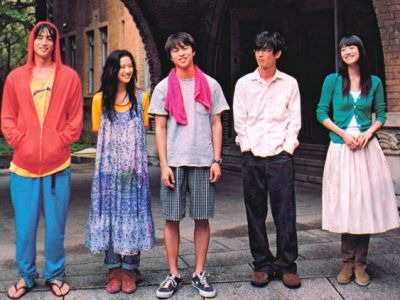
UlasanAnime.com – This travelogue delves into a personal journey through Japan and Taiwan during the winter of 2016, primarily driven by a passion for anime-related events and a desire to reconnect with family. The author meticulously details their experiences, from attending major live events like ML3rd and Nendo’s 10th Anniversary to exploring the culinary delights of Taipei and experiencing unique travel moments.
The primary motivations for embarking on this extensive trip, spanning over two weeks, were to attend ML3rd and to visit relatives who hadn’t been seen in years. The author’s maternal grandfather’s advancing age served as a significant impetus for the visit, especially after regretting not seeing their maternal grandmother one last time before her passing. The fact that the author’s parents were also visiting the same family members simplified arrangements, providing a sense of security. The timing of the trip was almost perfect, coinciding with Chinese New Year and ML3rd Sendai. Following the live event, the author spent five days with their parents, although they noted it was a shame it overlapped, as a New Year’s Eve meal would have been ideal.
The author had previously documented three major live events attended during the trip: ML3rd Nagoya, ML3rd Sendai, and Nendo’s 10th Anniversary. In between these, the author made two trips to Taiwan, resulting in a five-leg journey—three in Japan and two in Taiwan—which was described as “a little nuts.”
The initial leg in Taiwan involved visiting Eriko, Asapon, and GamiP at the Taipei Game Show. This also served as an opportunity to observe the local Taiwanese idol scene. The author found them to be an interesting and younger-than-expected group, many of whom possessed a strong command of Japanese, sometimes exceeding their English proficiency. This led to amusing situations where the author, introduced as being from America, was addressed in Japanese, which often proved effective.
The culinary scene in Taipei is highlighted as a major draw. The author describes Taipei as a dream city for gastro-tourism, offering an extensive range of high-quality food options accessible via mass transit and at reasonable prices. While acknowledging that meticulous research might yield similar results in places like Southern California or New York City, the author posits that for every niche cuisine found in diverse US areas, Taipei offers multiple options, especially for those familiar with Asian palates.
The author concedes that authentic European cuisines might be less prevalent, and Middle Eastern and African eateries could be more numerous. However, the discovery of a few such establishments during a short stay suggests that more could be found with dedicated research. The food landscape in Taiwan is characterized as a blend of Japanese-influenced and standard Chinese dishes, interspersed with local styles and some unexpected variety. This is likened to a Japanese department store food court, but with a broader spectrum of flavors that extend beyond typical Japanese preferences, even in everyday dining settings.
Prepared foods in Taiwan are noted for their affordability, with prices comparable to those in less expensive US regions like Ohio. The cost of premium dining in Taipei aligns with mid-range options in the US. The everyday food prices are so accessible that the author could enjoy substantial local meals for under $10 USD per day.
Despite a personal bias, the author asserts that the quality of food in Taipei surpasses that found in much of Southeast Asia, even with similar variety, and is likely more diverse and cheaper than in Hong Kong. Consequently, Taipei is presented as a “best-of-several-worlds” destination for those seeking diverse, high-quality, and affordable culinary experiences.
The Taipei Game Show itself was not particularly engaging for the author. Despite camping out, the venue felt small, and it was crowded. The author admitted to not playing many games these days, noting the prevalence of mobile games in Taiwan, mirroring trends in Japan. The author suggested that the lack of engagement stemmed more from not experiencing much of the show rather than the show’s inherent lack of interest.
Food, paradoxically, played a more significant role, as the group enjoyed hotpot at an after-party, described as being “as you imagined.”
===
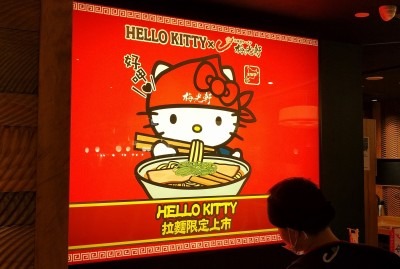
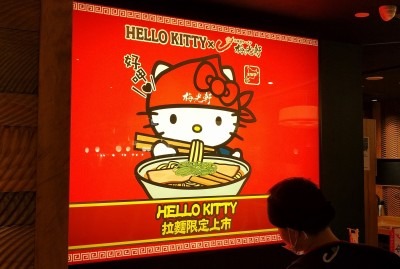
A semi-relevant anecdote involves an unexpected flight on the Hello Kitty Jet. The author was unaware of this until boarding, only realizing the unique nature of the flight upon descending to the gate. The Hello Kitty-themed boarding pass also failed to immediately signal the special livery.
Upon researching, the author identified the aircraft as the Hello Kitty Speed Puff, operating a daily round trip between Taipei (TPE) and Narita (NRT). While external images might showcase premium cabin features, the economy class experience on the Airbus A330-200 was described as comfortable, with standard seating but notable Hello Kitty touches in the pillows, restrooms, in-flight menus, cutlery, and more.
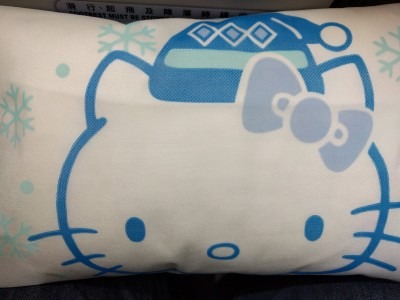
The author speculated that perhaps reviewing the in-flight shopping catalog, rather than sleeping through most of the flight, might have revealed exclusive merchandise. Alternatively, the author humorously considered the possibility of using Hello Kitty-themed toilet paper.
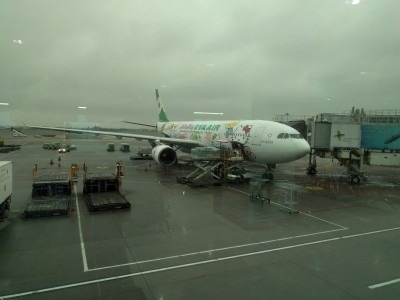
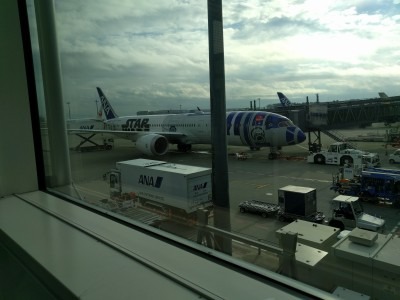
The author reported generally good luck with flights throughout the trip. The United Airlines flight from Newark (EWR) to Narita (NRT) was deemed the best in recent memory. The two ANA-operated flights between Haneda (HND) and Songshan (TSA) were notably uncrowded, allowing for ample space, though the author did not opt to lie down. These flights utilized Boeing 787 aircraft. On February 8th, during the HND to TSA flight, the author enjoyed beer and watched the Super Bowl while using in-flight Wi-Fi, expressing surprise at being able to catch the game given the travel schedule. They noted the absence of the R2D2 themed flight, which was parked nearby.
This streak of good fortune was contrasted by the unfortunate incident of losing a wallet in Taipei while on a bus to the airport.
The wallet was lost on the way back to Japan from the Taipei Game Show leg of the trip. Fortunately, it was recovered without any loss of contents. The author suspects the wallet was dropped either near the luggage pickup area or on the bus seat. Relatives managed to locate the wallet the same day, though the ordeal likely caused them more distress than the author experienced, as they proceeded to catch their flight regardless. The wallet contained money, money-related cards, some point cards, and a Japanese SIM card. The author considered it a fortunate escape from losing their JR Pass. Having some US dollars on hand provided sufficient funds to manage in Japan until the wallet was returned.
The wallet was retrieved a couple of days later when a friend flew from Taiwan to attend Nendo and ML3rd events, which the author considered a fortunate turn of events.
As a side note, the absence of the wallet did not deter the author from visiting the IM@S Cafe, an action they deemed “kind of bad.”
===
The week following the Taipei Game Show, the author attended two days of Wake Up, Girls! (WUG) events in Taipei. These events featured Myu, Aichan, Yoppi, Yamakan, and Fukuhara Kaori. One event was a free, public talk held at the Taipei Underground Mall, an extensive subterranean shopping area connected to Taipei Station. Locating the stage required some navigation through the interconnected underground spaces.
Since recording was not prohibited and was impractical in the venue, content from the event is available online.
On the second day, the WUG members participated in the Taipei International Comics & Anime (TICA) event. Hikasa Yoko was present the following Saturday, and Kayano Ai attended on the same day as the WUGs. The author attempted to participate in a sign-kai for Kayano Ai but was unsuccessful. Reports indicated that the sign-kai was changed to a meet-and-greet with a raffle for autographs, possibly due to concerns about autograph resellers and at the request of Office Osawa, who brought over Kayano Ai and potentially other guests. A photograph from this event is now featured on Kayano Ai’s Wikipedia page.
Video clips of the WUGs and other guests at TICA can be found in a provided YouTube link.
The three WUG members, Fukuhara Kaori, and Yamakan also appeared at a sign-kai on the morning of their TICA event at Animate HQ in Taipei. This Animate store also hosted a special exhibit for WUG to promote Sendai and an associated tour package scheduled for late March. This tour, news to the author at the time, offered travel from Taipei or Tainan directly to Sendai Airport, followed by exploration of Sendai city and Matsushima by bus, concluding with a live concert in Sendai. The author speculated that the tour would likely involve smaller venues, making it a unique experience. While not the typical WUGBus, it presented a significant opportunity for Taiwanese fans, albeit at a cost of approximately 21,000 NT (around $610 USD).
===
The final segment of the trip was dedicated to relaxation and recovery from a cold contracted at the Taipei Game Show, alongside attending Trysail events. Relaxation also included shopping in Akihabara, an activity the author had not extensively engaged in during the trip, and which they considered a “sinful place” best avoided.
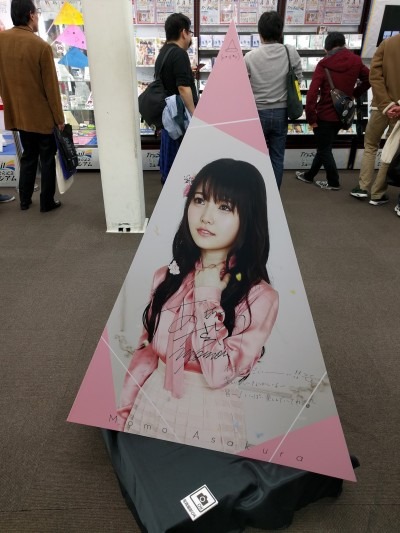
The author did visit Akiba Gamers, which had a temporary Trysail theme due to the sale of Whiz. Attempts at the kuji lottery were unsuccessful, as expected.
The author expressed enjoyment in observing Asakura Momo’s (Mocho) performances and public appearances. On February 14th, a day filled with numerous events, the author opted for a more relaxed schedule, attending two consecutive TrySail events. More ambitious attendees participated in multiple events, including WUGris, Seaside Fes, and Pryxis. The author questioned if “Valentine Kiss” was covered by these other events.
Regarding the TrySail event, the author noted its typical format of alternating talk segments and live performances, lasting around 90 minutes. The event was held at NHK Hall, a venue familiar to those who have experienced the Kohaku Uta Gassen.
The author raised several criticisms. Firstly, Music Ray’n, the idol management agency, was criticized for its “archaic practices” that limit social media exposure for idols to infrequent blog posts. The fan club was also described as sub-par in content compared to typical fan clubs, and subject to the same restrictive rules. The author expressed particular frustration as a producer (P) seeing Mocho’s armband instead of her interacting playfully with Pyon in post-event photos. Secondly, the sound engineering at the event was deemed subpar, with NHK Hall’s acoustics being difficult to mishandle. The performance of “Chocolate Disco” was described as a “sloppy mess,” exacerbated by vocoding. The sound quality deteriorated significantly after the “Valentine Kiss” and talk segments, leading the author to believe it might have been intentional.
Despite these criticisms, Mocho’s performance in “Chocolate Disco,” a three-girl idol unit cover of a Perfume song, was praised. The author felt that while TrySail possesses songs capable of captivating an audience, they often hold back. They expressed a desire to see TrySail perform a full-length live show that culminates in songs like “Let’s Kouken,” “Cobalt,” “Baby My Step,” or “Honto Dayo,” highlighting the quality of their existing catalog despite not yet having a full album. The author felt that the current mini-concert format limited their potential.
The talk segment followed a “chocolate treat” motif, involving various events and games for the three members. Failure in these games resulted in them delivering “amai serifu” (sweet lines), a pun on the event’s name “Amaysail.” The author humorously thanked “MochoTenNansu” for the phrase, which served as a reminder of Japanese English illiteracy. These lines consisted of standard confession phrases, with Nansu and 10ch’s facial expressions adding an interesting dimension.
The games themselves were varied and largely forgettable, though some were more engaging. Reverse call, where the audience sang along to “Baby My Step” and the members performed the calls, was considered the best. The bicycle challenge revealed Mocho’s inability to ride a bike. The author also mentioned challenges involving fried chicken and carrots, recalling a desire to try Lawson’s fried chicken at Narita Airport the following day.
===
You might also be interested in : The More Things Change
The author concluded that it was a “good trip,” arguably one of the best, as they had already booked their next journey. They expressed no regrets, provided they could secure a recovery weekend after landing to overcome jet lag and fatigue. The only regret mentioned was not ranking in the Deresute Tulips event, falling short by two runs, and a general liking for Fred. Another minor regret was not maximizing the use of their two-week JR Pass. While the cost was recouped through train travel, smarter planning could have potentially involved rerouting flights and utilizing night buses more, saving money. However, the author acknowledged that the Pass allowed for more stylish travel and comfortable sleeping arrangements compared to bus seats.