UlasanAnime.com – The IDOLM@STER M@STER OF IDOL WORLD concert, held at Saitama Super Arena on February 22-23, 2014, was a monumental event for fans, offering a two-day spectacle of music, performances, and fan engagement.
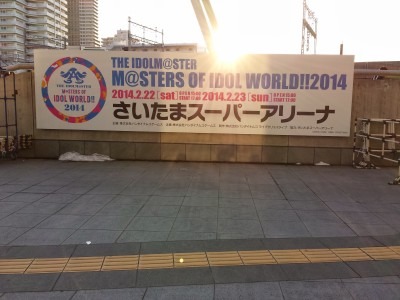
This extensive coverage delves into the multifaceted experience of attending this significant concert. While a comprehensive, word-for-word account would be exceptionally lengthy, this article aims to capture the key highlights, personal impressions, and memorable moments that defined the event.
The post-concert euphoria lingered for weeks, amplified by the reflections of the performers themselves. Witnessing the transformation of new seiyuu-idols into dazzling stars, as seen in clips where newer talents acknowledge their seniors, offers a profound emotional impact that transcends a simple written review. This sentiment is precisely why a detailed, lengthy write-up felt necessary, yet also challenging to undertake.
To fully grasp the concert’s essence, understanding its background is crucial. The accompanying movie, in particular, plays a vital role in the overall experience. While numerous other elements contributed to the emotional resonance of the event, the film serves as a significant contextual backdrop. For dedicated IM@S fans, familiarity with the movie’s advertisements and trailers is assumed, providing a baseline understanding for those who may not have seen it.
The sheer scale of the event and the depth of the experience led to considerations of breaking down the coverage into parts, a strategy already employed on the 059Pro blog. However, the decision was made to present a more consolidated, albeit lengthy, account, separating Day 1 and Day 2 for clarity.
Background Information, Meta and Shopping
The trip to Japan was primarily motivated by attending this concert, alongside experiencing the IM@S movie. These two major events were deeply intertwined, forming the core of the visit.
Arriving a week prior to the live performance allowed for exploration of Japan’s otaku culture beyond Akihabara, including shopping and socializing with fellow fans. This marked the author’s second otaku concert pilgrimage to Japan, providing a degree of familiarity with the logistics. The presence of a group undertaking the same journey simplified many aspects. This trip also included first-time experiences at Yukarin live, KOTOKO live in Japan, and an IM@S live event, each presenting unique challenges.
Upon returning home, discussions revealed that the concert’s call synchronization ratio was lower than anticipated, suggesting a significant presence of new fans. This observation aligns with the author’s experience, having sat next to a first-time IM@S live attendee on Day 1. It’s plausible that many older fans had competing events in February, particularly on the concert dates, indicating a healthy turnover and influx of newcomers to the franchise.
This influx is closely linked to the 2011 TV anime series, often referred to as anim@s. The IM@S Second Vision games draw heavily from the anime. While the future impact of “One For All” remains to be seen, the live concert served as a powerful launch point for the franchise’s next phase, with the movie acting as an effective advertisement for the event itself. For those who saw the movie, its connection to the concert merchandise was evident.
The concert merchandise was notably extensive. Pre-sale shopping at SSA, even arriving later than anticipated, proved surprisingly efficient due to excellent crowd management and order form distribution. However, the rapid sell-out of popular items like black shirts, keychains, and specific light sets highlighted the high demand.
Even for those who arrived early on Day 1, securing certain items like the black tee and CG/ML lights proved difficult, with only limited sizes or quantities remaining. This scarcity was a recurring theme, even for those who camped out.
To mitigate this, the author opted to forgo items that were less essential, focusing on key pieces. The pamphlet was particularly praised for its quality and content, despite its higher price. The white tee served more as a memento, while wristbands and towels offered practicality. Securing the 765Pro i-Light sets online through a local contact proved successful.
Managing numerous penlights, especially around 13, presented a logistical challenge, even with the aid of a light holder belt. Arena seats offered slightly more space compared to the 200-level seating.
Day One vs. Day Two
While Day One was undoubtedly excellent, Day Two offered a more impactful experience. The song selections and the inclusion of ML/CG girls who reprised their roles from Day One seemed to resonate more strongly on the second day. This could be attributed to the performers’ increased comfort after their initial performance or a higher concentration of seasoned live attendees on Day Two. The 765Pro performances remained consistent, though Azumin’s emotional breakdown during “Alright” was a poignant moment. The surprise appearance of Haruka Tomatsu on Day Two, performing “Hello” and joining for the final songs, was a significant highlight.
The arrangement of “Blue Symphony” differed, featuring two players on Day 2 versus four on Day 1, which was a notable difference. Aimi’s rockstar persona was captivating in person. Despite these variations, Day Two ultimately felt superior.
Before the Live
Day One began with a rewatch of the movie at Saitama Movix, including a special screening. The day also included watching “Mouretsu Pirates.” Further details of the pre-concert activities, including fan flowers and an exhibition at SSA on Friday, can be found on the 059pro blog.
A group gathered around gate S1 to prepare their gear, managing to secure a locker for the bulky 765pro penlight boxes.
Lunch on Day One consisted of a movie theater hotdog, popcorn, and Coke. A proper breakfast on both days proved essential for maintaining energy throughout the long events.
For Day Two, a trip to the national palace area for a radio recording preceded the return to Saitama with just 45 minutes to spare. This allowed for a quick convenience store lunch, stocking up on fluids, and preparing the penlights. Unburdened by merchandise and luggage this time, the author felt better prepared, with the knowledge gained from Day One proving invaluable.
Light and Prep
Expectations for the concert were moderate, anticipating a significant portion dedicated to CG/ML music, with which the author had only casual familiarity. Weeks prior, a playlist of potential CG/MS songs was compiled. The inclusion of Mayachan and Haramii performing their LTP songs was unexpected, though older tracks were anticipated.
The study sessions proved beneficial, as approximately half the concert indeed featured CG/ML content. The author brought a KB for penlights due to an insufficient supply of UOs. While hesitant to use it on Day One, observing others employing them encouraged its use on Day Two. It’s worth noting that IM@S concerts technically “forbid” the use of AAA, AA, or LR20-powered lights, though this rule was not enforced, and most attendees adhered to it. The challenge of managing multiple lights for various songs was significant, with the initial attempt to wield 13 lights for the first two songs proving impractical.
A light was dropped on Day Two as well, even when using only six lights. It’s recommended to use no more than eight lights for an enjoyable experience, regardless of whether i-lights or standard v2 penlights are used. V2 lights offer a more comfortable grip and easier spacing.
For attendees of SSA-class concerts, it’s important to be aware that UOs sell out quickly in Akiba and Tokyo leading up to and on the day of the show. The demand for UOs was particularly intense, with a group of “Kaigai Ps” managing to acquire 40. Purchasing them upon arrival or bringing them from home is advisable. With approximately 14 UOs, the author played it safe on Day One, using only five, though Tomato’s unpredictable song order disrupted plans for Day Two.
The GamiP UO, a bonus item with the 765Pro penlight and strap, proved useful as a last resort, deployed for “M@STERPIECE.” The author ran out of UOs after the 765Pro medley on Day Two, highlighting the extensive use of lights.
General preparation included consuming at least 16oz of fluids per day, with a full liter of spring water on Day Two. The nearly five-hour concerts required standing for extended periods. Bringing a towel for sweat and avoiding bulky clothing due to limited space were also recommended.
Day One Drilldown
Seating for Day One was favorable, positioned approximately 18 rows from the stage on the left, in front of the left stage extension, and roughly centered on the catwalk connecting the main and center stages. This provided an excellent view of the left main stage but a side or back view when performers were on the center stage.
The concert experience on Day One can be summarized by the view from this seating position.
https://twitter.com/75_nako/status/438670288679497728
The provided image depicts the “left stage” mini-stage during the performance of “Lime-iro Seishun” on Day 1. (Source: 4gamer)
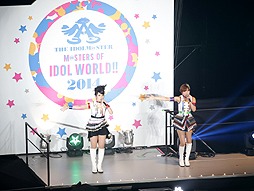
The 4gamer link offers a detailed perspective of the stage setup.
Prior to the live performance, IM@S music filled the stadium. Arriving at the seat with about five minutes to spare, the focus was on setting up gear, with greetings to neighbors postponed.
Shachou appeared on the main screen shortly after 5 PM to explain the rules, marking the official start of the concert.
01. The IDOLM@STER (Everybody)
02. READY!! (765pro All Stars)
03. CHANGE!!! (Eriko, Chiaking, Mayachan, Azumin)
The initial three songs were an overwhelming experience, amplified by the sheer volume of lights and the performers’ energetic stage presence. The parade of idols up and down the stage was a notable sight, particularly from the seating position which offered a direct view of their movements. Waving to performers like Hashii, who faced the audience, added to the interactive feel.
Eriko’s remark about seeing everyone in the back resonated deeply. The crowd’s enthusiastic response to “Ready” and “Change” was palpable, though fumbling with lights remained a minor distraction. Witnessing these songs live fulfilled a significant bucket list item, including the desire to use a UO for “Change,” which was withheld due to it being a four-player version.
Following “Change,” the 765Pro girls returned for an MC session. Four performers left to change, leaving the remaining eight to engage the audience.
You might also be interested in : KOTOKO’s Kuchuu Puzzle Tour 2014 at Shibuya’s AiiA Theater
04. Lime-iro Seishun (Kugyuu, Hirorin, Akki, Juri)
This song, a memorable sequence from the movie, felt perfectly placed in the setlist. Its inclusion on the soundtrack and repeated viewings of the film made it a familiar and welcome addition. Kugyuu’s presence was a highlight, while interactions with Hirorin and Akki were engaging. The Miki P seated nearby showed considerable enthusiasm.
The pace slowed for the subsequent set of 765pro solos.
05. Rebellion (Nunu)
This track from LTP 03 was recognized from prior study, and the calls came naturally. While lacking a strong personal attachment, any live performance by Nu is appreciated.
06. Mythmaker (Chiaking)
This song was well-known, and Chiaking’s stage presence was captivating. Her energetic performances throughout THE IDOLM@STER were noted, with a more serious demeanor reserved for “Mythmaker.” Unfortunately, the seating position offered mostly a back view of her performance.
07. Visionary (Asapon)
The performance of “Visionary” sparked a realization that many favorite songs would likely be included. This was not surprising given the recent nature of the Shiny TV games, of which “Visionary” is a part, despite its release over a year prior. The solo rendition suited Asapon well, though it wasn’t the definitive version.
08. Otome yo Taishi wo Dake!! (Eriko)
The choice of “Otome yo Taishi wo Dake!!” was a welcome one. The song’s impact was amplified by the use of flags, creating a spectacular visual. The desire to participate with small flags was noted. This classic Eriko track provided a memorable experience for a first IM@S live, with calls resonating strongly. Learning the calls for future Eriko performances was a goal.
Following the song, Eriko introduced the concert’s theme of “connections,” signifying the integration of ML and CG idols through thematic links or song collaborations. This was viewed as a clever marketing strategy by Scamco to encourage spending across all IM@S branches.
09. The world is all one!! (Eriko, Yamazaki Haruka, Hashii)
This classic piece was performed on the center stage, offering a partial view of Haruka’s face. The song marked the beginning of the Cinderella Girls segment.
10. Atashi Ponkotsu Android (Hasshi, Matsuzaki Rei)
The choreography for this song was described as cool and cute, perfectly aligning with the Cute CG girl group concept. The engaging calls contributed to a positive overall impression of CG performers, making it a strong opening song for the segment.
11. TOKIMEKI Escalate (Yoshimura Haruka)
While enjoyable live, the song did not quite match the impact of its recorded version. The author was also preoccupied with learning the calls, detracting from full immersion.
12. Marshmellow??Kiss (Matsuzaki Rei)
The vocal performance was notably cute, creating a striking contrast with Matsuzaki Rei’s portrayal of Nagahide in “Oda Nobuna.” Despite the visual incongruity, she convincingly delivered the song.
13. Mitsuboshi ?????? (Hara Sayuri)
This song was a crowd-pleaser, injecting energy into the live setting. Hara Sayuri’s performance was solid, and her contribution was crucial for reinforcing the CG segment.
The prior study sessions proved invaluable, enabling familiarity with all the CG songs performed thus far, a notable achievement for someone who had not previously focused heavily on the CG franchise.
14. MEGARE! (Akki, Machico, Hara Sayuri)
Continuing the theme of connection, this 765Pro collaboration song was a favorite due to its humorous lyrics and fun calls. The performance was highly enjoyable, with Machico delivering a strong vocal performance, harmonizing well with Hara Sayuri and Akki.
Performances typically alternated between the main and center stages, with occasional use of the catwalk. The CG/ML sets often transitioned seamlessly between these stages.
15. Blue Symphony (Tadokoro Azusa, Amamiya Sora, Fujii Yukiyo, Machico)
This Million Live song was a standout on Day One, enhanced by the visual spectacle of blue penlights and the effective four-player choreography on the center stage. It was recognized as one of the more interesting LTP songs during pre-concert study.
This performance marked the beginning of the ML segment, with a subsequent round of CG and ML performances scheduled after the intermission.
16. Liar, Rouge (Amamiya Sora)
Following an MC session, Amamiya took center stage with “Liar, Rouge,” a “cool” song that complemented “Blue Symphony.” The arrangement of the setlist was noted, and the song was thoroughly enjoyed, primarily for its musicality.
17. Ryuuseigun (Aimi)
Aimi’s solo performance was striking, beginning with her solitary appearance on the main stage before the lights illuminated stage left. Accompanied by her guitar, the visual was powerful. The music evoked a sound reminiscent of nano.Ripe. The performance was a welcome, rocking break from the typical idol fare. Aimi’s casual entrance and exit, as if unrelated to the rest of the show, were noted, though her later participation in collaborations was acknowledged.
18. PRETTY DREAMER (Yamazaki Haruka, Yuiton, Natsukawa Shiina)
Seeing Natsukawa and Watanabe again after their appearance at a theater screening the previous week was a pleasant surprise. The inclusion of Nu in this group was considered. “Pretty Dreamer” provided a welcome change of pace after “Ryuuseigun,” returning to a more typical idol sound with engaging calls and an anthem-like chorus.
This song concluded the first ML segment, leading back to 765Pro.
19. Alright (Azumin)
Azumin’s performance of “Alright” showed improvement, though comparison to her performance at the 8th live was not yet possible. This Yukiho oldie was delivered with passion on the center stage, resulting in a back view for the author.
20. Jitensha (Hirorin)