UlasanAnime.com – The anime “Million Doll,” which centers on underground idols, brings to mind a few observations about the lifecycle of cultural phenomena and their commercialization. It echoes a sentiment expressed by an English Literature professor regarding academic study: by the time a subject is analyzed in academia, it may have already passed its peak relevance. This concept can extend to commercial exploitation as well.

The article posits that by the time an anime featuring “chuunibyou” in its title becomes popular, the phenomenon itself might be considered “dead” by that point, as was largely the case by 2012. Similarly, doujinshi and the comic market experienced a significant decline by the mid-90s. The question arises whether the idol otaku culture is also nearing its end in 2015. The author notes that an individual in the USA was able to internalize these concepts as early as 2013-2014, acknowledging that anime production, even for short episodes, still requires time.

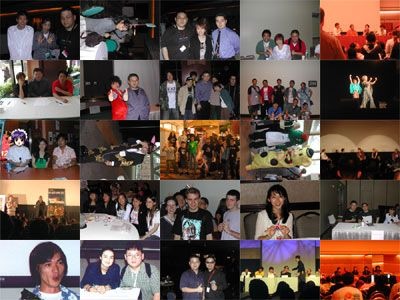
What stands out in “Million Doll” is its expository nature. The tension presented in the first episode mirrors dynamics observed in international fandoms. On one side are the “scenesters,” individuals who attend events, socialize with fellow fans, and meet guests. This often involves substantial financial outlay, funds that could arguably be better allocated to directly supporting the industry through purchases like Blu-rays or imports, rather than on expenses such as hotel stays, dining out, or plane tickets. The author reflects on potentially spending more on flights in a year than their annual figure collection budget at its highest point, prompting a moment of consideration.
The financial tension is less pronounced in Japan due to the lower costs associated with attending events in terms of time, money, and effort. In Japan, the distinction is drawn between “eventers” (referred to as “DD” in “Million Doll,” though the term’s usage has evolved) and those who engage in cheering from home or online. The latter group represents a valuable segment of the fanbase.
The article includes two tangents: the first touches upon “IM@S” (The Idolmaster) and its aim to encompass both types of fans, highlighting its 10th-anniversary live event as a significant undertaking. The second tangent expresses a desire to avoid an in-depth discussion on the idol industry from an armchair perspective.
The expository style of “Million Doll” is reminiscent of early attempts to explore such themes and settings in anime, like “Comic Party” or “Animation Runner Kurumi.” While not as comprehensive as “Shirobako,” which necessitates extensive explanation, “Million Doll” also omits certain details. The author doesn’t believe it was necessary to explain why Aoi-chan was performing “Initial D” maneuvers. In comparison to “Sore ga Seiyuu” (Wake Up, Girls!), “Million Doll” is deemed acceptable, managing a fair balance within its eight-minute episode format.
“Sore ga Seiyuu” employs a mechanism akin to showing an animated GIF of a running rotary engine to a car enthusiast. For seiyuu otaku, it offers a cartoony, behind-the-scenes look at the industry. This approach is enjoyable and fascinating for those already invested in the subject matter, especially if they recognize most of the technical, social, or historical references. It avoids the common trope of applying the same concept to a different setting, such as a Koshien plot in a tank battle or a production company office.
The article suggests that “Plastic Memories” might have used a superficial resemblance to an Asimov story without delving into its core themes. Similarly, “Sore ga Seiyuu” could be considered the “Martian” for tech nerds, but even more specialized in its subject matter. The author believes the reader understands the point being made.
The author expresses enjoyment of these “explanation” type anime, finding satisfaction in learning about subjects of personal interest. This enjoyment is amplified when the show presents new information alongside familiar concepts, framed as pop culture references. The statement that a middle schooler is as skilled at voice acting as the “Love Live” girls is presented as a reflection of reality.
The article suggests that “Sore ga Seiyuu” maintains a straightforward narrative because, based on the portrayal in “Shirobako,” being a novice seiyuu can be a particularly challenging experience. Meeting a renowned voice actress like Nozawa Masako (nicknamed “Makosan,” a term the author admits to being too new to use) would undoubtedly brighten anyone’s day.
To conclude this rambling thought process, the author anticipates that initial impressions of these shows might be difficult for those unfamiliar with the context, as they try to decipher the dynamics presented. The description of Ryuusan’s eyes evokes a strong sense of empathy from the author.
PS: “Million Doll” uses “MD” as its initialism. The author wonders if this is a deliberate joke that will be revealed later for those who have read the manga ahead.
PPS: The article includes links to YouTube videos, humorously acknowledging their content. The author notes that no one uses the terms associated with these videos, perhaps because early-day wotas (die-hard fans) did not rely on inside jokes, or perhaps they only went as far as the acronym “OAD.”
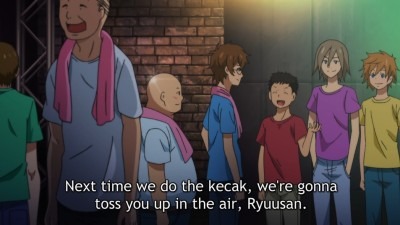
The author questions how this phenomenon even functions.
PPPH: The concept of “DD” (Daredemo Daisuki – loving anyone/anything) might be present. The author mentions the absence of “Kuso DD” (terrible DD) and, as a related tangent, shares a personal theory that Western eventers are compelled to be “DD” out of necessity.
You might also be interested in : Blogging about Comedy: A Lost Art
PPPPS: It is crucial to distinguish between idol otaku (wotas) and those who appreciate 2.5D or 2D idols. In Japan, these groups are indeed quite different. Seiyuu fans are inherently interested in anime and games, and likewise, fans of anime characters share similar interests. Strictly speaking, idol otaku are not necessarily connected to these fields. Within the context of anime, these distinctions can blur if one lacks the proper perspective. Understanding the historical origins and cultural importations is key. For instance, Japanese idols have undergone significant transformations over the past two decades, as have anime, and there is a curious interplay between the two, both industrially and conceptually, as well as in fan reactions.