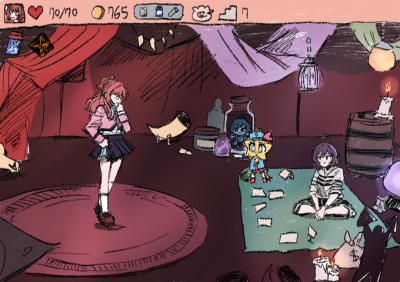
UlasanAnime.com – A few days ago, articles on Kotaku and Insert Credit discussed the Tentacle Bento project on Kickstarter. As of 15 hours ago, Kickstarter removed the project, which had been significantly overfunded, indicating a strong demand for the game. The creators have since moved their project to their own website.

The author applauds the emergence of more tabletop games with anime-style themes. While the use of rape as a game mechanic is noted as unfortunate and somewhat a dark joke within the scene, the author also acknowledges that humor, especially dark humor, can be a coping mechanism for tragedies, with irony often being a silver lining.
Regarding the moral and rights issues, the author finds Kickstarter’s stance straightforward, as the platform has the right to allow or disallow any project. The article references Kickstarter’s guidelines, highlighting potentially relevant points:
There are some things we just don’t allow on Kickstarter.
You might also be interested in : Narrative Parallels in Space Brothers Episode 7
Alcohol (prohibited as a reward)
Automotive products
Baby products
Bath and beauty products
Contests (entry fees, prize money, within your project to encourage support, etc)
Cosmetics
Coupons, discounts, and cash-value gift cards
Drugs, drug-like substances, drug paraphernalia, tobacco, etc
Electronic surveillance equipment
Energy drinks
Exercise and fitness products
Financial incentives (ownership, share of profits, repayment/loans, etc)
Firearms, weapons, and knives
Health and personal care products
Heating and cooling products
Home improvement products
Infomercial or As-Seen-on-TV type products
Items not directly produced by the project or its creator (no offering things from the garage, repackaged existing products, weekends at the resort, etc)
Medical and safety-related products
Multilevel marketing and pyramid programs
Nutritional supplements
Offensive material (hate speech, inappropriate content, etc)
Pet supplies
Projects endorsing or opposing a political candidate
Pornographic material
Raffles, lotteries, and sweepstakes
Real estate
Self-help books, DVDs, CDs, etc
Promoting or glorifying acts of violence
The author questions the definition of “offensive” and “inappropriate content,” noting that many violent games on Kickstarter remain untouched. The lack of objective standards in these decisions is acknowledged as having consequences.
While the Insert Credit article’s comparison of funding one project versus creating one is seen as flawed, the argument about an organization’s association with certain projects is considered valid. The author believes this stance, though detrimental to free speech, is permissible for a private entity like Kickstarter, unlike a publisher such as Apple, which is described as a “content Nazi.”
Initially, the author’s reaction to the Tentacle Bento ban was indifferent. However, a second thought arose: could Kickstarter be sued for its association with a project that faced legal issues due to its content? The author suggests that censoring a game like Tentacle Bento, based on content that seems borderline to project guidelines, could be interpreted as evidence of Kickstarter’s involvement in knowingly selecting or condoning specific projects, potentially leading to litigation.
The increasing diversity of online subgenres and niche projects enabled by Kickstarter also presents a risk of misunderstanding the context of terms like “tentacle rape,” which can have different meanings to different people. The author ponders which word, “tentacle” or “rape,” carries more weight. As online content evolves, what was once an acceptable interpretation of potentially offensive material might be twisted into parody spinoff games, which should likely not be funded on Kickstarter.
The author suggests that the Insert Credit article misses the mark, especially in the context of 2012. However, the viewpoint expressed is likely common among those who will encounter similar situations as more niche interests emerge from obscurity.
Further reflection leads the author to consider if the issue is less about society’s view on rape and more about how Westerners perceive Japan. English media coverage of Japanese culture often adopts a patronizing tone, with little mainstream effort to truly understand it. The author finds it hypocritical for Kotaku to criticize tentacle rape while relying on such content for clicks, suggesting that more insight into Japan can be gained from sources like The New York Times, despite its own limitations.
PS. The author recommends checking out a Kickstarter project that bends some guidelines, linking to “Sad Pictures for Children.” The author reiterates the possibility of lawsuits against Kickstarter, suggesting it’s ripe for a plaintiff’s attorney.