UlasanAnime.com – The author reflects on their extensive anime consumption and the surprisingly limited amount of it they can recall. While some truly exceptional moments are etched in memory, the vast majority of anime watched blurs together after a while, forming a landscape of mediocrity. This leads to an exploration of why certain anime are compelling and how deeply they can entertain.

The author posits that a diverse range of anime is necessary to cater to different forms of entertainment. Their personal favorite, Nadesico, is cited as an example of an anime that entertains on multiple levels, even incorporating elements the viewer brings to the experience. Engaging with a show that possesses depth and cleverness can be particularly rewarding.
However, a self-examination of their own memory reveals that even less remarkable anime, like “Cyber Team in Akihabara,” can leave lasting impressions, particularly through repetitive elements such as transformation sequences. Similarly, “Akahori Hour Love Game’s” Love Pheromone is remembered for its sheer absurdity. The author humorously questions the value of such memories, even suggesting a playful animosity towards the creator for “wasting” their time and memory.
Emotionally impactful scenes, on the other hand, tend to be more memorable. The author notes that “End of Evangelion” is a prime example, with “Millennium Actress” and the initial experience of “Magic Knight Rayearth” also holding significant emotional weight for them. “Cowboy Bebop” is also recognized for its abundance of such moments.
A source of lament arises when considering above-average anime that failed to achieve timeless status. The author highlights Ifurita’s performance in the original “El Hazard” OVA as exceptionally superb. They then question whether similar praise can be extended to characters like Suitengu from “Speed Grapher” or Robin Sena from “Witch Hunter Robin,” in contrast to iconic figures like Priss Asagiri from “Bubble Gum Crisis.”
This issue is particularly prevalent in the mecha anime genre post-“Evangelion.” While numerous intriguing titles like “Argento Soma,” “Betterman,” and “Neo Ranga” exist, their impact on the broader audience is limited. Dedicated fans will continue to seek similar content, but the general public is likely to move on to the next trending show.
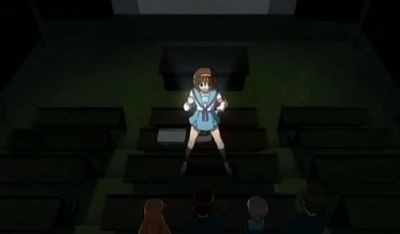
The phenomenon of “fan clamoring” is identified as a significant factor in an anime’s success. “Suzumiya Haruhi” is used as a case study, an anime that aired with little initial hype but achieved massive popularity. The author questions the enduring appeal of shows like “Naruto,” suggesting that fan engagement plays a crucial role.
The author contemplates whether anime functions as a dialogue between creators. While this holds true to some extent, it doesn’t fully explain the landscape. They propose that some anime are integral parts of an ongoing conversation, while others serve primarily as marketing tools to promote franchises and merchandise. Nevertheless, anime creators may still find ways to produce interesting content within their constraints. The author concludes with a nod to shows like “Tsuyokiss,” “Gun Parade March,” and the work of Shinichi Watanabe.
You might also be interested in : Revisiting Fan Debates: Harem Tropes and Their Controversies