UlasanAnime.com – For dedicated anime fans, a journey of at least six years offers a unique perspective on how niche fandoms evolve. Back in the 90s, the term “slice-of-life” genre simply didn’t exist. It wasn’t until the period between 2004 and 2006, when iyashikei shows began to dominate late-night broadcasting, that the term truly gained traction.

The connection between kuuki-kei or iyashikei shows and slice-of-life seems remarkably straightforward. The serene, everyday nature of many of these series naturally leads to the adoption of terms that describe the mundane. One might even argue that “slice-of-everyday” or “slice-of-everyday-life” would be more fitting descriptors.
The evolution of fan terminology is generally not a significant issue. Most fans can readily adapt to terms like “onions” or “cours” as they become part of the lexicon. However, the author’s primary concern with “slice-of-life” (SOL) is its inherent lack of a clear definition in most contexts. It tends to be a one-way descriptive label. While one can easily categorize a show as SOL and relate it to a predefined genre or attribute, it becomes exceedingly difficult to rely on recommendations for SOL shows.
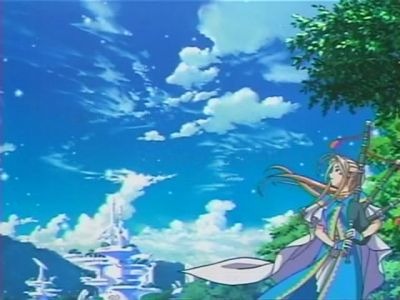
Beyond the archetypal kuuki-kei examples like Yokohama Shopping Log and Aria S1 and S2, the inclusion of shows like Hyouka or Manabi Straight in the SOL category raises questions and skepticism. This vagueness makes the term more suitable as a tag on anime databases like ANN or MAL, rather than as a subject for in-depth discussion, due to its inherent vacuity.
Furthermore, the term “slice-of-life” is often perceived as a somewhat marginalized label. Mainstream shows like The Simpsons or Firefly, or indeed most non-anime productions, are rarely, if ever, referred to as SOL. The question then arises: why do anime fans exclusively employ this term? The author also laments its persistent and seemingly unstoppable propagation, likening it to an undead zombie, and expresses a strong desire for its replacement with terms like “healing” or “ambiance” for more serious categorization.
A more seasoned perspective on the “slice-of-life” mapping problem suggests that anime fans have historically struggled with accurate categorization. The author humorously notes that if they received a dollar for every time Love Hina was mislabeled as a shoujo story, they could likely afford to skip a mortgage payment. However, this is not the core issue; well-established genres possess clear definitions. The fundamental problem with SOL is that even with complete information about a show, definitively classifying it as SOL remains challenging. At best, one can assign a probability, likely following a bell curve, indicating how many people would agree with the classification.
Ultimately, SOL is more about subjective feelings than any rigid, textbook definition, akin to the concept of “moe.” While it effectively conveys certain attributes of a show, it fails to prescribe a definitive list of shows sharing that attribute. This superficial agreement, characterized by “agree to disagree,” does not foster a deep understanding.
By coining the term “slice-of-life,” fans have inadvertently opened a Pandora’s Box for further discussion. The definition of SOL for each individual could easily fill countless internet forums, much like fervent declarations of character “waifoodom.” While this exploration of SOL’s nature can be a cause for celebration, it also raises linguistic confusion, particularly when differentiating it from terms like kuuki-kei.
From a more pragmatic standpoint, the question remains whether the term SOL will ever transcend its current status as a superficial shorthand, a mere parameter in databases like TVTropes or ANN, and evolve into a meaningful topic of discussion. Its current state suggests it is likely to remain a label, precisely because the underlying concept of “slice-of-life” is flawed when rigorously applied as a genre descriptor. The author pledges to continue their critique until the term is no longer used in a functional, non-ironic manner to describe anime series.
Alternatively, the author proposes a provocative thought experiment: “THE DARK KNIGHT RISES IS SLICE OF LIFE YO.”
[This post can be considered an updated version of a previous rant posted in August 2010, which has now been partially recovered.]
You might also be interested in : Otakon 2012: 8 Days to Go