UlasanAnime.com – This article presents observations on the game “Umamusume,” nearly two months after its release. It covers the game’s impressive organic growth, exceeding five million downloads, and the upcoming localizations in Korean and Simplified Chinese. The conclusion of the anime’s second season is also noted, with anticipation for Blu-ray sales driven by in-game codes and upcoming live concerts.

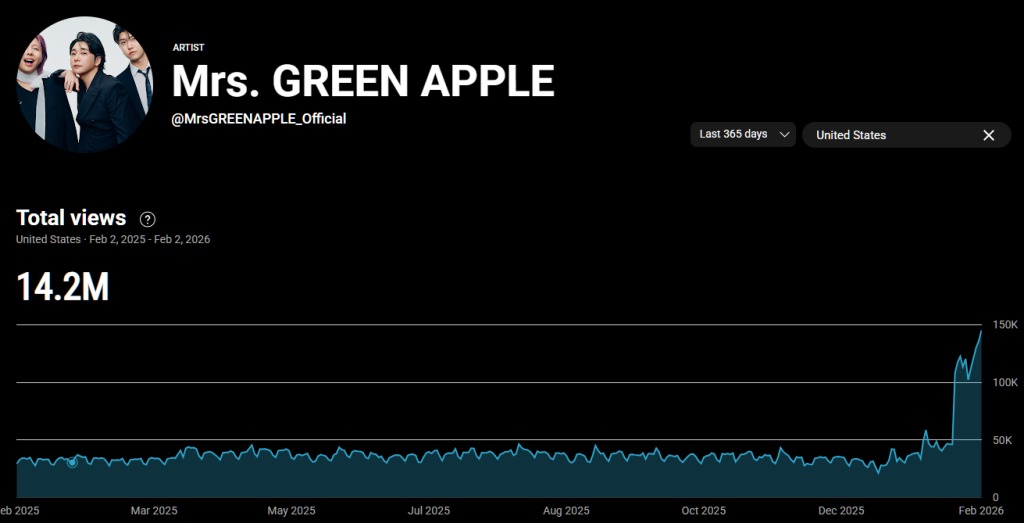
The popularity of “Umamusume” has drawn increased attention to Japanese horse racing, even among those not previously following the sport. The Japan Racing Association has partnered with Cygames to promote both the game and horse racing through various channels. April features four major races in Japan, with the game casually promoting them, and fans are showing significant interest, with races being live-streamed on YouTube and trending on Twitter.
A vibrant theorycrafting community exists for the “Umamusume” game due to its opaque mathematical systems. Players are actively reverse-engineering the game’s mechanics to understand the impact of various stats and in-game events on race performance. While some aspects, like the effect of raw stats on track time and the parameters of training scenario races, have been extensively tested, other elements, particularly server-side logic, remain less understood.
Much of the understanding of these mechanics comes from the game’s race visualizations. While some players analyze races frame by frame or by pixel, these interpretations are considered educated guesses rather than definitive truths. The data collected, whether anecdotal or harvested from online communities, suggests certain patterns: while excessive stamina can be detrimental by reducing speed, the value of “brains” is universally acknowledged, and the function of “guts” remains somewhat unclear. “Power” aids in acceleration and breaking through crowds, while “speed” directly impacts how fast a horse runs.
A notable, though somewhat controversial, theory suggests a “fuel economy” where a horse’s energy depletes faster at higher speeds, potentially influencing racing strategies. This concept, supported by YouTubers and complex equations, highlights the multi-variable nature of optimizing performance in the game.
In player-versus-player (PVP) races, this leads to a rock-paper-scissors dynamic. Horses with high “brains” can activate many skills, but ultimately, higher “speed” and “stamina” often secure victory. Scoring considers both activated skills and race placement. Additionally, attack-based skills that drain opponents’ energy add another layer of complexity.
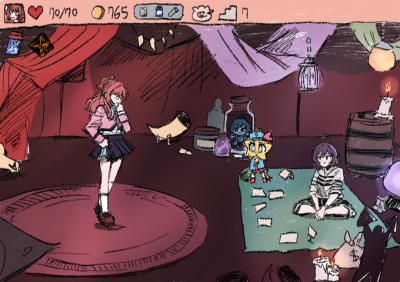
The author personally enjoys the game for its multifaceted raising mode, which blends story elements with strategic gameplay. Players navigate various checkpoints, successes, and failures, aiming to clear the URA Finals. The game allows for diverse playstyles, whether focusing on classic achievements like the triple crown, breeding for progeny, excelling in PVP, or pursuing specific achievements and in-game currencies.
This approach contrasts with the author’s experience in IDOLM@STER games, which are viewed more as content delivery platforms for engaging with franchises. In “Umamusume,” the core gameplay involves strategic decision-making and managing RNG to achieve victory, a concept the author finds surprisingly fun and engaging, even to the point of ignoring the performance mode.
The “stage aspect” of “Umamusume,” where horse girls perform, is discussed at length. The author defends its inclusion, likening it to the decision to make all the horses female characters. While acknowledging the use of existing frameworks to appeal to a player base, the author praises it for bringing something new. Criticisms are dismissed as stemming from misinterpretations of the game as a mere idol game or from a desire to provoke. “Umamusume” is described as a sophisticated form of postmodern Japanese anthropomorphism that glorifies horses by channeling their spirit through human-like counterparts. The singing and dancing are seen as enhancements and commentary on the nature of idols.
The second season’s episode featuring Tokai Teio’s stage performance is highlighted as a brilliant idol anime concept, even within a game that isn’t strictly an idol game. This storyline is cited as one of the most memorable scenes in idol anime, making its inclusion in “Umamusume” particularly amusing and effective.
Despite the game’s fun factor, the grind can be a significant time commitment, with raising runs taking around 45 minutes each, and players often completing multiple runs daily. This popularity has impacted other games, including those from IDOLM@STER and Cygames’s own titles, prompting developers to implement quality-of-life improvements like dungeon skips and simultaneous life/job completions to accommodate busy players and maintain engagement.
The author emphasizes the importance of spelling “Umamusume” correctly, without a space, as a sign of proper engagement with the franchise, akin to Cygames’s attention to detail in the game’s visuals.
Additionally, the author provides links to resources for further game analysis, including “Umagenics from Tin” and a beginner’s guide to the raising mode.
PS1. The author explains the inclusion of embedded tweets as a stylistic choice, arguing that “Umamusume” should be written without a space, and that seeing a space interrupts the flow of thought. They believe that just as Cygames meticulously removes strokes from horse kanji, players should be mindful of correct spelling.
PS2. Links are provided to “Umagenics from Tin,” a comprehensive resource for game analysis, and the author’s own beginner’s guide to the raising mode, which remains relevant.
You might also be interested in : Umamusume Raising Guide: A Beginner's Primer